



Since the Securities and Exchange Commission (SEC) updated its guidelines and formalised digital asset trading, Nigeria has been experiencing rapid expansion in digital and electronic trading.
This growth is being driven by increased investment in digital infrastructure, institutional reforms and a large tech-savvy young population increasingly comfortable with trading and investing through their smart devices.
For instance, the recent Initial Public Offering (IPO) of Dangote Refinery clearly indicated that many Nigerians can now participate in activities in the capital market without leaving the comfort of their homes. The development demonstrated how technology is changing the traditional process of investment, making it easier for individuals to access the market, submit applications and participate in major investment opportunities from different parts of the country.
The implication is that Nigeria is beginning to reap the benefits of huge investments in Information and Communications Technology (ICT), as well as improvements in broadband penetration and digital financial services. According to the Nigerian Communications Commission (NCC), broadband subscriptions in the country stood at approximately 124.42 million, while monthly data consumption surged by 47 per cent year-on-year to 1.66 million terabytes.
Nigeria’s fintech ecosystem has also expanded considerably, with the country accounting for about 28 per cent of fintech startups on the African continent. The growing adoption of digital payment channels, mobile banking applications and other financial technology solutions has helped create an environment in which online investment and securities trading can gain wider acceptance.
For the Nigerian capital market, this transformation represents an important opportunity to attract a broader category of investors, particularly young people who are increasingly familiar with technology-driven financial services.
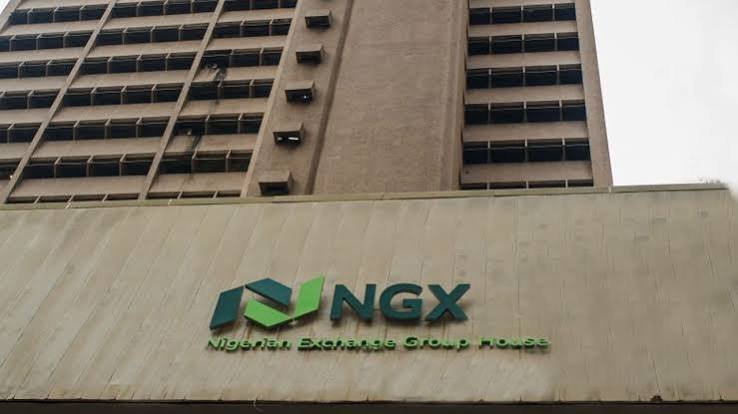
These figures are increasingly evident in the financial performance of the Nigerian Exchange Group Plc (NGX Group), which has continued to benefit from the expansion of electronic trading and the growing participation of investors in the Nigerian capital market.
The unaudited financial results released by the Group showed that it recorded an 83.3 per cent increase in profit before tax to N20.6 billion for the nine months ended September 30, 2026. The impressive performance was driven largely by a surge in transaction fees, increased investor participation and growing adoption of digital trading platforms.
The results showed that profit before tax rose from N11.2 billion recorded in the corresponding period of 2025. Profit after tax also increased by 86.4 per cent to N14.7 billion, compared with N7.9 billion in the same period last year.
The performance puts the Group’s nine-month earnings significantly above its full-year 2025 profit after tax of N10.5 billion, with three months remaining in the financial year.
The strong performance was supported by a substantial increase in trading-related income, with transaction fees more than doubling to N20.7 billion from N9.7 billion in the corresponding period of 2025, representing a growth of 112.4 per cent.
Total revenue rose by 79.8 per cent to N27.3 billion from N15.2 billion, while gross earnings increased by 64.8 per cent to N29.6 billion from N17.9 billion.
The results highlight the growing contribution of digital access, higher trading volumes and expanding investor participation to the Group’s earnings, reflecting the increasing use of technology in Nigeria’s capital market.
Listing fees also recorded an increase, rising by 24.4 per cent to N3.7 billion from N3.0 billion, reflecting continued capital-raising activities by companies and new admissions to the Exchange.
Operating profit advanced by 73.5 per cent to N14.9 billion from N8.6 billion, while the Group’s share of profit from associates increased by 69.6 per cent to N5.7 billion from N3.4 billion.
Despite higher operating costs, the Group improved its cost efficiency during the period. Operating expenses increased by 56.8 per cent to N14.7 billion from N9.4 billion, below the 79.8 per cent growth in revenue.
Consequently, the cost-to-income ratio improved to 49.7 per cent from 52.3 per cent, indicating that the Group generated more income relative to its operating costs. Earnings per share stood at N5.33 for the period, compared with the restated N2.68 recorded in the corresponding period of 2025.
The comparison reflects the impact of the one-for-three bonus issue approved by shareholders in April 2026, which increased the number of outstanding shares.
Commenting on the performance, NGX Group said the results reflected a structural shift in Nigeria’s capital market, with more investors accessing investment opportunities through digital self-service channels.
This shift is significant because it points to a gradual departure from the traditional investment process, which often required prospective investors to depend heavily on physical interactions with stockbrokers and other market operators. Digital platforms now allow investors to obtain market information, open investment accounts, submit orders and monitor their portfolios with greater convenience.
The Dangote Refinery IPO provides a practical illustration of this changing investment culture. The N2.15 trillion offer, comprising 4.1 billion ordinary shares at N525 each, opened opportunities for retail and institutional investors to participate in the ownership of one of the country’s biggest industrial projects. Its subscription channels included approved electronic platforms, allowing eligible investors to apply without necessarily visiting a physical office.
The regulatory environment is also evolving to accommodate these changes. The SEC introduced rules governing the issuance, offering platforms and custody of digital assets in May 2022, providing a framework for the registration and supervision of operators in the emerging market. More recently, the Commission reviewed minimum capital requirements for regulated capital market operators in January 2026, including digital asset exchanges, custodians and other technology-driven market participants.
These measures are important in ensuring that the expansion of digital financial services is accompanied by appropriate supervision, stronger market infrastructure and investor protection. However, digital asset trading and conventional securities trading remain distinct activities, even though both are benefiting from the wider adoption of technology.
For NGX Group, the opportunity extends beyond the immediate increase in transaction fees. As more Nigerians become comfortable with digital financial services, the Exchange has the potential to attract new categories of investors, deepen market liquidity and improve the accessibility of investment products.
The growth in internet usage also provides a strong foundation for this expansion. NCC industry statistics show that monthly data consumption continued to rise in 2026, reaching approximately 1.76 million terabytes in August. This reflects the increasing dependence of Nigerians on internet-enabled services, although reliable connectivity and affordable data remain important considerations for wider participation.
Nevertheless, the growth of electronic trading also comes with challenges. Cybersecurity threats, online investment fraud, inadequate financial literacy and the possibility of uninformed investment decisions remain concerns that regulators and market operators must address.
There is also the need to ensure that investors outside major commercial centres are not excluded from the opportunities created by digital platforms. Improved broadband access, simplified onboarding procedures and investor education will be necessary to make the market more inclusive.
For the NGX Group, sustaining the current growth will depend on its ability to continue investing in technology, strengthen market confidence and develop products that respond to the changing needs of investors.
The Group’s nine-month financial performance suggests that the increasing adoption of digital trading is already translating into stronger business activity. If the trend continues, technology could become one of the most important drivers of revenue growth, market expansion and investor participation in Nigeria’s capital market.
The bigger picture is that the Nigerian Exchange is increasingly positioning itself to benefit from a financial system in which access to investment opportunities is no longer determined primarily by physical location. As digital adoption deepens, the Exchange stands to gain from a larger investor base, increased transactions and a more active capital market.


 updated its guidelines and formalised digital asset trading, Nigeria has been experiencing)