



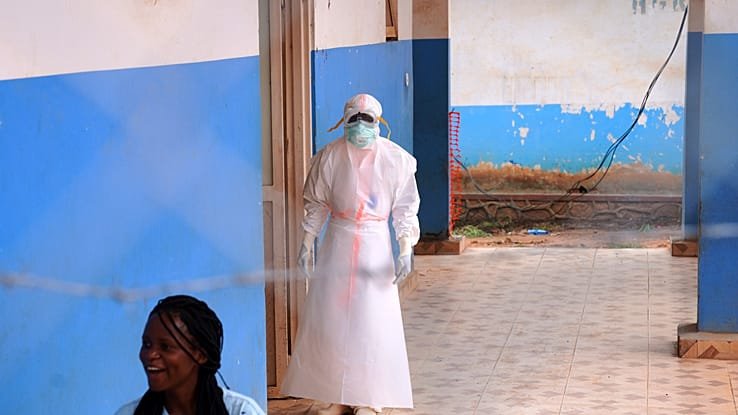
The AFC/M23 rebel alliance in eastern Democratic Republic of Congo has tightened movement restrictions after two travellers from government-controlled territory tested positive for Ebola in an area under rebel control, adding to growing challenges in containing the country’s worst outbreak of the disease.
The AFC/M23 administration announced that shared taxis operating along the Goma-Kirumba road would be suspended for one month from Saturday. Passenger boat services on some routes across Lake Edward will also be halted as part of measures to limit the spread of the virus.
Taxi-buses will remain in operation on the Goma-Kirumba route under enhanced health and safety measures, while trucks transporting essential goods will be allowed to continue operating.
The restrictions followed the detection of Ebola in two travellers from Lubero, a government-held town, who tested positive after reaching a village under M23 control, according to a member of the response team established by the rebel administration.
The development underscores the difficulties health authorities face in containing the outbreak in a region fractured by prolonged armed conflict.
AFC/M23 controls large parts of North and South Kivu after capturing Goma and Bukavu during its 2025 offensive. The group has since established its own health administration in areas under its control, operating largely independently of the government in Kinshasa.
The rebels have portrayed their response to Ebola as evidence of their ability to administer territory, declaring areas under their control Ebola-free in late June.
Meanwhile, the outbreak has reached unprecedented levels in the country. Government figures released this week showed confirmed infections had risen to 5,021, while the death toll stood at 2,378.
The outbreak is now the largest in the Democratic Republic of Congo’s history in terms of both cases and deaths, and the second-largest Ebola outbreak recorded globally after the 2014–2016 epidemic in West Africa.
The current outbreak is caused by the Bundibugyo species of Ebola, for which there are no approved vaccines or treatments. Health officials have cited delayed detection, weak healthcare infrastructure, insecurity and community resistance as major obstacles to containing transmission.
The latest infections have also highlighted the risks created by frequent movement between government- and rebel-controlled areas.
Health experts have warned that travel and trade networks across eastern Congo can make it more difficult to trace contacts, isolate patients and prevent further transmission. Health precautions were also intensified earlier this year at a major gold mine in the region because of concerns about movement between Ebola-affected communities.
The virus has already spread to a sixth province, with health authorities reporting an Ebola-related death in the northeastern province of Bas-Uele earlier this month.
The World Health Organization has said the outbreak could still be brought under control within three months if adequate resources are mobilised.
However, the agency has so far secured only about 60 per cent of the $115 million it estimates is required for the response. Between 70 and 80 per cent of newly identified cases reportedly have no known epidemiological links, indicating that transmission remains widespread and difficult to track.
As M23 imposes tighter movement controls in territories under its administration, health authorities face the delicate task of preventing transmission across frontlines without disrupting the movement of essential supplies and access to healthcare for communities already affected by conflict.


