


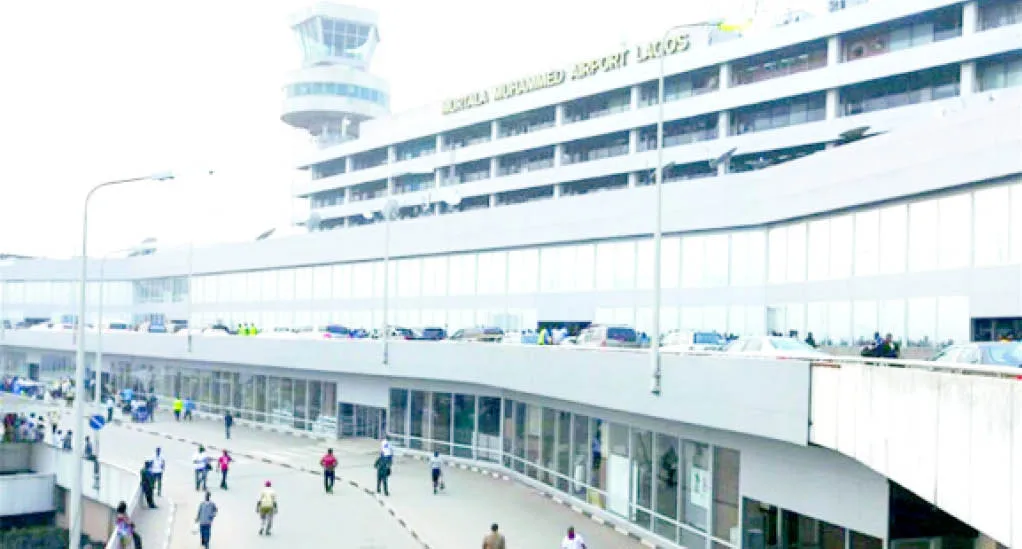
Murtala Muhammed International Airport (MMIA), Lagos, has retained its ninth position among Africa’s leading airports by scheduled outbound seat capacity, even as airlines across the continent increased capacity by 9.4 per cent year-on-year in September 2026.
Data from aviation analytics firm OAG showed that airlines offered approximately 25.8 million scheduled seats across Africa during the month, with international flights accounting for 78 per cent of the total capacity.
The figures highlight continued expansion in air connectivity across the continent, while also reflecting changes in airline networks, flight frequencies and aircraft deployment across different markets.
MMIA recorded approximately 470,000 scheduled outbound seats in September, representing a 24.1 per cent increase compared with the same month in 2025.
Although the Lagos airport’s capacity edged down from about 480,000 seats in August, it added approximately 90,600 seats year-on-year.
MMIA remains Nigeria’s principal international gateway and one of the country’s key hubs for international air connectivity.
Cairo Maintains Top Position
Cairo International Airport retained its position as Africa’s busiest airport by scheduled outbound seat capacity, recording approximately 1.79 million seats in September.
The figure represented an 11.2 per cent year-on-year increase, although it was lower than the approximately 1.85 million seats recorded in August.
Addis Ababa Bole International Airport in Ethiopia retained second place with approximately 1.19 million scheduled outbound seats, up 6.5 per cent year-on-year.
The airport, which serves as Ethiopian Airlines’ main hub, recorded about 1.25 million seats in August.
South Africa’s O.R. Tambo International Airport in Johannesburg remained in third position, with approximately 1.16 million scheduled outbound seats, representing 5.0 per cent year-on-year growth.
The airport recorded about 1.15 million seats in August, making September’s capacity roughly 10,000 seats higher.
Mohammed V International Airport in Casablanca, Morocco, ranked fourth with approximately 730,000 scheduled outbound seats, an increase of 13.5 per cent year-on-year.
The airport is Morocco’s main international gateway and a major hub for Royal Air Maroc, connecting the country with destinations across Africa, Europe, the Middle East and other international markets.
Cape Town International Airport ranked fifth with approximately 590,000 scheduled outbound seats, up 11.3 per cent year-on-year.
The South African airport climbed from seventh place in August, while its annual growth accelerated from 6.5 per cent to 11.3 per cent.
Houari Boumediene International Airport in Algiers ranked sixth with approximately 580,000 scheduled outbound seats, representing 3.8 per cent year-on-year growth.
Its position fell from fifth in August, when it recorded about 680,000 seats.
Marrakech Menara Airport occupied seventh place with approximately 530,000 scheduled outbound seats, up 10.5 per cent year-on-year.
The Moroccan airport entered the top 10 in September after being outside the ranking in August.
Jomo Kenyatta International Airport in Nairobi ranked eighth, recording approximately 520,000 scheduled outbound seats, an 11.9 per cent year-on-year increase.
It dropped from sixth position in August, when it recorded about 570,000 seats.
Tunis–Carthage International Airport completed the top 10 with approximately 460,000 scheduled outbound seats, representing an 8.2 per cent year-on-year increase.
The Tunisian airport fell from eighth position in August, when it recorded about 530,000 seats.
Overall, the September figures show a mixed month-to-month performance among Africa’s leading aviation hubs, even as most recorded year-on-year increases in scheduled capacity. The growth points to continued expansion in the continent’s air transport market, particularly in international connectivity.


, Lagos, has retained its ninth position among Africa’s leading airports by scheduled outbound)