



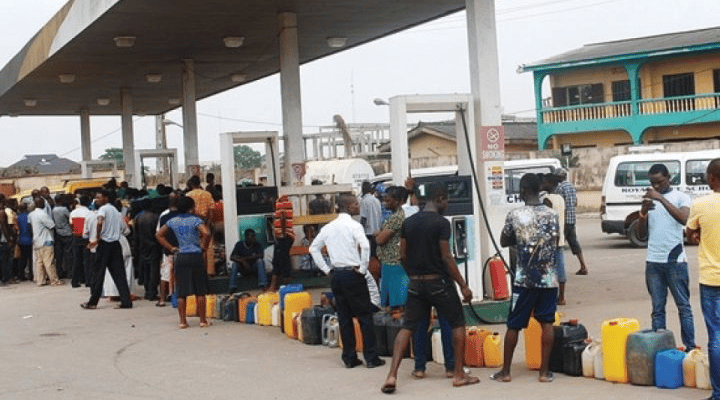
Niger has imposed an overnight restriction on petrol sales nationwide, allowing only designated filling stations to operate between 9 p.m. and 6 a.m., as authorities struggle to address a worsening fuel shortage.
The government said the temporary measure was introduced to improve fuel distribution operations and enable suppliers, including the Nigerien Petroleum Company (Sonidep), to replenish stocks and maintain supplies to filling stations.
However, the restriction has sparked concerns among commercial transport operators, who say the shortage and limited access to petrol are affecting their earnings and ability to meet daily financial obligations.
Moussa Idé Boubacar, a taxi driver, said he had been unable to make his required payments for two days because of the disruption.
“Normally, we generate revenue of around 20,000 a day, of which 8,000 is for payments and 12,000 is for fuel. With this shortage, we’ve had some management issues,” he said.
The shortage has also led to increasingly long queues at filling stations, disrupting transportation and everyday activities in the capital, Niamey, and other parts of the country.
Residents have reported difficulties commuting to work and carrying out routine activities as motorists spend longer periods searching for petrol.
The restrictions have drawn criticism from the taxi drivers’ union, Synctaxi, which has appealed to the authorities to reconsider the curfew and introduce arrangements that would allow transport operators to obtain fuel more easily.
The union’s Secretary-General, Ganda Sanda, said the current arrangements were making it difficult for drivers to sustain their operations.
“To obtain fuel, you need authorisation. The petrol station must be open around the clock,” he said.
Sanda urged the governorate and other relevant authorities to review the policy, arguing that the restrictions were worsening the difficulties faced by commercial drivers.
He also emphasised the importance of the transport sector to the national economy, saying operators needed a workable arrangement to continue providing services.
In addition to the overnight restrictions, the government has prohibited the sale of petrol in jerry cans outside filling stations in areas where at least one petrol station is available.
The measures are intended to improve control over fuel distribution and ensure that available supplies reach motorists through authorised outlets.
Authorities have appealed to citizens to demonstrate “understanding and civic-mindedness” while the temporary measures remain in place, maintaining that the restrictions are designed to improve fuel availability.
However, the disruption has highlighted the difficulties facing transport operators and commuters as Niger grapples with a nationwide shortage, with calls growing for measures that would protect livelihoods while stabilising petrol supplies.


