



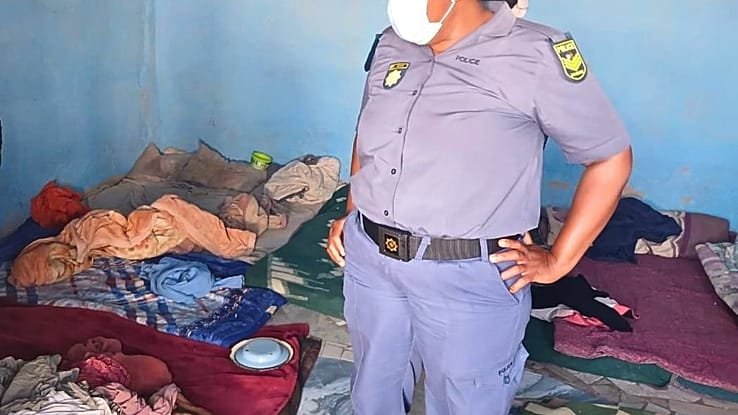
Police in South Africa have arrested a pastor and his wife after authorities discovered about 200 people living in allegedly appalling conditions at an unauthorised rehabilitation centre in Mpumalanga province.
The facility, reportedly run by a church, was raided on Thursday, October 15, following concerns about the treatment and living conditions of people receiving care for drug addiction, local media reported.
Those found at the centre included children and adults. Some residents were reportedly chained together, while others had untreated sores on their bodies.
Inspectors also uncovered overcrowded sleeping quarters, broken toilets and a lack of running water, according to reports.
Authorities said the centre was operating without the necessary authorisation to provide rehabilitation services.
Officials disclosed that the pastor and his wife had declared a capacity of only 60 people, but the inspection revealed more than 200 residents, including at least 30 women.
Among those found at the facility were an 11-year-old boy and a 16-year-old girl who were sharing accommodation with adults.
The Department of Social Development said residents were charged 3,000 rand, equivalent to about $182, monthly. Reports indicated that nearly half of the payments went to the church.
Following the operation, 14 residents were taken to hospital for medical attention, while another 132 were returned to their families.
The pastor and his wife are facing kidnapping charges, while police continue to investigate whether other offences were committed at the facility.
The couple is expected to appear in court on Monday.
The incident has renewed concerns about the operation of unregistered rehabilitation centres in South Africa, where authorities have been grappling with the growing number of facilities offering addiction treatment without the required approval.
In 2025, the Department of Social Development identified more than 100 centres operating illegally across the country, with Gauteng, the province that includes Johannesburg, recording the highest concentration.
The latest case has drawn attention to the need for stronger oversight of rehabilitation facilities and safeguards for vulnerable people seeking treatment for substance addiction.


