



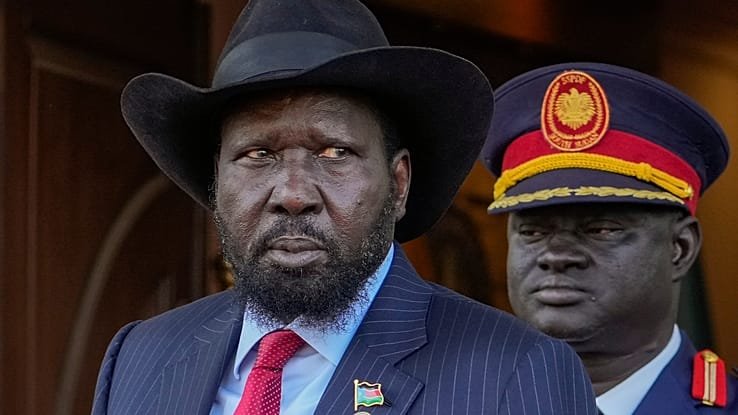
South Sudan President Salva Kiir has dissolved the country’s transitional government, hours after signing amendments to election laws that removed requirements for a permanent constitution and national census to be completed before the December election.
The changes have heightened concerns over the credibility of the planned December 22 vote, which has already been postponed twice.
Kiir’s office said the transitional government would be dissolved at midnight on Tuesday, in line with the agreed election timetable, with a new transitional government to be appointed to oversee the poll.
South Sudan gained independence in 2011 but was soon plunged into a five-year civil war. The country remains among the world’s poorest and faces persistent political and economic challenges.
The government has yet to implement several key provisions of the 2018 peace agreement, including the registration of voters and the unification of rival armed forces. A permanent constitution has also not been completed.
The amendments to the National Elections Act allow the election to proceed without a permanent constitution or national census. They also provide for the removal of vice-presidents appointed under the 2018 peace agreement during the election period.
The legal changes have drawn concern from analysts, who said they could give Kiir greater control over the political transition.
“Kiir will be the only person in power, without vice-presidents, without the executive, without the parliament,” Michael Wani, a lawyer and former member of the constitution drafting committee, told AFP.
Independent analyst Machot Amuom said the amendments contained significant ambiguities and could give the president broad powers over the transition.
“The new law gives the president full powers… He can decide even not to go for elections for another year or another two years,” Amuom said.
Security was also tightened in the capital, Juba, on Tuesday, with an increased military presence reported on major roads.
One vendor, who spoke to AFP anonymously, said the presence of soldiers was unusual and prompted him to close his shop.
The Internal Security Bureau issued a directive ordering security forces to remain in uniform and on high alert for three days from September 22.
A civil servant, also speaking anonymously, said his ministry had been closed without prior notice and soldiers deployed outside the building.
Political tensions remain high, particularly between Kiir’s government and opposition groups. Opposition leader Riek Machar is currently facing treason charges and remains detained.
The latest developments have increased concerns among international observers that the election, coming amid unresolved political and security tensions, could further destabilise the country and potentially trigger renewed conflict.


