


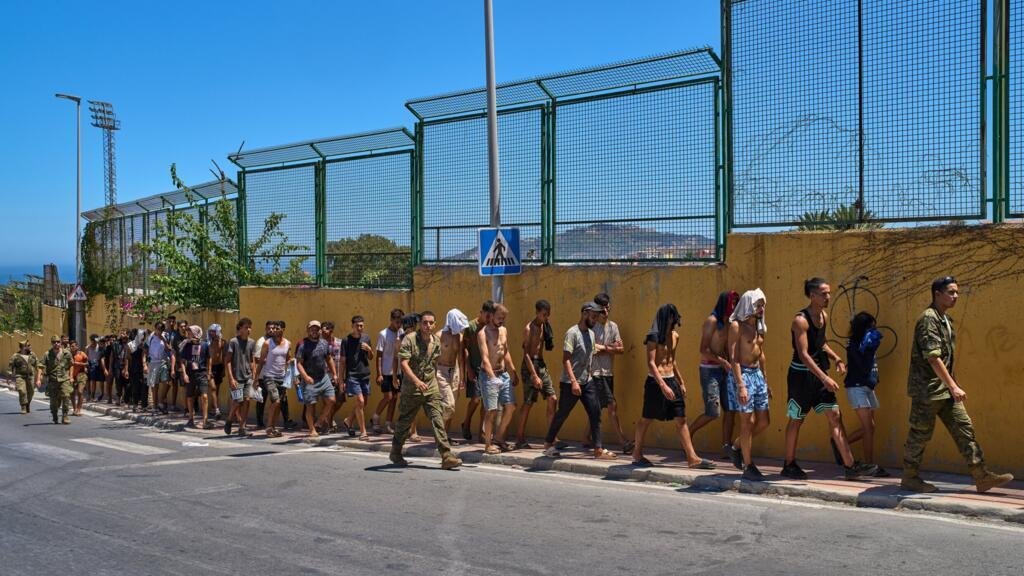
Spain’s government has approved an additional €306 million in aid for Ceuta, as the North African enclave continues to deal with the aftermath of a massive influx of migrants from neighbouring Morocco.
The funding package, approved at a cabinet meeting in Madrid on Tuesday, is intended to support the territory across several sectors as authorities work to restore normality following the migration crisis.
Economy Minister Carlos Cuerpo said the government recognised the urgent need for action to restore calm and confidence among residents of the Spanish enclave.
“We are aware, and we have been witnesses… of the urgent need to act from our part and from all authorities, so that there can be a return to the city of Ceuta of the calm and confidence that its citizens need as soon as possible,” Cuerpo told reporters.
The government’s intervention follows a dramatic surge in migration from Morocco in late July, when an estimated 70,000 people crossed into Ceuta over several days.
Although most of those who entered returned to Morocco shortly afterwards, Spanish authorities estimate that about 5,000 migrants remain in the enclave.
More than 90 migrants reportedly died while attempting to make the crossing.
Spain raises disinformation concerns
The Spanish government has also raised concerns about the spread of misinformation surrounding the migration crisis.
Prime Minister Pedro Sánchez recently accused foreign actors of using social media to spread false information about events in Ceuta.
Minister for Inclusion, Social Security and Migration Elma Saiz said online platforms linked to Russia and Israel had amplified reports about the situation with the aim of increasing divisions within Europe and Spanish society.
“Different digital forums, from both Russia and Israel, amplified what happened with the intent to polarise and fracture Europe and Spanish society,” Saiz said.
She added that internal reports from Spain’s Foreign Ministry and the European Union had also identified Russia as a source of disinformation during the crisis.
Sánchez has maintained that there is no evidence that Morocco orchestrated the mass movement of migrants into Ceuta.
The latest aid package is expected to help local authorities manage the continuing humanitarian and administrative pressures created by the influx while supporting efforts to restore stability in the strategically important Spanish territory.


