


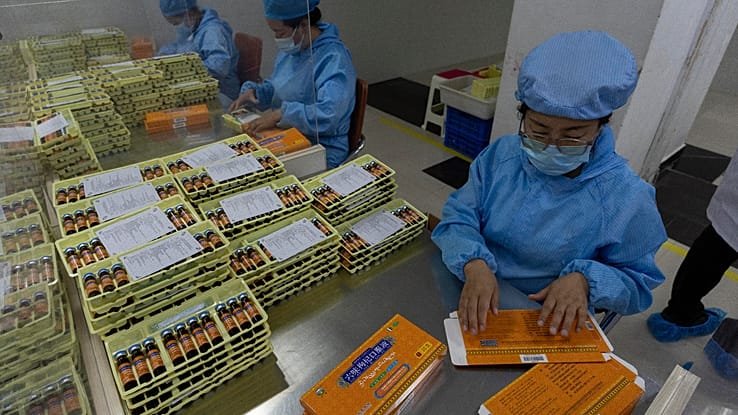
Countries in Central Africa are facing a growing public health threat from the trafficking of counterfeit, substandard and unauthorised medicines, according to a new report by United Nations agencies and the Central African Economic and Monetary Community (CEMAC).
The report by the United Nations Office on Drugs and Crime (UNODC), the World Health Organization (WHO) and CEMAC said the illicit trade was being driven partly by gaps between healthcare needs and access to safe and affordable medicines.
The six CEMAC countries — Cameroon, the Central African Republic (CAR), Chad, the Republic of Congo, Equatorial Guinea and Gabon — continue to face high rates of infectious diseases, including tuberculosis, malaria and HIV.
However, the report said essential medicines were not always readily available or affordable, creating conditions for the expansion of illicit markets.
According to the report, traffickers divert prescription medicines from regulated supply chains and national health programme stocks, while also distributing counterfeit, substandard and unapproved products.
The medicines involved include antibiotics, anti-malarial drugs, painkillers, anti-inflammatory medicines and psychoactive substances such as tramadol and pregabalin.
At least 251 tonnes of medicines were seized across the six countries between 2020 and 2025, highlighting the scale of the illicit trade.
UNODC warned that medicine trafficking posed a serious threat to public health, potentially resulting in treatment failures, poisoning and preventable deaths.
The report also noted that illicit medicines sometimes find their way into legitimate healthcare facilities, where patients may assume that all medicines provided are safe.
Citing WHO estimates from 2017, the agencies said falsified or substandard anti-malarial medicines could be associated with between 72,000 and 267,000 deaths annually in sub-Saharan Africa, while poor-quality antibiotics used to treat childhood pneumonia could be linked to up to 169,271 deaths each year.
The report said most trafficked medicines enter Central Africa through seaports and river ports, while others are smuggled by air as freight or concealed in passengers’ luggage.
The products are subsequently distributed into inland areas through major commercial and transport routes.
Beyond the health consequences, UNODC said the illicit trade also fuels organised crime, weakens public institutions and contributes to the recreational misuse of addictive psychoactive substances.
In the Central African Republic, armed groups reportedly generate revenue by looting health facilities and imposing levies on shipments moving through territories under their control.
The report further highlighted a recent seizure in Gabon, where customs officials recovered 17,000 tramadol tablets in late September. The authorities attributed the shipment to cross-border traffickers operating from neighbouring Cameroon.
The UN agencies called for stronger cooperation among countries in the region, improved regulation of pharmaceutical supply chains and greater access to safe and affordable medicines to tackle the illicit trade and protect public health.


