


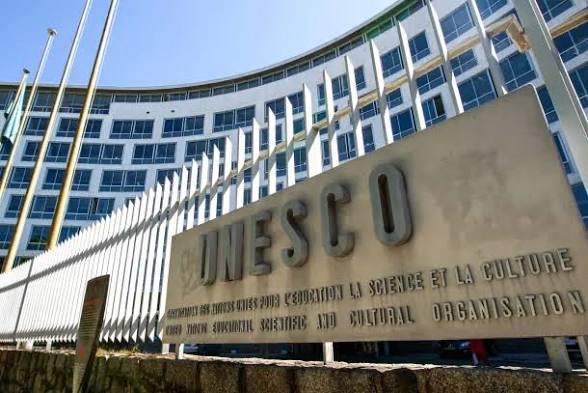
UNESCO’s recognition of six historic plantation estates in São Tomé and Príncipe as World Heritage sites has renewed efforts to preserve the country’s colonial-era heritage and revive abandoned properties for tourism.
Known locally as “roças”, the plantation estates were built on slavery and forced labour and played a major role in the agricultural economy of the Gulf of Guinea archipelago.
For Conceição Moreno, a descendant of plantation workers, the ruins of the former Sundy plantation on Príncipe Island represent a deeply personal connection to the past.
“My grandmother lived here, my father was born here and I was born here too. It’s our heritage, in a way,” Moreno said while pointing to the deteriorating walls of the former plantation.
The six roças were added to UNESCO’s World Heritage List last month, highlighting their historical importance while drawing attention to the urgent need for their preservation.
Most of the estates have been abandoned, with many reduced to deteriorating buildings surrounded by vegetation. Some are still occupied by former plantation workers and their descendants.
The plantations were established by Portuguese colonists in the second half of the 19th century and were initially used for intensive sugar production before becoming major producers of cocoa and coffee.
The estates relied first on enslaved labour and later on contracted workers who were often forcibly recruited from other Portuguese territories, including Angola, Mozambique and Cape Verde, as well as Gabon and Congo.
São Tomé served as an important staging post in the transatlantic slave trade, with enslaved Africans passing through the islands before being transported to the Americas.
Although Portugal abolished slavery in 1869, forced labour continued in another form through the contract system.
According to UNESCO, the roças combined agricultural land with industrial facilities, residential quarters and social infrastructure, illustrating the workings of a large-scale colonial agro-industrial system based on forced migration and labour.
At Sundy, remnants of that era include old fortress-like stables, a Portuguese colonial-style mansion, a small chapel and rows of workers’ quarters known as “sanzalas”.
São Tomé and Príncipe’s culture chief, Emir Boa Morte, said the structures remain important repositories of the nation’s collective memory.
“The buildings preserve the collective memory of São Tomé and Príncipe from the colonial era to the present day,” he said.
Boa Morte noted that some roças have disappeared or been merged over the years, but about 100 remain across the country.
The estates were nationalised by the country’s Marxist-Leninist government in the late 1970s and later privatised in the 1990s. Many subsequently fell into decline amid the economic difficulties facing São Tomé and Príncipe, once one of the world’s leading cocoa producers.
Today, many of the surviving plantations are in poor condition, with some lacking basic sanitation and heavily overgrown.
Moreno, a 46-year-old member of the National Assembly, is among those whose families have remained connected to Sundy. His ancestors were “servicais”, or contracted labourers, brought from Cape Verde to work on the plantation.
He said he had remained at the sprawling estate because of his lifelong connection to the area.
“I’ve never lived anywhere else, so I like being here. There’s a very strong cultural connection,” he said.
At the same time, private investment is beginning to give some of the historic estates a new lease of life.
HBD, an investment fund founded by South African entrepreneur Mark Shuttleworth, acquired Sundy several years ago. The former plantation owner’s mansion has since been converted into a luxury hotel, while workers’ houses are being renovated into additional accommodation.
Egbert Bloemsma, CEO of HBD Hotels, said tourism could help preserve the estates while creating employment.
“We are creating beautiful hotels where hundreds of people can work,” he said, stressing the importance of renovating the historic buildings and preserving their cultural heritage.
HBD currently owns two former roças on Príncipe.
The UNESCO designation is expected to attract further investment and strengthen government efforts to protect the plantations.
Boa Morte said authorities were working to mobilise communities across São Tomé and Príncipe to take part in preserving the sites.
He said the government has launched a 10-year programme aimed at restoring the deteriorating estates and giving them new purposes.
Officials hope that the UNESCO recognition could eventually lead to more plantations receiving international heritage status, with Boa Morte suggesting that another 10 roças could potentially be added to the list within the next five to 10 years.
However, he stressed that redevelopment must not come at the expense of the plantations’ history.
“The story of these roças must be told,” Boa Morte said. “There will be a combination, a union between the past and the present.”


