


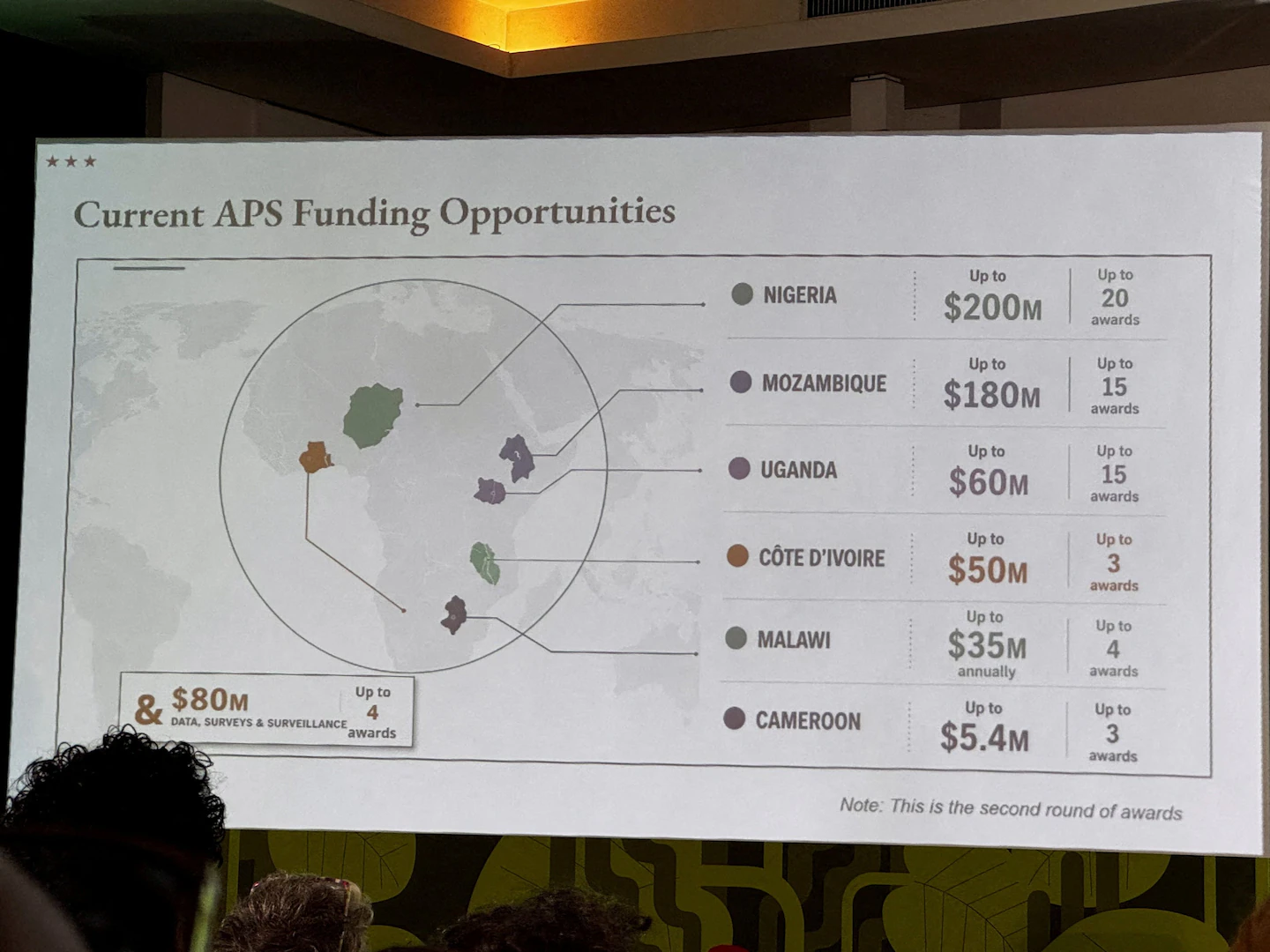
The United States State Department has apologised after a presentation at one of the world’s biggest HIV and AIDS conferences displayed an inaccurate artificial intelligence generated map of Africa that incorrectly labelled every country shown.
The error occurred during the AIDS 2026 conference in Rio de Janeiro, Brazil, where members of the US delegation used a slide intended to highlight six African countries receiving American health assistance. Instead, the map contained major geographical errors that quickly drew criticism from health experts, activists and delegates attending the event.
The most striking mistake involved Nigeria. Rather than appearing on the Gulf of Guinea in West Africa, the country was shown as a large landlocked nation stretching across parts of Mali, Niger, Algeria and Chad. Its shape was completely distorted and bore little resemblance to Nigeria’s actual borders.
Other countries were also misplaced. Mozambique appeared hundreds of miles north of its real location, Malawi was shifted south, while Ivory Coast was moved across the continent. The presentation also contained incorrect colour coding, creating further confusion over which nations were receiving US funded HIV programmes.
The mistake was first highlighted by HIV researcher and activist Emily Bass, who shared a photograph of the presentation online. The image rapidly spread across social media, prompting widespread criticism and questions about how such an error passed through official review before being shown at a major international conference.
Reuters later verified the authenticity of the image and reported that the slide carried a watermark indicating it had been generated using artificial intelligence. The watermark suggested OpenAI technology had been used in creating the image, although the presence of the watermark alone does not establish exactly how the image was produced or whether it was subsequently edited by users.
In response, the State Department issued a formal apology, saying it accepted full responsibility for the incident.
“The Department takes full responsibility for the confusion and misrepresentation caused by the incorrect map displayed during the presentation,” a spokesperson said. Officials explained that a team member had hastily modified the slide deck shortly before the presentation, leading to the inaccurate graphic being included.
OpenAI has also acknowledged reports about the image and said it is investigating the circumstances surrounding its creation.
The incident comes at a sensitive moment for United States global health policy. Since President Donald Trump returned to office, his administration has significantly reduced overseas aid spending, dismantled much of the US Agency for International Development and sharply scaled back the President’s Emergency Plan for AIDS Relief, widely known as PEPFAR.
PEPFAR, launched in 2003 under President George W. Bush, has been credited with saving more than 25 million lives by providing HIV treatment, prevention programmes and support across dozens of countries, particularly in sub Saharan Africa. It has long been regarded as one of the most successful global public health initiatives ever funded by the United States.
The administration has also announced plans to reduce spending on HIV prevention, surveillance and public health monitoring, including the gradual withdrawal of support for programmes in South Africa, which has the world’s largest HIV epidemic.
Health experts have repeatedly warned that cuts to international HIV funding could reverse decades of progress. UNAIDS has cautioned that reduced financial support could lead to millions of additional HIV infections and AIDS related deaths over the coming years if treatment and prevention programmes are disrupted.
The map controversy has therefore attracted attention beyond its geographical inaccuracies. Critics say it reflects broader concerns about declining investment in global health programmes and the increasing use of artificial intelligence generated content without adequate human verification, particularly in official government presentations.


