



Venezuela says it has released 131 people regarded as political prisoners, in what authorities describe as a major step towards national reconciliation following the removal of former President Nicolas Maduro.
The interim government said those released were granted alternative measures to imprisonment under its Program for Peace and Democratic Coexistence.
The releases were welcomed by the United States, with Secretary of State Marco Rubio describing the move as a “crucial step” in Venezuela’s reconciliation process. Rubio said more than 1,000 Venezuelans had been released since Maduro was removed and detained by the United States in January.
Families reunite with detainees
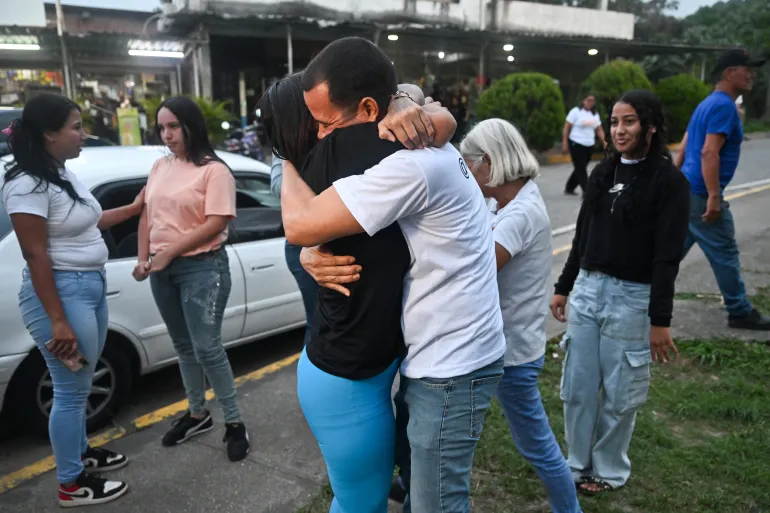
Emotional scenes were reported outside El Rodeo I prison near Caracas, where former prisoners reunited with relatives following their release.
Opposition group Vente Venezuela independently confirmed the release of 43 detainees, while human rights organisation Foro Penal said at least 40 people had been freed.
Foro Penal also reported that 17 women were among those released. However, the organisation said 391 political prisoners remained in detention as of August 10.
Opposition calls for more releases
Opposition leader Juan Pablo Guanipa welcomed the releases but said the government must go further by freeing every political prisoner.
He described the return of detainees to their families as an “immense relief” but insisted that releases should happen “without exception” and without delay.
Talks continue
The prisoner releases come shortly after the first round of US-brokered talks between Venezuela’s government and opposition, which ended on Wednesday.
Both sides agreed to work on recovering Venezuelan funds frozen overseas to support recovery from the country’s devastating June earthquakes, which reportedly killed more than 6,300 people. They also agreed to discuss reforms to the judiciary.
The issue of political prisoners, however, was not included in their joint statement.
The reconciliation process is being closely watched by Venezuelans hoping it will eventually lead to democratic elections and broader political reforms after disputed presidential elections in 2018 and 2024.


