


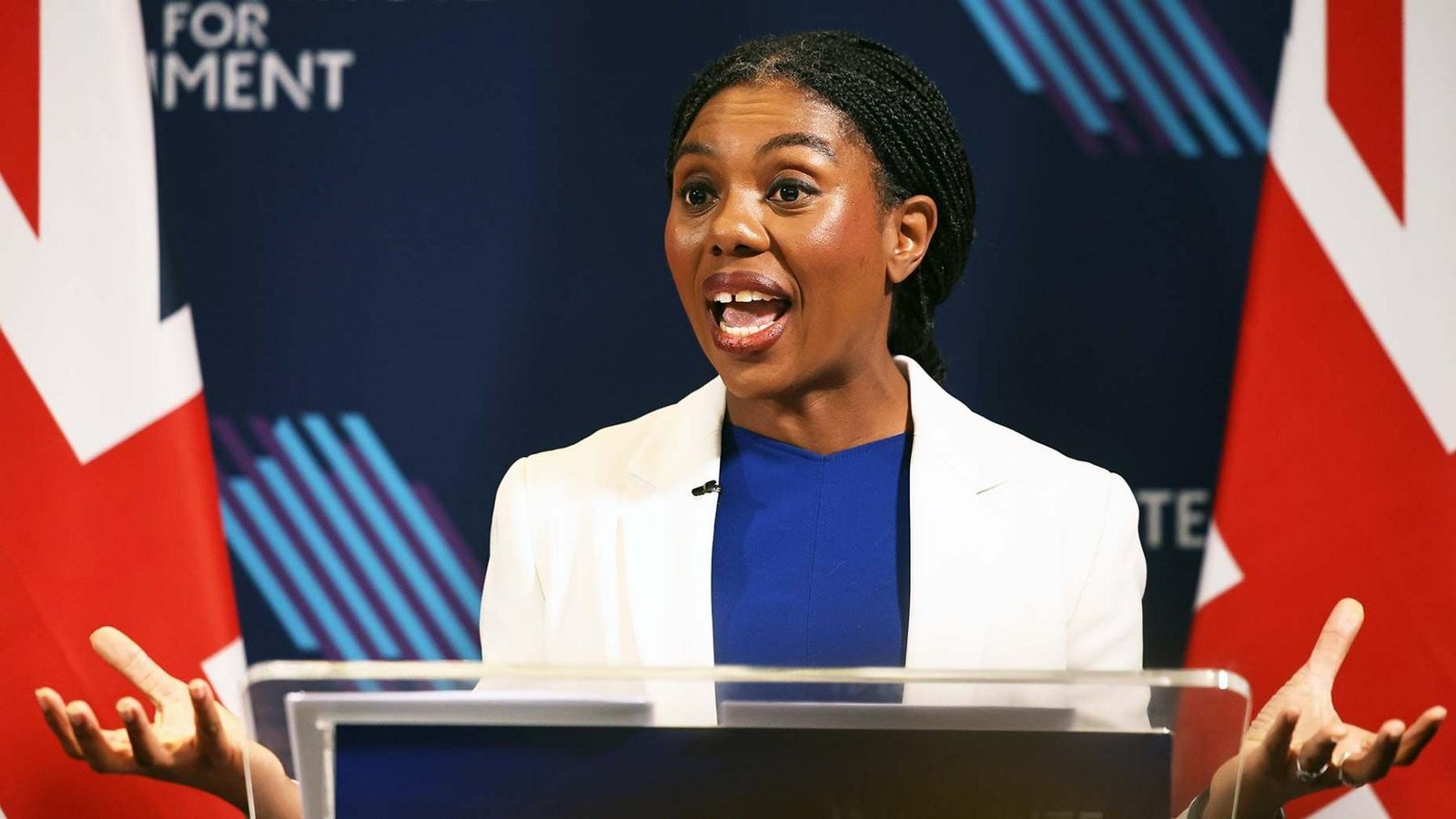
Conservative leader Kemi Badenoch has triggered a fierce political debate after declaring that police should not hesitate to stop and search more black boys if it helps save lives and tackle knife crime.
Speaking on Tuesday at the Institute for Government in London, Badenoch argued that public authorities have become too afraid of being labelled racist, preventing them from taking action that could stop serious crimes.
She claimed that concerns about accusations of racism had contributed to failures linked to major tragedies including the Manchester Arena bombing, the Nottingham killings and child exploitation scandals.
The Tory leader used the speech to announce plans to scrap the Public Sector Equality Duty, a key part of the Equality Act 2010 that requires public bodies such as schools, hospitals and police forces to consider how their decisions affect people from different backgrounds. Badenoch said the duty has encouraged what she described as identity politics and distracted public services from their core responsibilities.
Her most controversial remarks came when discussing stop and search powers. Badenoch said she wanted the use of stop and search to increase significantly and insisted that if more black boys were searched and more weapons were found, then more black lives would ultimately be protected. She said families affected by knife crime had urged politicians not to shy away from tougher policing measures.
The comments immediately reignited a long running national debate over race and policing.
Critics pointed to recent research showing that black Londoners are already far more likely to be stopped and searched than white residents. A major study by King’s College London found that black people were up to 48 times more likely to be stopped and searched in some affluent parts of the capital. Across England and Wales, black people are around four times more likely to face stop and search than white people. Researchers also found that officers often recorded less specific reasons when stopping black individuals.
Supporters of stop and search argue that the tactic helps police recover weapons and disrupt violent crime. However, civil rights groups and community campaigners have long warned that disproportionate use of the power damages trust between police and minority communities. The Metropolitan Police has recently introduced reforms aimed at improving the way officers conduct searches after criticism over racial disparities.
Labour quickly attacked Badenoch’s proposal to scrap the equality duty, arguing that it would weaken safeguards for women, disabled people, ethnic minorities and other protected groups. Ministers accused the Conservative leader of attempting to roll back important protections that help ensure fairness in public services.
The row comes as Badenoch seeks to redefine the Conservative Party’s approach to crime, race and equality ahead of future elections, placing law and order at the centre of her political agenda.


