


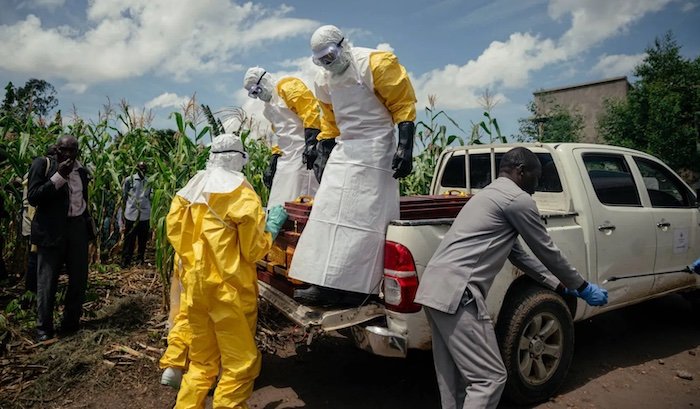
Health authorities in the eastern Democratic Republic of Congo are facing mounting challenges in containing a worsening Ebola outbreak, as shortages of personnel, limited resources and delays in reporting suspected infections continue to undermine response efforts.
In Bunia, the centre of the outbreak, surveillance teams are battling significant logistical difficulties while attempting to monitor and investigate new cases across the city’s 23 health districts. With too few official vehicles available, some frontline officers have resorted to using their personal cars to carry out field investigations.
Surveillance officers conduct daily visits to hospitals and clinics, reviewing patient records and checking whether suspected Ebola cases have been reported through the country’s alert system. However, many health facilities fail to notify authorities promptly, allowing infected individuals to remain undetected and increasing the likelihood of further transmission.
Officials say the problem is compounded by the fact that the outbreak is caused by the Bundibugyo strain of Ebola, a relatively uncommon variant for which there is currently no approved vaccine or targeted treatment. Its early symptoms often resemble illnesses such as typhoid fever and are generally milder than those associated with other Ebola strains, making diagnosis more difficult.
According to government figures, the outbreak has infected more than 3,200 people and resulted in at least 1,405 deaths. The World Health Organization believes the actual number of infections could be significantly higher than official reports.Health workers have also identified several instances where high-risk patients were not reported for follow-up. In one case, a teenager whose sibling had died from Ebola was not flagged for monitoring despite the obvious exposure risk.
Some clinics reportedly hesitate to report suspected cases because transferring patients to specialised treatment centres reduces their revenue. Others struggle with basic operational challenges, including a lack of phone credit needed to alert surveillance teams.Even when reports are received, response teams often face delays due to inadequate staffing and limited resources. Health officials say these setbacks have contributed to preventable deaths, with some patients dying before medical teams could reach them.
Public mistrust has created additional obstacles. In one incident, a mother refused to allow her two children, who displayed symptoms consistent with Ebola, to be transferred for testing and isolation. Health authorities later deployed a psychologist to counsel the family and encourage cooperation. Frontline responders say the current outbreak has exposed weaknesses in preparedness, including insufficient planning, logistical constraints and the deployment of inexperienced personnel.
They also revealed that many health workers involved in the response have not received their salaries since the outbreak was declared in May. Despite these challenges, surveillance teams continue working to identify infections quickly and prevent further spread of the deadly disease.


