


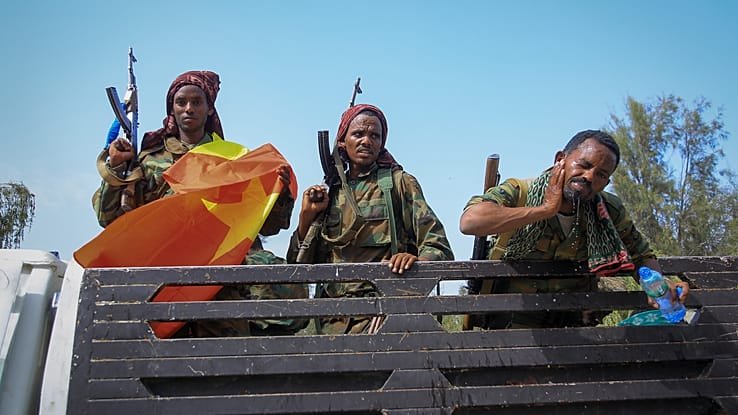
Seven Ethiopian armed groups, including former adversaries from the country’s 2020–2022 civil war, have formed an alliance aimed at removing Prime Minister Abiy Ahmed’s government and establishing a transitional administration.
The coalition, known as the Ethiopian Peoples’ Forces Alliance for Survival, brings together groups from several regions, including the Tigray People’s Liberation Front (TPLF), Amhara Fano National Movement and Oromo Liberation Army (OLA). Four other groups are also part of the alliance.
TPLF Vice President Amanuel Assefa said the groups had been coordinating for more than a year and were united by the objective of removing the federal government and facilitating a transitional government.
“We just formed an alliance, we are collaborating with several groups and our objectives are to remove the regime and facilitating a transitional government,” Amanuel said.
Fano leader Zemene Kasse will chair the alliance, according to Amanuel.
The other members include the Ogaden National Liberation Front, Afar Revolutionary Democratic Unity Front, Benishangul People’s Liberation Movement and Gumuz People’s Democratic Movement.
The announcement comes amid renewed tensions in Tigray, where the federal government and TPLF have reportedly increased troop deployments. The development has raised concerns over a possible return to large-scale conflict following the 2022 peace agreement that ended the Tigray war.
The TPLF and Fano fought on opposite sides during that conflict, while Fano later turned against the federal government in 2023. The OLA has also been fighting federal forces in Oromia since 2018.
The alliance members have previously had serious disagreements, including over territory. Amhara and Tigray forces both claim Western Tigray, which has been administered by Amhara authorities since the end of the war.
Analysts have questioned whether the groups, which have different political objectives and remain geographically dispersed, can sustain effective military coordination against the federal government.
Kjetil Tronvoll, a regional specialist at Oslo New University College, said a coordinated military command could potentially put pressure on the government by opening several fronts, but questioned the alliance’s ability to sustain a prolonged conflict and what political arrangement could follow any change of government.
The Ethiopian federal authorities had not immediately responded to requests for comment on the latest announcement.
Amanuel acknowledged the differences among the groups, saying they intended to address their disputes through dialogue.
“We will sit at the table later to solve our problems peacefully,” he said.


