



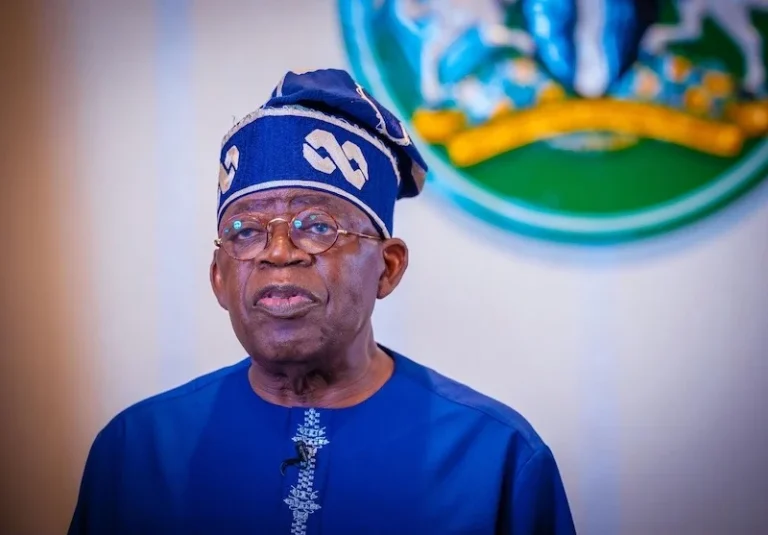
President Bola Tinubu has said Nigeria has significantly reduced its dependence on crude oil revenue as his administration intensifies efforts to build a more diversified and resilient economy.
Tinubu said the Renewed Hope Agenda was focused on expanding the contributions of agriculture, manufacturing, digital technology and the creative industries while ensuring that the oil and gas sector continues to support national development.
The President spoke on Tuesday in Abuja at the fifth anniversary of the Nigerian Upstream Petroleum Regulatory Commission (NUPRC). He was represented at the event by Vice President Kashim Shettima.
Tinubu said improved collaboration among security agencies, oil and gas operators, host communities and the NUPRC had helped stabilise crude oil production and strengthen the sector.
According to him, the improvement in the operating environment has also helped attract investors back to Nigeria, with the country emerging as Africa’s leading destination for upstream investment for two consecutive years.
“These gains matter well beyond the oil and gas industry. Under the Renewed Hope Agenda, we are building a diversified economy in which agriculture, manufacturing, the digital and creative industries all play their part.
“We have already reduced our dependence on oil revenue, and we intend to go further,” the President said.
He, however, stressed that a diversified economy still required reliable energy, foreign exchange and investment, noting that the petroleum sector remained important to Nigeria’s economic development.
Tinubu said Nigeria’s gas resources could provide energy for homes and industries, while petroleum earnings could support the naira and contribute to funding government responsibilities.
He added that a well-managed upstream sector could create employment and business opportunities for Nigerian engineers, fabricators and service companies.
The President said his administration was determined to use petroleum resources to build the wider economy rather than make the country excessively dependent on them.
On energy transition, Tinubu said the government would pursue an approach suited to Nigeria’s development needs, describing the current period as “the decade of Gas.”
“With the largest gas reserves in Africa, we will expand gas supply for power, industry and clean cooking, reduce flaring and methane emissions, and grow renewable energy alongside it,” he said.
He added that Nigeria would meet its climate responsibilities while ensuring that energy access and economic development were not compromised.
Tinubu also pledged to strengthen Nigeria’s position as a preferred destination for hydrocarbon investment, saying the government would place greater emphasis on compliance and accountability in the next phase of reforms.
He said oil and gas operators benefiting from government incentives must meet their obligations regarding work programmes, local content, environmental protection and host communities.
The President equally charged the NUPRC to be accountable for its performance, while assuring investors that the government would uphold the rule of law and the sanctity of contracts.
He said disputes within the sector should be minimised and, where they occur, resolved quickly and fairly.
Tinubu described the Petroleum Industry Act (PIA) as an important foundation for reforms in the petroleum sector, but noted that legislation alone could not guarantee investment.
“Laws only set the rules, while investors decide on commercial terms,” he said.
The President said his administration had listened to concerns from investors over high operating costs, lengthy contracting processes and uncertainty surrounding fiscal terms for complex projects.
“Investors told us plainly that good rules were not enough while costs remained high, contracting took too long and fiscal terms for complex projects were uncertain. We listened, and we acted,” he said.
Tinubu described the NUPRC as a critical link between government policy and investment, charging the commission to maintain clear processes, reliable timelines and effective coordination with other government agencies.
He said improving regulatory efficiency would be essential to sustaining investment and unlocking the full potential of Nigeria’s oil and gas resources.


