



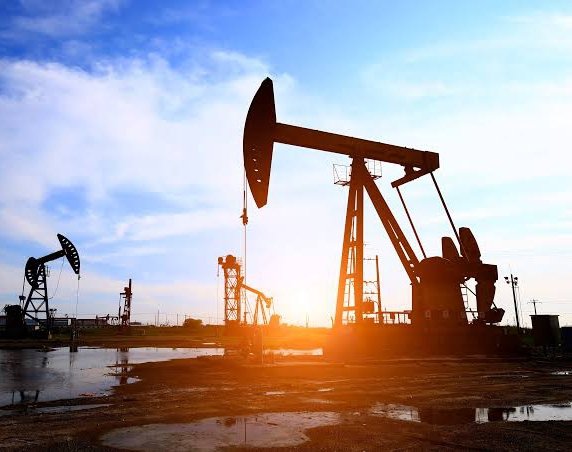
Despite the Nigerian Government spending billions of naira on pipeline surveillance in the Niger Delta region, the country has continued to lose billions of dollars to crude oil theft, raising fresh questions about the effectiveness of measures introduced to protect its petroleum assets and improve production.
For instance, in 2025, the country lost approximately 3.33 million barrels of crude oil to theft, with 2.19 million barrels stolen in the final quarter of the year alone.
Apart from the crude oil theft, the Nigerian Upstream Petroleum Regulatory Commission’s revenue collections fell by N2.14 trillion amid mounting losses in the oil sector, further exposing the financial consequences of insecurity and operational challenges confronting the country’s most important revenue-generating industry.
The losses, which accounted for nearly 66 per cent of the total reported crude theft for the year in the last three months, occurred despite the Nigerian National Petroleum Company Limited spending N8.67 trillion on energy security in 2025.
The figures present a troubling picture of an industry in which substantial resources are being committed to protecting oil and gas infrastructure, yet significant volumes of crude continue to disappear before they can be accounted for and monetised.
The NUPRC’s 2025 annual report, released on Thursday, showed that crude oil and gas revenue collections declined from N12.56 trillion in 2024 to N10.42 trillion in 2025, representing a 17.03 per cent drop.
The report highlighted a sharp escalation in crude theft in the fourth quarter, when 2.19 million barrels were recorded, almost five times the 440,434 barrels reported in the third quarter.
According to the commission, 896,471 barrels were recorded as stolen in the first quarter, while the second quarter recorded a negative figure of 200,400 barrels, attributed to excess volumes identified during reconciliation.
The third quarter recorded 440,434 barrels, while the fourth quarter accounted for the highest volume of 2.19 million barrels.
The quarterly figures brought the reported crude theft volume for the year to approximately 3.33 million barrels, with the fourth-quarter losses alone accounting for about 65.8 per cent of the annual total.
The report stated, “Nigeria recorded 896,471 barrels of crude oil theft in the first quarter.
“The second quarter recorded a negative 200,400 barrels, which the commission described as an excess volume in its reconciliation. Reported theft stood at 440,434 barrels in the third quarter. The fourth quarter recorded 2.19 million barrels, the highest quarterly volume of the year.”
The negative figure in the second quarter is particularly important in understanding the annual calculation. It represents an adjustment arising from the reconciliation of reported volumes rather than an actual recovery of crude oil by security operatives. The combined figures nevertheless point to a significant increase in reported losses towards the end of the year.
The theft persisted amid the enormous financial demands of securing Nigeria’s petroleum assets. The NNPC’s financial disclosures put energy security cost receivables at N8.67 trillion at the end of 2025.
However, the figure requires some qualification: the company’s audited accounts indicated that no new energy security expense was recognised in 2025, as the outstanding amount was reconciled against royalties, taxes and dividends due to the Federation.
The reconciliation was concluded in September 2025. It would therefore be inaccurate to describe the entire N8.67 trillion as fresh expenditure incurred during 2025.
The development does not diminish the scale of the financial burden associated with protecting oil and gas infrastructure. NNPC’s accounts show that the energy security receivable had been built up through previous costs, while the company continued to operate under an arrangement allowing it to incur approved expenses on behalf of the Federation.
In 2024, NNPC recognised N7.13 trillion in energy security expenses, compared with N4.84 trillion in 2023. The reconciliation of the outstanding balance in 2025 also illustrates the need for greater clarity in distinguishing between new expenditure, accumulated receivables and amounts subsequently settled through government obligations.
The continued losses, alongside the substantial security-related financial obligations, raise concerns over the effectiveness of efforts to safeguard production facilities and crude evacuation infrastructure.
Nigeria’s oil infrastructure stretches across difficult terrain in the Niger Delta, where pipelines pass through creeks, rivers, remote communities and other locations that are difficult to monitor continuously. Pipeline vandalism, illegal connections and unauthorised crude evacuation have remained persistent problems for operators and security agencies.
Although surveillance arrangements involving private contractors, host communities and government security agencies have been deployed to protect critical facilities, the latest figures suggest that the country still faces difficulties in preventing crude theft and detecting losses across the production and transportation chain.
The consequences go beyond the volume of crude missing from official records. Every barrel stolen represents potential export earnings and government revenue that may not be realised. It also reduces the volume of crude potentially available to domestic refineries, which require consistent feedstock supplies to operate efficiently.
The losses are particularly significant at a time when the Federal Government is seeking to increase oil production, improve foreign exchange earnings and strengthen public finances through the petroleum industry.
Despite the losses, Nigeria produced 541.08 million barrels of crude oil and blended condensate in 2025.
Quarterly production stood at 132.70 million barrels in the first quarter, 137.69 million barrels in the second, 137.45 million barrels in the third and 133.23 million barrels in the fourth quarter.
The country also produced 48.52 million barrels of unblended condensate during the year.
The production figures indicate that output remained relatively stable across the four quarters, although the country continued to contend with crude theft, pipeline disruptions and other operational challenges.
Nigeria’s ability to translate its production capacity into higher government earnings remains a major concern, particularly as crude oil continues to account for a substantial portion of the country’s foreign exchange receipts and public revenue.
The country has repeatedly struggled to meet its production targets, with insecurity and operational disruptions among the factors affecting output. Although improvements in pipeline availability and surveillance have supported production recovery, the latest NUPRC figures show that the problem of crude theft remains unresolved.
On revenue performance, oil and gas royalties, including Project Gazelle and NNPC receivables, remained the commission’s largest revenue source, generating N8.97 trillion in 2025, compared with N11.08 trillion in 2024.
The decline of N2.11 trillion represented a 19.03 per cent reduction, reflecting the weaker revenue performance from the country’s upstream petroleum activities.
The commission generated N10.42 trillion against a projected revenue target of N16.54 trillion, representing 63 per cent performance. This means that NUPRC fell short of its revenue target by approximately N6.11 trillion, a significant gap with implications for the government’s fiscal projections and the resources available for public spending.
The report stated, “The total approved budget for 2025 was N645,462,335,500.80, with total income of N342,814,462,174.97 and total expenditure was N304,533,385,103.
“Total revenue generated was N10,424,478,448,682.40, which is 63 per cent of projected revenue of N16,538,206,608,738.00.”
The shortfall is noteworthy because Nigeria’s budgetary assumptions and fiscal planning remain heavily influenced by oil revenue. When collections fall below projections, the government faces additional pressure to meet its obligations, fund infrastructure and provide essential services without further increasing borrowing.
Despite the overall decline in revenue, some categories recorded improvements during the year.
Receipts from gas flare penalties increased by 56.27 per cent, from N391.26 billion in 2024 to N611.42 billion in 2025.
Signature bonuses rose by 44.2 per cent, from N369.58 billion to N532.94 billion, while concession rentals increased by 61.1 per cent, from N23.71 billion to N38.19 billion.
Miscellaneous revenue also increased from N35.20 billion to N46.44 billion.
However, royalty by price declined from N313.72 billion to N213.41 billion, while lease renewal receipts dropped sharply from N230.73 billion in 2024 to N8.23 billion in 2025.
The figures suggest that although the commission recorded stronger collections from some regulatory and licensing-related revenue streams, these gains were insufficient to offset the decline in royalties, which remain central to government earnings from petroleum production.
The commission’s total income from cost of revenue collection and internally generated revenue increased by 21.85 per cent to N342.81 billion in 2025, compared with N281.34 billion in 2024.
Cost of revenue collection accounted for N335.45 billion, while internally generated revenue contributed N7.36 billion.
Beyond crude theft and declining revenue, the report also documented 357 oil spill incidents during the year, with sabotage accounting for 49.5 per cent of the reported cases.
The high proportion of spills attributed to sabotage further illustrates the difficulties associated with protecting petroleum infrastructure in the Niger Delta. Apart from the immediate loss of crude, oil spills threaten waterways, fishing activities, agricultural land and the livelihoods of communities that depend on the environment for their economic survival.
The environmental consequences also place additional responsibilities on regulators and operators, particularly in ensuring that affected locations are properly investigated, cleaned up and restored.
The figures reinforce the need for a more comprehensive approach to tackling oil theft, one that goes beyond deploying security personnel and awarding pipeline surveillance contracts. Effective monitoring, improved accountability, timely investigation of breaches, stronger community engagement and the use of technology to detect illegal connections are critical to reducing losses.
There is also the question of transparency in the financial arrangements surrounding oil security. With billions of naira committed to protecting petroleum assets and substantial receivables accumulated by NNPC, Nigerians need clearer information about how the funds are deployed, the results achieved and the responsibilities of the various agencies and contractors involved.
The latest NUPRC report therefore presents a mixed picture of Nigeria’s upstream petroleum industry. While the country continued to produce substantial volumes of crude oil and condensate, the 3.33 million barrels reportedly lost to theft, the N2.14 trillion decline in revenue collections and the 357 oil spill incidents expose persistent weaknesses in the sector.
For an economy that still depends heavily on petroleum earnings, the cost of allowing crude theft to continue at this level is enormous. Beyond the immediate financial losses, it undermines production planning, weakens investor confidence and limits the resources available to government.
The challenge before the authorities is not simply to spend more on oil security but to demonstrate that such expenditure is producing measurable results. Until the persistent theft of crude oil and attacks on petroleum infrastructure are substantially curtailed, Nigeria will continue to lose valuable resources that could otherwise support economic growth and national development.


