



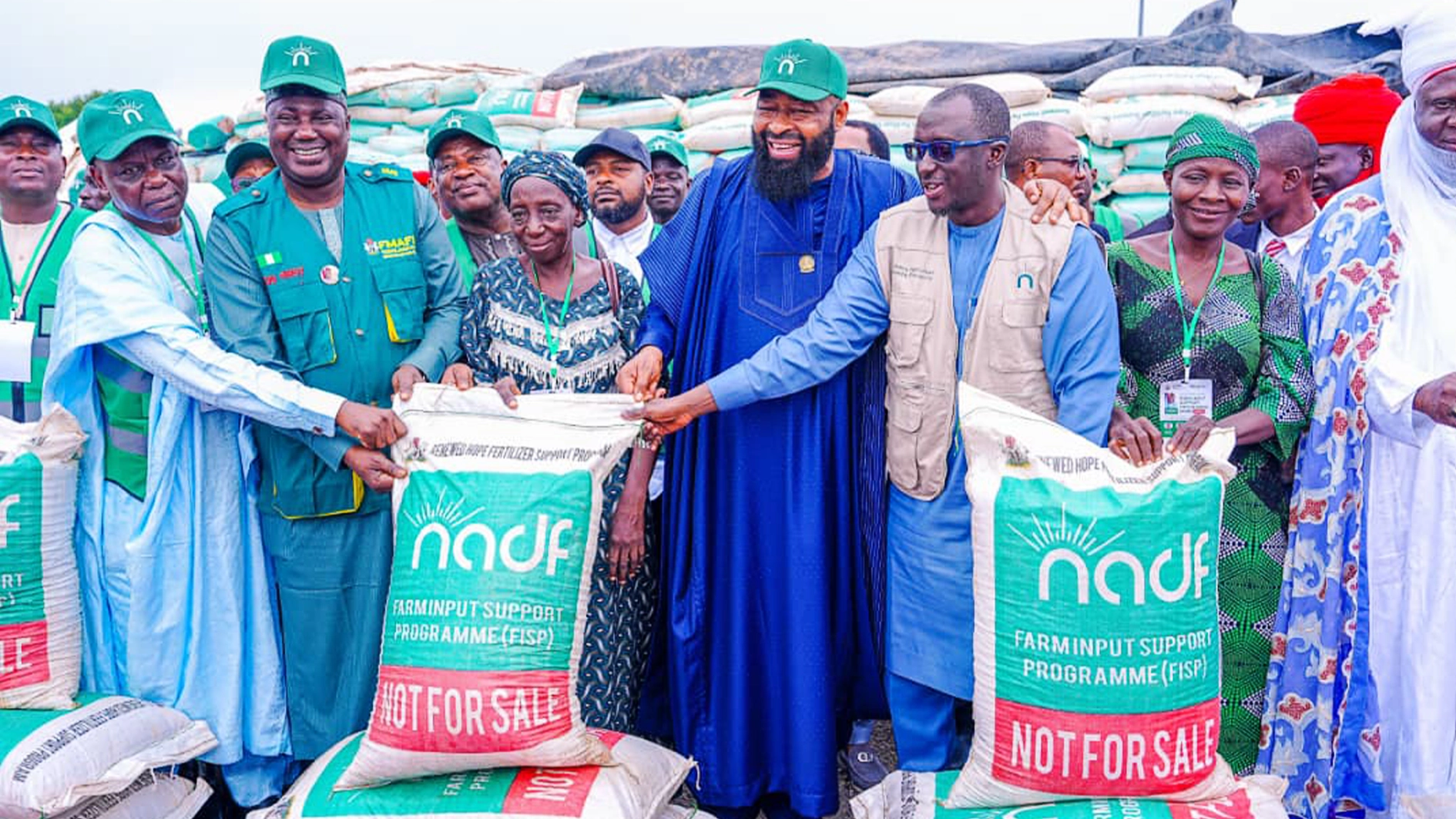
The National Agricultural Development Fund (NADF) and Sahel Capital Fund Managers have signed a Memorandum of Understanding (MoU) to expand investment opportunities in Nigeria’s agricultural sector, with a focus on reducing the cost of financing for agribusinesses and addressing challenges limiting productivity across agricultural value chains.
The partnership, which brings together public-sector support and private investment expertise, is designed to move agricultural financing beyond conventional lending towards a more sustainable investment ecosystem capable of attracting institutional investors and providing businesses with the capital and expertise required to grow.
The agreement comes at a time when access to affordable financing remains one of the major challenges confronting Nigerian agribusinesses, particularly small and medium-sized enterprises that need capital to expand production, acquire modern equipment, improve processing capacity and reach wider markets.
For an economy seeking to strengthen domestic food production, reduce dependence on imported agricultural products and create employment opportunities, the ability of local businesses to access sustainable investment is critical. However, high borrowing costs, inadequate infrastructure and the risks associated with agricultural activities have continued to restrict the growth of many enterprises operating across the sector.
The NADF-Sahel Capital partnership seeks to address some of these constraints by combining public-sector and concessionary capital with private investment expertise to develop financing structures that can accommodate the peculiarities of agricultural businesses and encourage wider participation by investors.
Executive Secretary of NADF, Muhammed Ibrahim, said the MoU was part of the agency’s efforts to reposition agricultural financing beyond conventional lending towards building an investment ecosystem capable of attracting more capital into the sector.
He explained that the decision to partner with credible private-sector organisations was aimed at reducing investment risks associated with agricultural activities and unlocking opportunities through well-structured financing arrangements.
“The agricultural sector is often viewed through the lens of risk, but beyond those risks lie enormous opportunities. What we are doing with Sahel Capital is a deliberate shift from simply financing agriculture to building an investment ecosystem where capital can flow sustainably into the sector, attract more investors and support the growth of agribusinesses,” Ibrahim said.
The approach is significant because agricultural businesses often face financing difficulties that go beyond the availability of loans. Many require patient capital, appropriate investment structures and technical support to manage the risks associated with production, processing and distribution.
Unlike businesses in some other sectors, agricultural enterprises operate within seasonal production cycles and are exposed to weather uncertainties, fluctuating commodity prices, changing market conditions and other operational challenges. These factors often make commercial lenders cautious, resulting in high interest rates, stringent collateral requirements and restrictive lending conditions.
The partnership is therefore expected to provide a framework through which agricultural investments can be better structured, risks assessed and private capital attracted to businesses with viable growth opportunities.
Speaking earlier, Managing Partner of Sahel Capital, Mezuo Nwuneli, commended NADF for its efforts to address critical challenges in Nigeria’s agricultural sector, describing the agency as a strategic partner in driving sustainable agricultural development.
Nwuneli said his organisation was attracted by NADF’s deliberate approach to identifying and addressing fundamental problems within the agricultural ecosystem and its commitment to achieving meaningful impact.
“What we saw with NADF is that it has been very focused on figuring out how to solve critical problems in the ecosystem,” he said.
He noted that Sahel Capital had been active in the agricultural sector for several years and that collaborating with institutions was consistent with its approach of providing complementary expertise to support sustainable development.
According to him, the partnership would concentrate on two major areas: reducing the cost of financing for agribusinesses and jointly identifying and addressing challenges affecting agricultural productivity and value chains.
Nwuneli observed that many small and medium-sized agribusinesses currently obtain loans at interest rates of between 24 and 27 per cent, a situation that significantly limits their ability to expand operations, invest in equipment and improve their competitiveness.
At such interest rates, businesses are faced with considerable borrowing costs, making it difficult to commit resources to expansion projects that may take months or years to generate returns. For agricultural enterprises operating on relatively narrow margins, the cost of servicing loans can also limit their ability to reinvest earnings in production and other critical areas.
Reducing this burden is consequently one of the central issues the partnership seeks to address. More affordable financing would give businesses greater room to plan investments, improve operational capacity and compete more effectively in the market.
Beyond the cost of capital, the agreement’s emphasis on identifying and addressing productivity challenges is also important to the development of Nigeria’s agricultural value chains.
Agriculture remains a major contributor to Nigeria’s economy and a significant source of employment, particularly in rural communities. However, farmers and agribusinesses continue to contend with inadequate storage facilities, poor rural infrastructure, limited access to modern technology, inefficient processing systems and difficulties connecting producers to markets.
These constraints contribute to post-harvest losses, high production costs and inconsistent supplies of agricultural commodities. They also limit the capacity of local businesses to compete effectively with imported products.
The challenges are particularly evident in the gap between agricultural production and processing. While Nigeria produces substantial quantities of various food crops, inadequate processing and storage capacity often prevent businesses from maximising the commercial value of their produce.
Financing arrangements that take account of these gaps could support investments in food processing plants, warehouses, cold-chain facilities and modern production equipment. Such infrastructure is important for reducing wastage, improving product quality, extending the shelf life of agricultural produce and strengthening the supply of processed food products.
The development of stronger value chains would also provide opportunities for businesses involved in the supply of agricultural inputs, mechanisation, transportation, processing, packaging and distribution.
For small and medium-sized agribusinesses, access to institutional investment and professional fund management expertise could also improve business planning, financial management and their ability to meet the requirements of larger markets.
This is particularly relevant for businesses seeking to move beyond small-scale operations but lack the financial capacity and technical support to undertake major investments. A more structured investment environment could help connect such enterprises with capital providers while ensuring that funding is directed towards commercially viable agricultural activities.
The potential impact also extends to rural communities, where agriculture provides livelihoods for millions of Nigerians. Agribusiness expansion creates demand for farm produce, labour, transportation, storage and other services that support agricultural production. Improving the commercial viability of these activities is therefore important to rural incomes and employment.
Nigeria has introduced several agricultural financing and development interventions over the years, including programmes aimed at improving access to credit, supporting farmers and encouraging private-sector investment. However, the persistence of financing constraints shows that the challenge is not simply the availability of funds but also the need for appropriate financing structures that reflect the realities of agricultural businesses.
The NADF-Sahel Capital agreement represents an effort to address this gap by bringing together the public-sector institution’s development mandate and the private fund manager’s investment experience.
Nevertheless, the success of the partnership will depend on the practical arrangements developed by both organisations, particularly the financing structures to be introduced, the businesses targeted and the mechanisms for addressing risks across different agricultural value chains.
For agribusinesses struggling with borrowing costs of between 24 and 27 per cent, the proposed focus on reducing financing costs is particularly significant. The extent to which the partnership can deliver more affordable capital will be an important measure of its value to the sector.
Ultimately, the agreement provides an opportunity to strengthen the relationship between agricultural development financing and private investment in Nigeria. Its success will be measured not merely by the signing of the MoU but by the capital mobilised, businesses supported and tangible improvements in agricultural productivity and value-chain development.


 and Sahel Capital Fund Managers have signed a Memorandum of Understanding)