



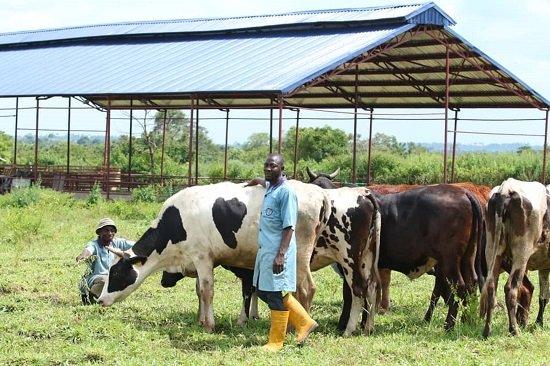
For decades, Nigeria’s dairy industry has been dominated by imported products, while efforts to develop a sustainable domestic milk production system have remained largely elusive. But the latest investment by Promasidor Nigeria Limited in Ikun Dairy Farm, Ekiti State, has signalled fresh hope for the development of the local livestock industry and the country’s ambition to reduce its dependence on imported dairy products.
The investment is expected to strengthen domestic milk production, improve cattle breeding capacity and build a competitive livestock industry capable of meeting a larger proportion of Nigeria’s dairy needs.
The farm, operated in partnership with the Ekiti State Government, is increasingly demonstrating the potential of strategic public-private collaboration to transform local milk production, improve agricultural productivity and create sustainable economic opportunities across the livestock value chain.
According to a statement, the progress achieved at the facility came into focus during a working visit by the Minister of Livestock Development, Idi Mukhtar Maiha, who inspected the farm’s operations and assessed its contribution to the development of Nigeria’s dairy industry.
Maiha commended the investment, describing the progress in local cattle breeding, animal healthcare and milk production as important contributions to the Federal Government’s efforts to strengthen the livestock sector.
The Minister noted that Nigeria spends approximately $1.5 billion annually on dairy imports, highlighting the urgent need to develop domestic production capacity and reduce the country’s exposure to international supply pressures.
The huge import expenditure underscores the economic implications of Nigeria’s continued dependence on foreign dairy products, particularly at a time when pressure on foreign exchange, rising production costs and fluctuations in international commodity prices have increased the importance of local manufacturing and agricultural production.
Developing the domestic dairy industry would not only help conserve foreign exchange but also create opportunities for farmers, processors, feed producers, veterinary professionals and other businesses operating within the agricultural value chain.
Originally established in 1983, Ikun Dairy Farm remained underutilised for several years before a partnership between Promasidor and the Ekiti State Government, formalised in 2019, initiated a new phase of investment and operational development.
With an initial $5 million investment by Promasidor, the farm has grown into an integrated agricultural operation covering more than 500 hectares, housing over 700 cattle and producing more than 6,000 litres of fresh milk daily.
The scale of the operation represents a significant step towards building the infrastructure required for commercial dairy farming in Nigeria, where limited access to improved cattle breeds, inadequate feed production, animal health challenges and the high cost of establishing modern dairy facilities have constrained productivity.
One of the most significant achievements of the project, however, is its progress in local cattle breeding, an area considered critical to the long-term sustainability of the dairy industry.
The farm’s Group Finance Director and Chairman, Mr Yomi Adexson, disclosed that the facility sold more than 160 pregnant heifers to farmers this year, helping to expand dairy farming capacity beyond the farm.
The development is particularly important because increasing the number of productive dairy cattle across the country requires more than establishing large commercial farms. It also depends on building a reliable supply of quality breeding stock that smaller and medium-scale farmers can access.
By selling pregnant heifers to other farmers, Ikun Dairy Farm is extending the benefits of its investment beyond its immediate operations and creating an opportunity for the expansion of dairy production among independent livestock operators.
Such an arrangement could help address one of the structural challenges facing Nigeria’s dairy industry: the limited availability of improved cattle breeds capable of producing higher volumes of milk under local conditions.
Adexson explained that the farm’s development had not been without challenges, recalling the loss of approximately 185 imported cattle during its early operations because of difficulties adapting to local environmental conditions.
The experience exposed the risks associated with relying heavily on imported livestock without adequately considering the country’s climatic conditions, disease environment and other local production challenges.
However, sustained investment in breeding, animal healthcare and improved management practices has enabled the development of successive generations of cattle better suited to the Nigerian environment.
This progress offers important lessons for the country’s livestock development strategy, particularly in improving productivity, reducing dependence on imported breeding stock and strengthening the resilience of local dairy farming.
It also reinforces the importance of developing local expertise in cattle genetics, breeding management and veterinary services rather than depending entirely on the importation of animals to expand production.
For Nigeria to achieve meaningful growth in dairy production, the development of suitable cattle breeds must go hand in hand with investments in feed, water supply, animal healthcare, infrastructure and access to markets.
The facility has also developed agricultural activities involving maize, soybean and cassava cultivation to support animal feed production, alongside investments in animal healthcare and improved farm management.
The integration of crop production with livestock farming is significant because feed availability and cost remain important considerations in commercial dairy operations. A reliable supply of quality feed is essential for maintaining cattle health, improving milk yields and ensuring that dairy production remains economically viable.
By cultivating crops to support its livestock operations, the farm is seeking to establish a production system in which agricultural activities complement one another, reducing some of the operational pressures associated with dependence on external feed supplies.
The approach also creates opportunities for farmers involved in crop production, particularly those supplying agricultural raw materials required by livestock operators.
Promasidor’s Chief Executive Officer, Mr Francois Gillet, emphasised that building a sustainable dairy industry requires a long-term approach anchored on technical knowledge, consistent investment and collaboration.
He identified local breeding capacity, farmer development and adaptation to environmental conditions as essential elements of a productive and resilient dairy industry.
His position reflects the realities of an industry where investments in dairy infrastructure cannot deliver their full potential without sustained attention to the supporting agricultural ecosystem.
Unlike some agricultural ventures that can achieve relatively quick production cycles, commercial dairy farming requires substantial initial capital, specialised technical expertise and continuous operational investment. Cattle breeding, in particular, involves a long-term process that demands consistency before the benefits become fully evident.
This makes the participation of private investors particularly important, as government policies and public infrastructure support must be complemented by businesses willing to commit resources, technology and management expertise to the sector.
Representing the Ekiti State Governor during the visit, the Chief of Staff, Mr Oyeniyi Adebayo, reaffirmed the state’s commitment to developing an integrated agricultural value chain linking crop production with livestock development.
The state’s partnership with Promasidor provides an example of how subnational governments can leverage private-sector investment to revive existing agricultural assets and stimulate economic activities.
Beyond milk production, the expansion of the dairy farm has implications for employment generation, agricultural skills development and the growth of businesses providing inputs and services to the livestock industry.
There are also opportunities to strengthen the relationship between commercial dairy operators and smaller farmers through the supply of breeding animals, technical support and access to established milk collection and processing channels.
For Promasidor, whose operations in Nigeria are closely associated with dairy-based consumer products, the development of a reliable local milk supply presents an opportunity to strengthen its domestic sourcing capacity while contributing to the wider development of the agricultural sector.
Nevertheless, the success of the Ikun project should be measured not only by its current production figures but also by its ability to expand breeding capacity, increase milk output and establish a sustainable model that can be replicated across other parts of the country.
Nigeria’s dairy self-sufficiency ambition will require investments on a much larger scale, supported by consistent government policies, accessible financing, improved veterinary services, modern livestock infrastructure and stronger linkages between farmers and processors.
The challenge will also be to ensure that the gains recorded by large commercial farms translate into wider improvements in the livelihoods of smallholder farmers, who remain important participants in the country’s livestock economy.
While Ikun Dairy Farm alone cannot close Nigeria’s dairy production gap, its progress demonstrates what sustained private-sector investment and government collaboration can achieve when existing agricultural assets are repositioned for commercial productivity.
With domestic milk production still facing considerable structural challenges, the Promasidor investment offers an encouraging example of how local breeding, integrated farming and private-sector participation could contribute to reducing import dependence and building a more competitive Nigerian dairy industry.


