



The failure of delegates at the United Nations COP31 climate conference in Turkey to agree on a common position on fossil fuels has exposed deep divisions among nations over how far the world should go in confronting the principal drivers of global warming, with European countries and vulnerable states rejecting a final draft they considered inadequate.
The disagreement, which centred on whether the outcome document should contain stronger commitments on transitioning away from oil, gas and coal, stalled negotiations and prevented the adoption of a consensus deal at the closing session on Sunday.
The European nations, alongside several countries particularly vulnerable to climate disasters and rising sea levels, opposed the draft, arguing that it weakened critical climate protections and failed to adequately address fossil fuel dependence.
The rejection dealt a setback to efforts to build on previous international climate agreements, particularly the landmark commitment reached at COP28 in Dubai, United Arab Emirates, to transition away from fossil fuels.
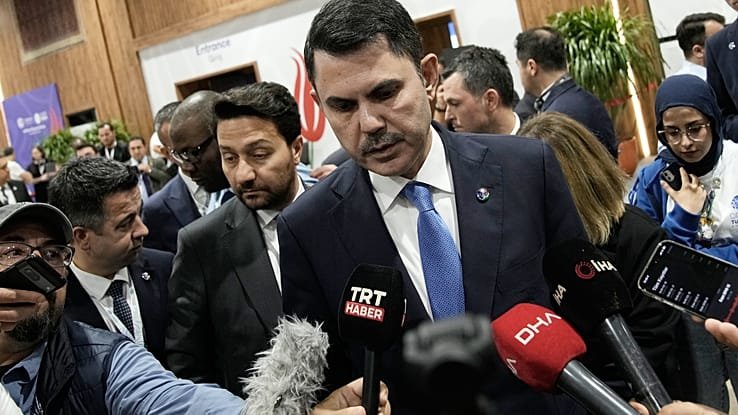
COP31 President and Turkish Environment Minister Murat Kurum acknowledged that delegates had failed to reach consensus, bringing the negotiations to an end without the proposed overarching agreement.
“I understand that there is no agreement on this text. For that reason, these decisions have not been adopted,” Kurum told the closing session in Antalya, Turkey.
The conference, which continued for two days beyond its scheduled conclusion, had been marked by intense negotiations among countries with competing interests over energy production, climate finance, emissions reduction and the pace of the transition from fossil fuels.
Kurum said the presidency had worked “day and night” to secure a stronger outcome, but the negotiations remained deadlocked over the language and substance of the proposed agreement.
The Turkish presidency had presented successive drafts in an attempt to bridge the differences among delegations, but the fourth draft, which did not explicitly mention fossil fuels, was rejected by countries insisting that the final outcome should contain a clear commitment on the transition.
The disagreement was not simply about wording. It reflected a broader struggle over the responsibility of countries to reduce emissions, the economic consequences of moving away from fossil fuels and the extent to which wealthier nations should support developing countries facing the costs of climate change.
For much of the first 25 years of United Nations climate negotiations, fossil fuels were largely absent from the explicit language of final agreements, despite their central role in driving greenhouse gas emissions and climate change.
That changed at COP28 in Dubai in 2023, when countries agreed for the first time to include a call for transitioning away from fossil fuels in the global climate deal. The agreement was widely regarded as a significant breakthrough after years of resistance and disagreements over whether oil, gas and coal should be specifically identified in climate negotiations.
The Dubai agreement, however, did not establish a binding timetable for the elimination of fossil fuels, leaving countries to determine how the transition would be pursued in line with their national circumstances, energy needs and development priorities.
The COP31 negotiations were expected to build on that commitment, but the latest disagreement demonstrated how difficult it remains to translate the language of transition into specific, agreed international action.
The Turkish-Australian proposal reportedly recalled the Dubai agreement but did not provide the stronger language sought by several countries and environmental groups. For opponents of the draft, simply reaffirming an earlier commitment without outlining a clearer pathway towards implementation was insufficient.
The absence of an explicit reference to fossil fuels in the fourth draft became a major point of contention, with critics arguing that the document failed to adequately address the central issue confronting climate negotiations.
The position of countries opposing the draft was also shaped by growing concerns over the consequences of global warming, including extreme heat, flooding, drought, rising sea levels and other climate-related disasters affecting vulnerable populations.
Small island nations and developing countries, many of which contribute relatively little to global emissions but face disproportionate climate risks, have consistently pressed for stronger action by major emitters and fossil fuel-producing economies.
For such countries, the pace of the energy transition is not merely an economic or political debate but a question of survival, particularly where rising sea levels threaten coastal communities, while extreme weather events undermine agriculture, livelihoods and infrastructure.
The disagreement at COP31 therefore exposed the difficulty of reconciling the demands of climate-vulnerable nations with the interests of countries whose economies remain heavily dependent on fossil fuel production, exports or consumption.
Oil and gas-producing countries have continued to argue that energy transition policies must take account of energy security, economic development, national circumstances and the need to ensure affordable and reliable supplies.
Developing economies, including those with significant energy poverty, have also maintained that access to affordable energy remains essential to industrialisation, job creation and economic growth.
The debate has consequently centred not only on whether fossil fuels should be phased down or transitioned away from, but also on who should bear the economic costs, how quickly the process should happen and what support would be available to countries with limited resources.
For many developing nations, a transition that threatens jobs, public revenue and access to energy without adequate financing, technology transfer and investment could deepen existing economic challenges.
These concerns have repeatedly complicated climate negotiations, where countries are expected to agree on common objectives despite differing levels of development, historical emissions, economic structures and capacities to respond to climate change.
The breakdown of negotiations also raises questions about the future direction of international climate diplomacy and the ability of the United Nations process to secure consensus on increasingly contentious issues.
The Paris Agreement, adopted in 2015, remains the principal international framework for addressing climate change. It commits countries to efforts to limit global warming to well below 2°C above pre-industrial levels, while pursuing efforts to limit the increase to 1.5°C.
Under the agreement, countries are expected to submit and strengthen national climate plans, known as Nationally Determined Contributions (NDCs), outlining their commitments to reducing emissions and adapting to climate change.
However, the implementation of these commitments continues to depend on national policies, international cooperation, financing and the willingness of governments to pursue more ambitious climate action.
Without a new overarching agreement at COP31, existing frameworks and previous COP commitments will remain the basis for international climate action, although the absence of a fresh consensus could weaken the momentum countries hoped to achieve through the negotiations.
The failure to agree on the proposed document is also likely to intensify pressure on governments, climate campaigners and international institutions to find alternative avenues for advancing the transition away from fossil fuels.
Environmental groups have consistently argued that the world cannot adequately address climate change without reducing dependence on fossil fuels, while insisting that governments must move beyond broad declarations towards concrete implementation measures.
The latest disagreement in Turkey illustrates the difficulties confronting climate diplomacy, where progress often depends on painstaking negotiations and compromises among countries with competing economic, political and environmental priorities.
Despite the setback, the debate over fossil fuels is unlikely to disappear from the international climate agenda. Rather, the failure to reach agreement at COP31 could make the issue even more central to future negotiations, as countries continue to grapple with the balance between climate ambition, energy security, economic development and the need to protect vulnerable populations.
The rejection of the draft has left the conference without the consensus outcome its presidency sought, underscoring the widening divisions over the future of fossil fuels and the challenge of securing a common international response to the climate crisis.


