



Nigeria’s renewed counterterrorism diplomacy with the European Union is expected to open new avenues for intelligence sharing, defence technology cooperation and regional security coordination, as the Federal Government intensifies efforts to confront insurgency, terrorism and other security threats across the country.
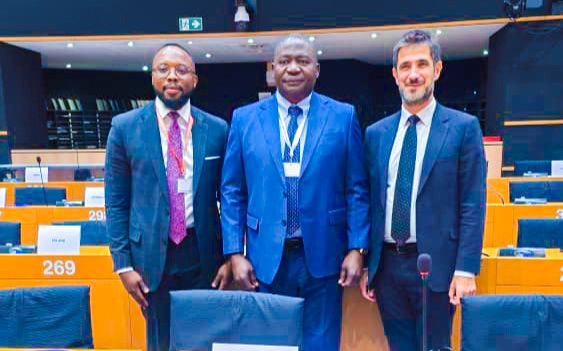
The Minister of Defence, General Christopher Gwabin Musa (rtd.), returned to Abuja after participating in the 2026 Schuman Security and Defence Forum in Brussels, Belgium, where Nigeria secured fresh commitments to strengthen counterterrorism cooperation and international defence partnerships.
The engagements, which brought together European defence leaders, African security stakeholders and multilateral partners, focused on emerging security threats, technological innovation in warfare, intelligence coordination and the need for stronger international collaboration in tackling terrorism.
Musa described Nigeria’s participation in the high-level forum, organised by the European External Action Service (EEAS), as a major milestone in advancing the country’s counterterrorism diplomacy and international security cooperation.
In a statement issued on Sunday, the minister said the discussions produced significant strategic gains in intelligence sharing, counterterrorism financing, border management and emerging defence technologies, in line with President Bola Tinubu’s security priorities.
He identified strengthened Nigeria-European Union counterterrorism alignment, technology partnerships, international endorsement of Nigeria’s non-kinetic security approach and enhanced regional security diplomacy as some of the key outcomes of the forum.
The minister said discussions with EU defence leaders and other multilateral partners opened new opportunities for technical cooperation in counter-drone technologies, military artificial intelligence, digital forensics and satellite intelligence.
These areas have become increasingly important to modern security operations, particularly as armed groups continue to exploit technology, porous borders, communication networks and evolving tactics to sustain their activities.
For Nigeria, the prospect of accessing advanced intelligence and surveillance capabilities could strengthen the ability of security agencies to track insurgents, identify threats, monitor movements and improve operational coordination across areas affected by insecurity.
Musa said the engagements would also strengthen support for Nigeria’s indigenous defence innovation ecosystem, particularly efforts to develop home-grown technological solutions to emerging security threats.
The emphasis on local innovation comes amid growing recognition of the need for Nigeria to reduce dependence on foreign technology and strengthen its capacity to develop, maintain and deploy security equipment suited to the country’s operational realities.
While international partnerships could provide access to specialised expertise, technology and training, the minister’s position suggests that the Federal Government is also seeking to build domestic capacity capable of sustaining security operations beyond external assistance.
The proposed cooperation in counter-drone technology is particularly significant, given the growing use of unmanned aerial systems in contemporary conflicts and the need for security forces to develop effective means of detecting, tracking and neutralising hostile drones.
Similarly, military artificial intelligence, digital forensics and satellite intelligence could provide additional tools for gathering and analysing information, identifying patterns of criminal activity and supporting decision-making in complex operational environments.
However, the effectiveness of such technologies will ultimately depend on their integration into Nigeria’s existing security architecture, the capacity of personnel to operate them and the ability of security agencies to convert intelligence into timely operational action.
The minister also said international stakeholders commended Nigeria’s National Counter Terrorism Strategy (NACTEST), particularly its integrated approach, which combines military operations with institutional and non-kinetic measures.
The strategy recognises that the fight against terrorism extends beyond the battlefield and requires coordinated action involving intelligence agencies, financial institutions, law enforcement, rehabilitation programmes and other government institutions.
Musa specifically highlighted the contributions of the Nigerian Financial Intelligence Unit (NFIU), the National Counter Terrorism Centre (NCTC) and Operation SAFE CORRIDOR in complementing military operations with financial intelligence, institutional coordination and rehabilitation initiatives.
The NFIU’s role in tracking suspicious financial transactions and identifying funding networks is considered an important component of efforts to disrupt the financial structures that sustain terrorism and organised criminal activities.
The NCTC, meanwhile, provides a coordinating platform for counterterrorism activities, while Operation SAFE CORRIDOR is designed to facilitate the rehabilitation, deradicalisation and reintegration of eligible individuals who disengage from insurgent groups.
The inclusion of these institutions in Nigeria’s counterterrorism framework reflects the government’s position that sustained security gains require a combination of military pressure, intelligence-driven interventions and measures aimed at addressing the conditions that allow extremist groups to recruit and operate.
Beyond the engagements with European partners, Musa held bilateral consultations with African and European counterparts on strengthening regional security arrangements.
The discussions reportedly focused particularly on the Multinational Joint Task Force (MNJTF) operating in the Lake Chad Basin, ECOWAS security cooperation and the West Africa Police Information System (WAPIS).
The MNJTF remains an important regional framework for coordinating military operations against Boko Haram and other terrorist groups operating across the Lake Chad Basin, where insecurity has continued to affect communities in Nigeria and neighbouring countries.
The regional nature of the threats has made cross-border intelligence sharing, coordinated operations and cooperation among security agencies increasingly important, as insurgents and criminal networks exploit territorial boundaries to evade security forces.
Musa’s engagements on the MNJTF and ECOWAS platforms are therefore expected to strengthen Nigeria’s diplomatic and operational relationships with countries confronting similar security challenges.
The West Africa Police Information System also provides a framework for improving information exchange among law enforcement agencies in the region, particularly in addressing transnational crime and strengthening police cooperation.
The minister assured that the Ministry of Defence would translate the diplomatic and technical outcomes of the Brussels engagements into practical operational support for the Armed Forces of Nigeria across various theatres of operation.
The commitment places the responsibility on the ministry to ensure that the partnerships secured abroad deliver tangible benefits to troops and security operations at home, particularly in the form of improved equipment, intelligence capabilities, training and operational coordination.
Nigeria continues to confront multiple security challenges, including insurgency in the North-East, banditry and kidnapping in parts of the North-West and North-Central, as well as other forms of organised criminal violence.
The country’s security response has increasingly involved military operations, intelligence gathering, inter-agency coordination and collaboration with regional and international partners.
While fresh international commitments could provide additional support, the impact will depend on the speed of implementation, the availability of resources and the ability of relevant institutions to sustain cooperation beyond diplomatic engagements.
Musa, however, reaffirmed the government’s commitment to ensuring that military operations uphold civilian protection, due process and international humanitarian law.
The position underscores the importance of balancing operational effectiveness with accountability, particularly in communities affected by prolonged military operations and the activities of armed groups.
The minister returned to Abuja after the Brussels engagement and subsequent official activities in Lagos and Ibadan.
The Federal Government is expected to build on the outcomes of the forum as it pursues stronger international partnerships and seeks to improve the capacity of the Armed Forces and other security institutions to respond to Nigeria’s evolving security challenges.


