



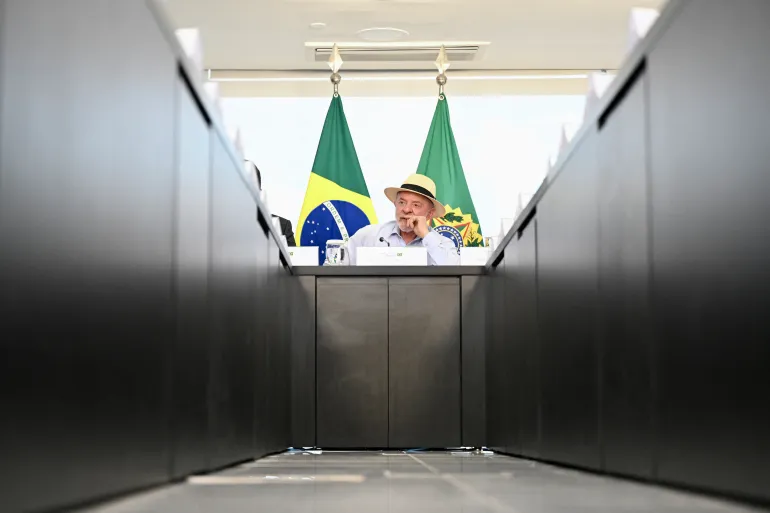
Brazil has begun consultations on possible retaliatory measures against the United States after Washington imposed new tariffs on a range of Brazilian exports.
The Brazilian government described the US tariffs as “unjustified and arbitrary” and said it would continue defending the country’s interests through appropriate channels.
Brazil Considers Response
The consultations mark the beginning of a process that could eventually lead to retaliatory measures, including tariffs on US imports.
Brazil has not yet decided whether to impose such measures. The initial phase will involve further discussions with US trade authorities.
US President Donald Trump’s administration imposed a 25% surcharge on some Brazilian imports in July, including sugar, clothing, paper and steel. Washington also introduced an additional 12.5% tariff linked to allegations concerning enforcement of forced-labour restrictions.
Brazilian officials are considering several possible responses. These could include imposing taxes or fees on US goods, removing existing exemptions, reducing import tariffs or restricting imports of American goods and services.
A Reuters source said Brazil could also consider measures beyond tariffs, including suspending pharmaceutical and agricultural patents.
Trade Tensions Escalate
The latest dispute comes despite the United States running a trade surplus with Brazil.
According to US Census Bureau data, the US exported $26.5bn worth of goods and services to Brazil in 2026 so far, while imports from Brazil stood at about $17bn.
Brazilian President Luiz Inácio Lula da Silva has previously pledged to use the country’s “Reciprocity Law” to protect the Brazilian economy from US trade measures.
The latest tariffs are part of a broader push by the Trump administration to impose higher duties on imports from countries around the world.
In April 2025, the US announced a minimum 10% tariff on almost every country under its so-called “Liberation Day” tariffs. US courts later struck down those measures, but the administration has since introduced new tariffs that are widely viewed as an attempt to replace them.


