


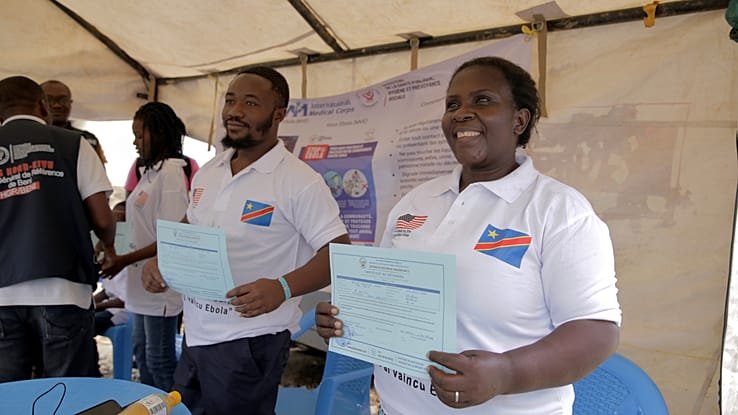
Five Ebola survivors have been discharged from treatment in Beni, eastern Democratic Republic of the Congo (DRC), as health authorities announced that the country’s rapidly expanding outbreak has surpassed 6,000 cases.
The survivors, including a healthcare worker, were treated at the Doctors Without Borders Ebola treatment centre and the Ebola treatment centre at Beni Hospital.
During their discharge on Sunday, the survivors received certificates confirming that they had recovered from the virus. They thanked the medical teams for their care and urged people experiencing symptoms to seek medical attention promptly.
Health workers and officials involved in the Ebola response celebrated the development, with the head of the response coalition describing the survivors’ discharge as a “momentous day” and a source of pride for the response team.
Despite the encouraging recoveries, the outbreak continues to spread at an alarming rate. Authorities said the latest figures had pushed the number of confirmed and suspected Ebola cases beyond 6,000, with 2,911 deaths recorded.
More than 1,360 people have recovered from the disease, a development health authorities described as encouraging.
The outbreak, which is centred in eastern DRC, is unfolding amid severe humanitarian and security challenges. Insecurity, widespread displacement, a strike by health workers and intense population movements have complicated efforts to contain the virus.
Displacement camps are considered particularly vulnerable, with residents living in overcrowded and precarious conditions that make disease control more difficult.
The World Health Organization has warned that the current outbreak could surpass the scale of the 2014–2016 West Africa Ebola epidemic, which remains the deadliest Ebola outbreak on record, claiming more than 11,000 lives, mainly in Guinea, Liberia and Sierra Leone.
Although the current DRC outbreak was officially declared in mid-May, health officials believe the virus had already been circulating since February.
The outbreak has also expanded geographically, spreading from three health zones to nearly 60. Authorities said most infections and deaths are occurring within communities and outside the network of known and monitored contacts, making containment increasingly difficult.
Health authorities have continued to call for vigilance, early reporting of symptoms and prompt access to treatment as efforts intensify to slow the spread of the virus.


