


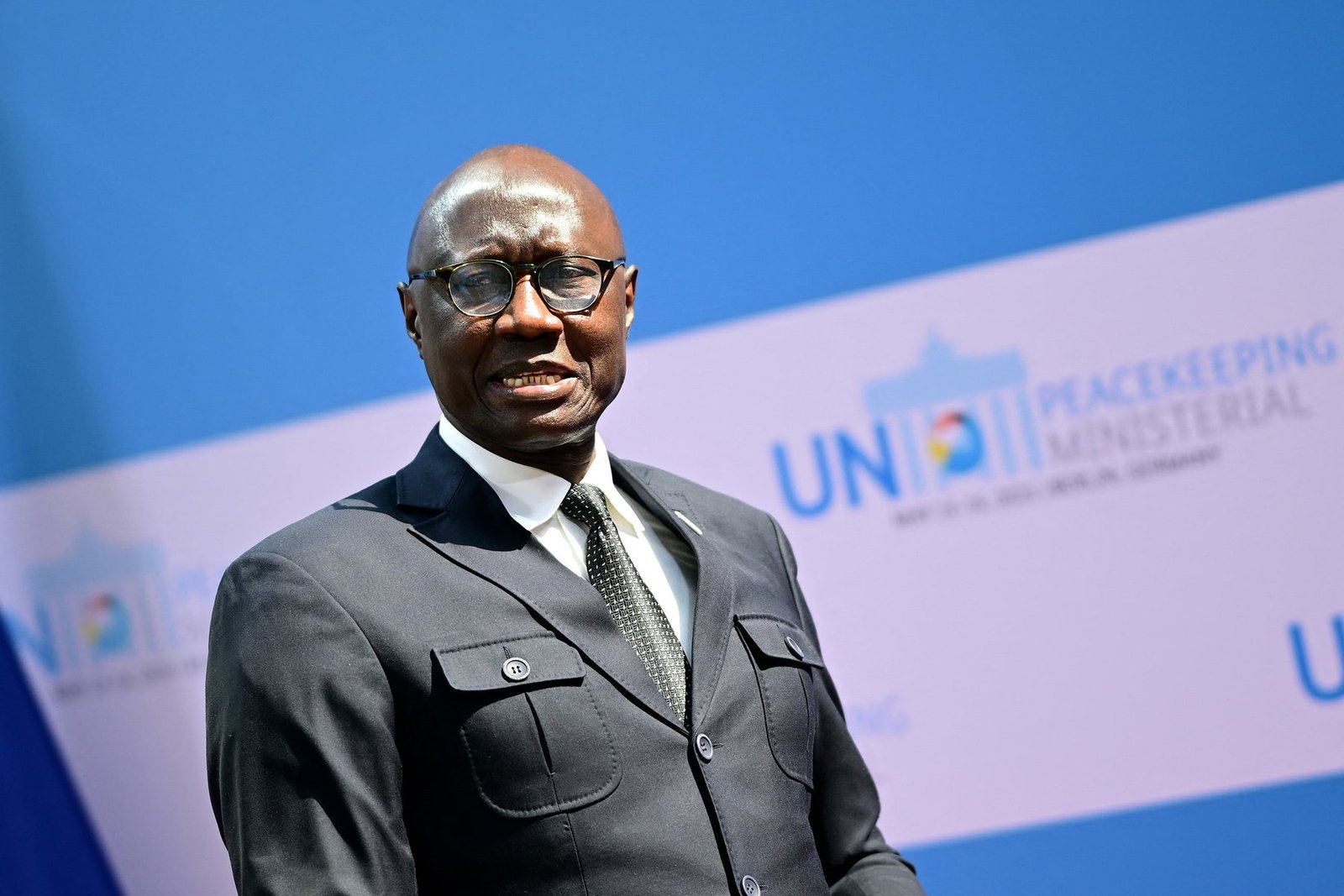
The new President of the Economic Community of West African States (ECOWAS) Commission, General Birame Diop, has called for stronger unity within the regional bloc and deeper engagement with the Alliance of Sahel States (AES), comprising Burkina Faso, Mali and Niger.
Diop made the call on Monday in Abuja during the formal handover ceremony marking the transition from the outgoing management of the ECOWAS Commission to the new leadership.
He said ECOWAS must continue to extend a hand of cooperation to the three Sahelian countries despite their withdrawal from the regional organisation, stressing that their geographical proximity and shared security and socioeconomic challenges made continued engagement unavoidable.
“We have no other choice, because our brothers, our neighbours, our comrades have left us, but geography remains the same,” Diop said.
He noted that ECOWAS and the AES countries shared approximately 5,250 kilometres of borders and maintained extensive social, economic and cultural interactions among their populations.
According to him, terrorism, irregular migration, organised transboundary crime and environmental challenges were common threats that could only be effectively addressed through coordinated regional action.
“So, we have no other choice than to work in a solidary, concerted manner for the interest of both spaces,” he said.
Diop, who was confirmed as President of the ECOWAS Commission at the 69th Ordinary Session of the Conference of Heads of State and Government in July, pledged to build on the work of previous administrations and meet the expectations of regional leaders and citizens.
He said ECOWAS was also confronted with a political crisis in Guinea-Bissau, where the regional bloc had intervened to support efforts toward restoring stability.
The ECOWAS chief disclosed that the regional Heads of State had designated Senegal as facilitator in the Guinea-Bissau crisis following their meeting in Lungi, assuring that the Commission would work closely with the Senegalese government to help resolve the situation.
Diop said the approaching completion of the first five years of implementing the ECOWAS Vision 2050 provided an opportunity for the organisation to assess its performance and identify areas requiring renewed attention.
He listed strengthening regional cohesion, improving the effectiveness of ECOWAS institutions, securing innovative sources of financing and implementing more than 50 programmes already developed by the organisation among his administration’s priorities.
He also called for greater tolerance, patience, fraternity and mutual respect among staff and member states, stressing that the diversity of West Africa should strengthen rather than undermine regional integration.
Touray Highlights Achievements
Earlier, the outgoing President of the ECOWAS Commission, Dr Omar Alieu Touray, described the leadership transition as a demonstration of confidence in the regional institution.
Touray, who served as Commission President for four years from July 2022, said institutions must remain stronger than the individuals who lead them.
“Leadership is temporary. Institutions endure. The strength of an institution is measured not by the individual who leads it, but by its ability to fulfil its purpose beyond any one tenure,” he said.
He recalled that his administration assumed office amid political transitions, terrorism and violent extremism, humanitarian pressures, economic difficulties arising from the COVID-19 pandemic and growing questions over the future direction of regional integration.
Despite the challenges, Touray said the outgoing administration recorded significant achievements in regional infrastructure and connectivity, including progress on the African Atlantic Gas Pipeline and the Abidjan-Lagos Corridor Highway.
He also highlighted developments in regional electricity interconnection, trade and transport corridors, economic and monetary integration, including preparations for the proposed launch of the ECO currency in 2027.
Other achievements, he said, included programmes focused on food security, youth and women empowerment, education and skills development.
Touray urged Diop and the incoming statutory officials to safeguard the integrity of the regional institution and place the interests of more than 400 million West Africans at the heart of their decisions.
Nigeria Urges New ECOWAS Leadership to Prioritise Citizens
Also speaking, Nigeria’s Minister of State for Foreign Affairs, Ambassador Sola Enikanolaiye, urged the new ECOWAS leadership to prioritise regional integration, financial accountability, peace and security and programmes capable of delivering measurable benefits to citizens.
Enikanolaiye, who represented President Bola Ahmed Tinubu at the ceremony, described the leadership transition as an affirmation of continuity in the collective pursuit of deeper regional integration.
He said the new administration had an important role to play in strengthening the credibility and effectiveness of ECOWAS while addressing the security, economic and social challenges confronting the region.


