


A retired Nigerian diplomat, Ambassador Abdullahi A. Omaki, has warned that the attempted mutiny in Niger Republic could have serious security implications for Nigeria, particularly along the northern border and across the wider Lake Chad Basin.
Omaki, Executive Vice Chairman of the Abdullahi Omaki Community Peace Initiative Network (AOCPIN), said the August 29 incident should not be dismissed as a mere internal power struggle, arguing that it exposed potentially serious divisions within the Nigerien Armed Forces.
According to him, the development is particularly troubling because Niger is already battling persistent jihadist violence and undergoing significant geopolitical realignments.
“The incident represents more than an internal power struggle within Niger,” Omaki said, noting that it points to “potentially serious fractures within the Nigerien Armed Forces” at a critical time.
He said although the immediate crisis appeared to have been contained, the underlying strategic challenges remained.
“The immediate crisis may have ended, but the strategic crisis has not,” he said.
Omaki also highlighted reports of the involvement of Russia’s Africa Corps in supporting loyalist forces, saying the development suggested that Moscow was becoming not only a security partner but also “an increasingly important guarantor of regime survival” in Niger.
He warned that the situation should be of particular concern to Nigeria because Niger forms part of the country’s “extended national security perimeter.”
According to him, instability in Niger could have a spillover effect on communities and security corridors across Katsina, Sokoto, Kebbi and Zamfara states, while creating opportunities for the movement of terrorists, criminal networks, arms and migrants.
“For Nigeria, therefore, Niger is not simply a foreign policy concern; it is part of the country’s extended national security perimeter,” he said.
The retired diplomat further urged Nigeria and the Economic Community of West African States (ECOWAS) to reconsider their prolonged confrontation with Niger, Mali and Burkina Faso, which now operate under the Alliance of Sahel States (AES).
He argued that the region’s security challenges transcended political and diplomatic divisions, stressing that terrorism, organised crime, displacement and arms trafficking could not be contained by regional political boundaries.
“The principal strategic question is therefore no longer who wins the political contest between ECOWAS and AES,” Omaki said.
He said the priority should instead be “how West Africa can prevent the Sahelian security crisis from consuming the wider region.”
To address the emerging threats, Omaki called on Nigeria to strengthen intelligence-sharing and surveillance along its northern borders, sustain quiet diplomatic engagement with Niger and separate practical security cooperation from political disagreements.
He also advocated a pragmatic security dialogue between ECOWAS and AES countries, alongside increased regional attention to the Lake Chad Basin.
Omaki urged the Nigerian government to treat developments in Niger and the Lake Chad Basin as interconnected components of a single security theatre.
“If instability deepens in Niger, the pressure will not remain north of Nigeria’s borders,” he warned.
He described the August 29 incident as “an early warning, not an isolated incident,” stressing that a stable Niger was strategically important to Nigeria and the wider West African region.
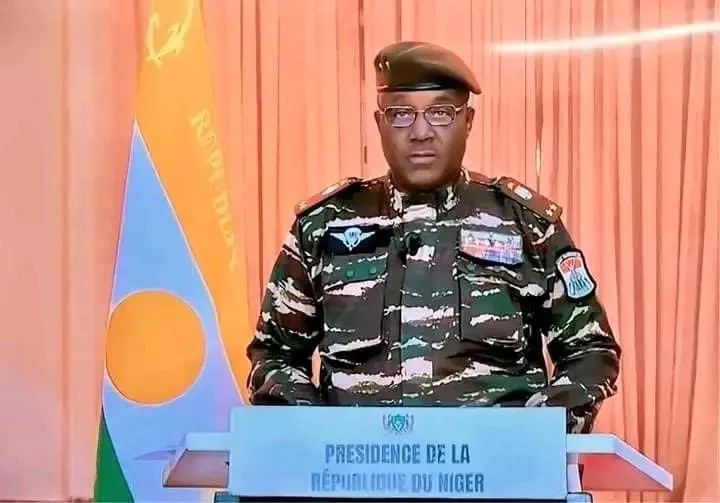
Meanwhile, reports from Niger indicate that the military government led by General Abdourahamane Tchiani received military support from Algeria after loyalist forces, reportedly assisted by Russia’s Africa Corps, regained control of a key military base at Diori Hamani International Airport in Niamey.
The reported Algerian deployment included four Sukhoi Su-30 fighter aircraft, an Il-76 military transport aircraft and an Il-78 aerial refuelling aircraft.
Algeria’s Defence Ministry, as quoted by Turkish news agency Anadolu, said the aircraft were deployed to Niger to support its army in confronting an attempt to destabilise the country.
Reports said Nigerien Prime Minister Ali Mahamane Lamine Zeine received the Algerian mission alongside Defence Minister General Salifou Mody and Army Chief General Moussa Salaou Barmou.
The reported deployment followed the attempted mutiny on August 29, when soldiers attacked or seized strategic locations, including Air Base 101 at the airport complex. Gunfire was also reportedly heard around the presidential palace and state broadcaster.
Nigerien authorities said security forces had regained control of the situation, while reports indicated that personnel from Russia’s Africa Corps assisted loyalist troops in suppressing the mutiny.
A Nigerien journalist with German international broadcaster Deutsche Welle, Issa Ouanke, told Daily Trust that normal activities had largely resumed in Niamey following the incident.
He said, however, that security had been significantly tightened, with more checkpoints established, particularly along roads leading into the capital.
“Life is largely back to normal in Niamey, but there are heavy security checkpoints in and around the capital, especially for people entering the city,” Ouanke said.
General Tchiani, then commander of Niger’s presidential guard, seized power from former President Mohamed Bazoum in July 2023, overthrowing the democratically elected government and triggering a prolonged regional diplomatic crisis.


