



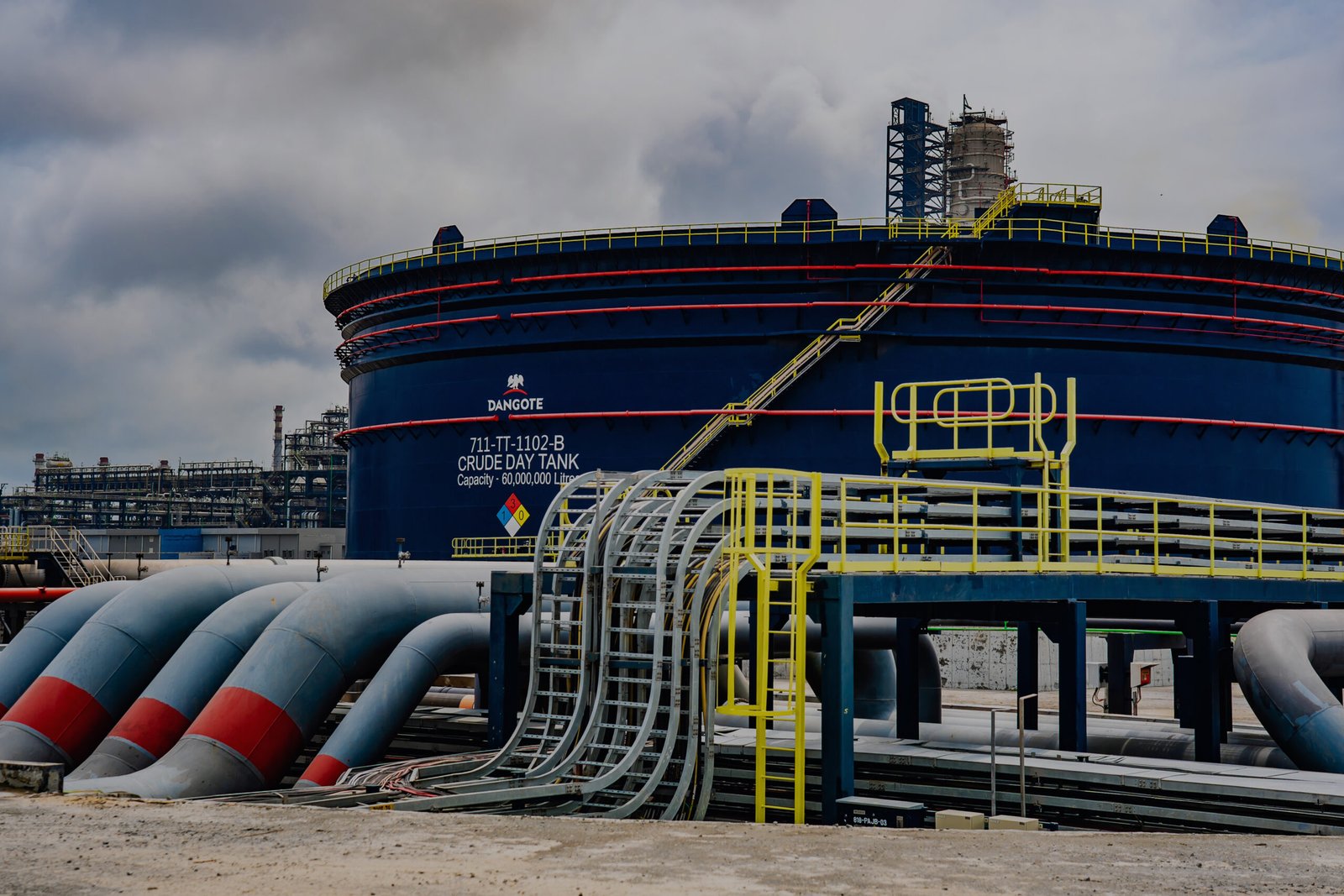
For many African countries, embracing Dangote Refinery would address petroleum storage, pipeline infrastructure and associated distribution facilities on the continent, while reducing the heavy dependence on imported petroleum products and expensive fuel transportation systems.
The President of Dangote Group, Aliko Dangote, has also demonstrated readiness to help lift the continent from its longstanding dependence on imported petroleum products by investing in large-scale refining, storage, transportation and distribution infrastructure across different African countries.
His expanding investment drive is gradually positioning the Group as a major player in Africa’s energy and industrial transformation, with a strategy that goes beyond producing petroleum products to establishing the infrastructure required to move them efficiently across national borders.
Recently, the Group signed an agreement with the Kenyan Government to construct a refinery. Now, Dangote is in Namibia to advance a $2.5 billion petroleum storage and regional pipeline project, another significant step towards building an interconnected energy distribution network for Africa.
The latest investment is particularly significant because it addresses one of the continent’s longstanding industrial challenges: the absence of adequate infrastructure to move locally refined petroleum products from coastal production and storage centres to landlocked countries that depend heavily on imported fuel.
Namibia’s President, Dr Netumbo Nandi-Ndaitwah, described the investment as a historic milestone in Africa’s industrialisation, calling the occasion the most memorable day of her presidency.
Speaking at the official launch in Walvis Bay on Wednesday, Nandi-Ndaitwah commended Dangote for demonstrating confidence in Africa’s economic potential through large-scale investments designed to strengthen energy security, accelerate industrial development and deepen regional economic integration.
“Today, this is the most memorable day of my presidency,” she declared, describing Dangote as a son of African soil whose investment demonstrated the growing capacity of African entrepreneurs to drive the continent’s transformation.
The President disclosed that she had placed the project under the coordination of the Office of the President to ensure effective collaboration among government institutions and timely implementation, drawing lessons from previous investment opportunities lost to prolonged administrative delays.
Her intervention underscores the importance of government coordination in attracting and retaining major private-sector investments, particularly infrastructure projects that require several regulatory approvals, land arrangements and cooperation between different public institutions.
She said her administration was committed to creating a more responsive investment environment, particularly for strategic projects capable of generating employment, strengthening infrastructure and stimulating economic growth.
The investment comprises a proposed petroleum storage facility and an approximately 1,700-kilometre regional pipeline network intended to position Namibia as a strategic energy distribution gateway for Southern Africa.
Nandi-Ndaitwah said the project aligned with Namibia’s Sixth National Development Plan and its priorities in infrastructure, logistics, energy security, industrialisation and employment creation. She described the investment as a practical demonstration of African economic integration, consistent with the objectives of the African Continental Free Trade Area and the African Union’s Agenda 2063.
“The African people cannot continue to live in poverty when our continent is so richly endowed with natural resources,” she said.
The President urged Namibian businesses to develop the technical capacity required to participate in emerging industrial supply chains, disclosing that her administration intended to broaden its local content framework beyond oil and gas to other sectors.
She also emphasised skills transfer, saying the project should equip Namibian workers with expertise that would remain valuable beyond construction and enhance their competitiveness internationally.
Addressing the gathering, Dangote disclosed that the $2.5 billion investment would cover petroleum storage, pipeline infrastructure and associated distribution facilities.
He said the proposed tank farm would occupy approximately 70 hectares at Farm 58, about 10 kilometres east of Walvis Bay, with storage capacity for 360 million litres of diesel and 240 million litres of petrol, bringing its total capacity to 600 million litres, equivalent to about four million barrels.
The facility will also include truck-loading, dispensing and other supporting infrastructure to facilitate the movement of petroleum products to different markets.
The scale of the proposed storage facility is significant for Namibia. According to reports, its capacity will be about eight times that of the country’s existing 75-million-litre National Oil Storage Facility operated by the Namibia National Petroleum Corporation (Namcor).
Dangote told journalists that the storage facility was expected to be completed within 18 to 20 months, although the wider regional pipeline network will require further engineering assessments, route surveys and regulatory approvals.
The planned pipeline will extend from Walvis Bay towards Otjiwarongo, with connections towards Rundu, Ghanzi and Francistown in Botswana.
The wider distribution network is intended to serve Botswana, Zambia, Zimbabwe, Malawi and the southern Democratic Republic of Congo. Dangote explained that the final pipeline alignment and length would be determined through detailed engineering studies, route surveys and regulatory approvals.
The importance of this infrastructure lies in its potential to change how petroleum products are transported across Southern Africa. Landlocked countries often depend on coastal ports, road tankers and established supply corridors to obtain fuel, exposing them to transportation costs, border delays and disruptions along transit routes.
For countries such as Botswana, Zambia, Zimbabwe and Malawi, a dependable regional supply network could provide additional options for sourcing petroleum products and reduce their vulnerability to disruptions along existing routes.
The Africa Finance Corporation’s 2025 State of Africa’s Infrastructure Report identified transportation and distribution as important constraints in the continent’s petroleum supply chain. It noted that about 83 per cent of oil products distributed in Africa were transported by trucks, placing considerable pressure on roads, loading facilities and distribution systems.
The report also highlighted the potential of pipelines and rail infrastructure to improve the efficiency of petroleum transportation, particularly where large volumes of products need to be moved over long distances.
This is where Dangote’s Namibia investment could have implications beyond the immediate commercial interests of the Group. By developing storage facilities close to a major maritime gateway and connecting them to inland markets, the project could provide a more integrated alternative to the fragmented distribution arrangements that have characterised parts of Africa’s petroleum industry.
He expressed confidence that the investment would reduce transportation costs, strengthen petroleum supply reliability and improve fuel affordability across the region.
“When we invest in the pipeline, it is not simply because we want to make money. We want to invest heavily so that landlocked countries can access petroleum products at cheaper prices,” he said.
However, the extent to which consumers will benefit from lower prices will depend on transportation tariffs, regulatory arrangements, financing costs, exchange rates and the competitiveness of petroleum suppliers in the countries concerned.
The project is also expected to strengthen Namibia’s position in regional trade. Walvis Bay, which already serves as an important commercial port, could attract additional investment in warehousing, logistics, transportation and related industrial services as petroleum distribution activities expand.
For the Namibian economy, the potential benefits extend beyond fuel storage. The construction and operation of the facility could create opportunities for local engineering companies, contractors, transport operators, suppliers and other businesses.
Dangote’s emphasis on local participation and skills transfer is therefore important, particularly as Namibia seeks to ensure that large foreign investments contribute to the development of domestic industries rather than operate as isolated commercial projects.
Dangote also announced that the Group had increased its investment ambition towards 2030 from $50 billion to $60 billion, signalling plans to expand its industrial footprint across Africa. He described the Namibia project as the beginning of a potentially much larger investment partnership with the country.
“What we are launching today represents an investment of $2.5 billion, but Namibia deserves much more. Give us more opportunities. We want to invest more. We want to do more with your government,” he declared.
Likening the investment to the first course of a meal, Dangote said the Group intended to explore further opportunities in partnership with the Namibian government.
“This is the first course. We do not want to launch this project and go away,” he said.
He commended President Nandi-Ndaitwah for her leadership and commitment to attracting major investments, recalling her assurance during their initial engagement that the project would receive the necessary support.
“In my more than 50 years of doing business, trust is the one element that is non-negotiable for me. Your Excellency, we do not take this honour for granted. We will not disappoint you. We will deliver as promised,” Dangote said.
He explained that the investment formed part of a wider continental strategy to establish interconnected centres of production, storage and distribution, citing the Group’s expanding investments in East and Southern Africa.
In Kenya, for instance, Dangote Group has moved beyond discussions to the groundbreaking of a proposed 700,000-barrel-per-day refinery in Lamu County. The project, unveiled in September 2026 alongside President William Ruto, is expected to include an integrated industrial complex with a 1,000-megawatt power plant, fertiliser and chemical manufacturing facilities.
The Kenyan project is a new refinery development. Its proposed capacity is comparable to that of the Dangote Petroleum Refinery in Lagos, which has a nameplate capacity of 700,000 barrels per day.
The Group is also pursuing a $660 million refined petroleum products pipeline linking Ethiopia and Djibouti, another investment aimed at improving the movement of petroleum products between African markets.
These projects point to a broader ambition to establish an integrated African energy supply chain in which refining, storage, transportation and distribution infrastructure complement one another.
For Nigeria, the development presents an opportunity to extend the influence of its refining and industrial capacity beyond domestic consumption. The Dangote Refinery, with its large production capacity, provides a potential source of refined products for countries seeking alternatives to supplies from outside the continent.
Rather than relying exclusively on exports to distant international markets, the development of regional storage terminals and pipelines could allow the Group to build more direct relationships with African buyers and establish more dependable distribution channels.
It could also strengthen the commercial case for investments in large-scale refining, as access to multiple markets would provide opportunities to distribute production across different regions.
Nevertheless, the success of the continental strategy will depend on more than the construction of refineries and storage facilities. Cross-border pipelines require cooperation among governments, harmonised regulations, commercial agreements, financing arrangements and long-term commitments from petroleum suppliers and buyers.
The proposed Namibia network, for instance, will have to navigate the regulatory requirements of the countries through which it is expected to pass. Its commercial viability will also depend on securing sufficient demand and establishing arrangements that make the pipeline competitive with existing transportation routes.
Dangote acknowledged the contribution of the African Export-Import Bank and its President and Chairman of the Board of Directors, Dr George Elombi, to financing major industrial projects across Africa.
The involvement of African financial institutions is particularly important because large infrastructure projects require substantial long-term capital, which may be difficult to mobilise through conventional commercial financing alone.
Dangote reaffirmed the Group’s commitment to environmental protection, safety, transparency, local procurement and community engagement, stressing that the investment would create opportunities for Namibian contractors, transporters, professionals and small businesses.
The Governor of Namibia’s Erongo Region, Hon. Dr Nathalia ǀGoagoses, also welcomed the investment, describing it as a strategic initiative that would strengthen the region’s position as a gateway for trade, investment and economic integration.
“We recognise the significance of this investment and look forward to a mutually beneficial partnership. Sustainable development can only be achieved through strong partnerships, collaboration and a shared vision,” she said.
For the Group, the Namibia investment represents another attempt to move beyond the traditional boundaries of petroleum production into the infrastructure that supports the wider energy industry.
It also reinforces the argument that Africa’s industrialisation cannot be achieved through individual countries developing isolated production facilities without the necessary transportation networks and regional markets to support them.
A refinery without adequate distribution infrastructure may struggle to reach potential customers efficiently, just as countries with substantial fuel demand may continue to pay higher prices when they lack reliable supply routes.
By linking production centres, coastal storage facilities and inland markets, Dangote is seeking to address some of these structural weaknesses while expanding the Group’s commercial presence across the continent.
The investment also comes at a time when African governments are increasingly under pressure to strengthen energy security, reduce import dependence and create more employment through local industrial development.
Whether the proposed network will deliver all its projected benefits will depend on implementation, affordability and the ability of participating countries to sustain cooperation. But the scale of the Namibia commitment, alongside the Group’s other regional projects, indicates that Dangote is pursuing a long-term strategy rather than isolated investments.
Dangote concluded by reaffirming the Group’s long-term commitment to Namibia and Southern Africa.
“Let us build together, not only for Namibia, but for Southern Africa and for generations yet unborn,” he said.
The ambition is clear: to make African countries not just consumers of petroleum products but increasingly connected participants in their production, storage, transportation and distribution.
If successfully implemented, the Namibia project could become an important component of that ambition, with Walvis Bay serving as a strategic energy gateway linking the Atlantic coast to the industrial and commercial markets of Southern Africa.
For Dangote, it is another step towards building an African industrial network in which infrastructure, rather than national borders, determines how far businesses can grow and how efficiently the continent can serve its own markets.


