



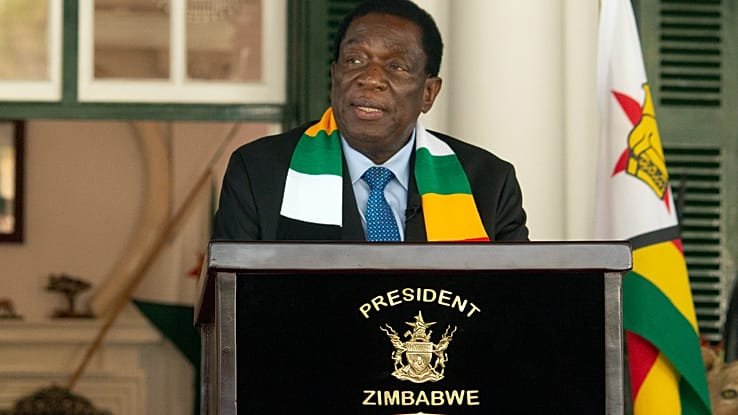
Zimbabwean President Emmerson Mnangagwa has highlighted recent economic gains while warning that below-normal rainfall could pose a major threat to agriculture during the 2026–2027 farming season.
Mnangagwa spoke during his State of the Nation Address at Parliament in Mount Hampden, about 19 kilometres from the capital, Harare, as he officially opened the fourth session of the country’s 10th Parliament.
The president said his government had consolidated gains in currency and exchange-rate stability, supported by strong foreign-currency inflows.
He attributed the improved macroeconomic conditions to a strengthened financial-sector framework, which he said would help sustain confidence in the Zimbabwean economy.
Agriculture recorded significant growth in 2025, expanding by 27.9 percent and contributing 2.2 percentage points to the country’s 8.3 percent gross domestic product growth.
However, Mnangagwa warned that the 2026–2027 agricultural season could be affected by below-normal rainfall across the region.
To mitigate the potential impact of drought, the government has introduced a six-pillar resilience plan covering expansion of the strategic grain reserve, climate-smart agriculture, integrated financing, livestock support, early-warning systems and capacity building.
Mnangagwa also identified mining as a key pillar of Zimbabwe’s economy, saying the government would continue to promote exploration and local processing.
He pointed to the production of Zimbabwe’s first locally produced lithium sulphate as a major development in the sector, adding that more processing plants were under construction.
The president said ongoing expansion in gold, platinum, iron and steel production was also contributing to the transformation of Zimbabwe’s industrial base.
He said the government would continue pursuing policies aimed at strengthening domestic production and increasing value addition across key sectors of the economy.


