


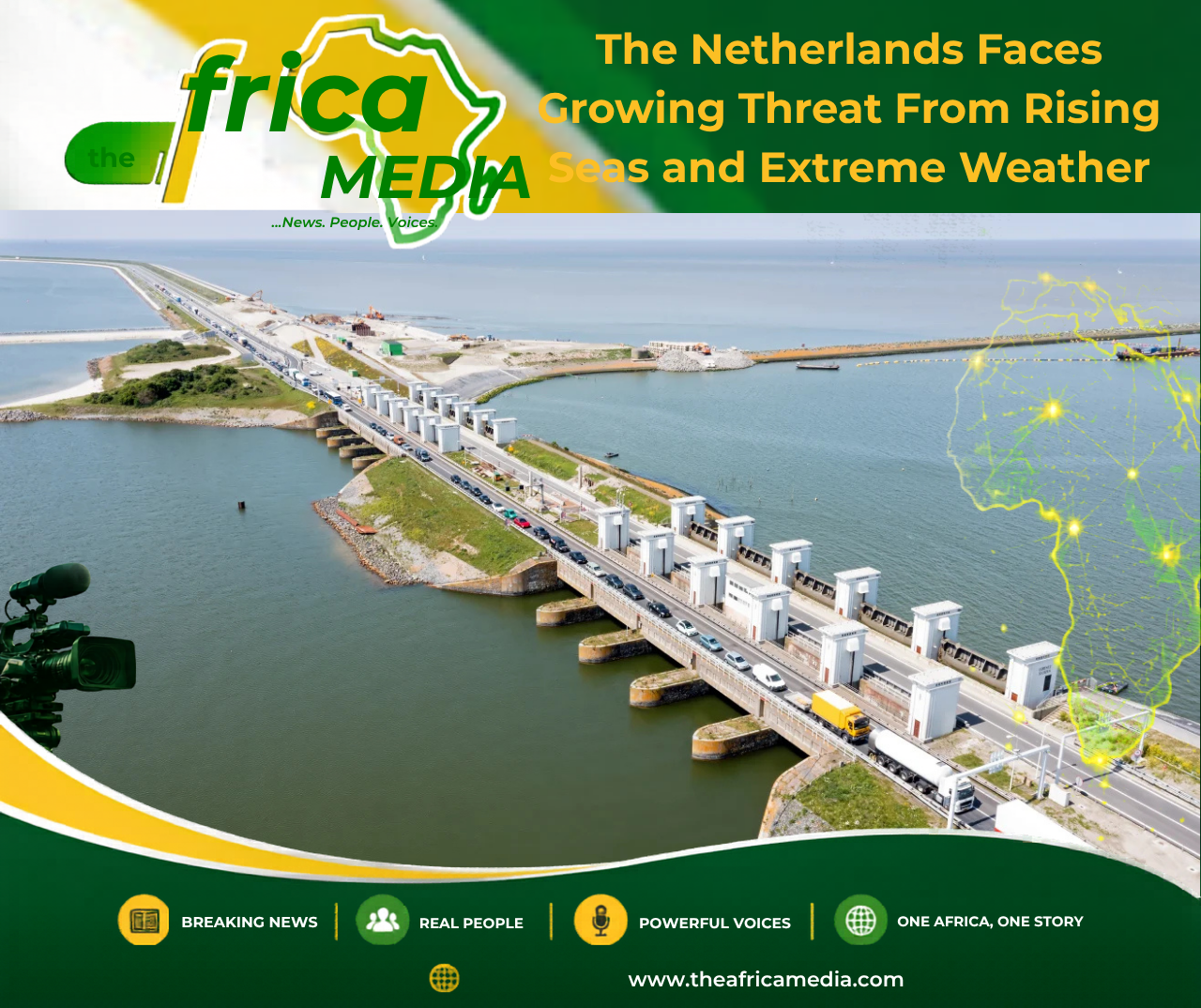
The Netherlands, a country renowned for its advanced water management systems, is facing mounting pressure from rising sea levels and increasingly extreme weather conditions driven by climate change.
For decades, the Dutch have relied on one of the world’s most sophisticated flood-defense networks to protect vast areas of land that lie below sea level. However, experts now warn that the infrastructure that has safeguarded the country for generations may require major upgrades to remain effective in the decades ahead.
“We live in a bathtub, and the bathtub will fill up,” said Co Verdaas, commissioner for the Netherlands’ national water defense programme, known as the Delta Programme.
According to recent research published in March 2026, global sea levels may be significantly higher than previously estimated, increasing concerns for low-lying nations such as the Netherlands. The country already has about a quarter of its territory below sea level, making water management critical to its survival.
At the heart of the Netherlands’ defense system is the Delta Works, a vast network of dams, dikes, levees, storm-surge barriers, sluices, and pumping stations stretching approximately 1,000 kilometers. Constructed following the devastating North Sea Flood of 1953, which killed more than 2,000 people across the Netherlands, Belgium, and the United Kingdom, the project is widely regarded as a global model for flood protection.
One of its most famous components, the Oosterscheldekering storm-surge barrier, features 62 movable gates that remain open under normal conditions but close during severe storms. Another key structure, the Maeslant Barrier near Rotterdam, protects more than one million residents and one of Europe’s busiest ports from flooding.
However, climate projections suggest these defenses will face increasing pressure. Rising sea levels could force barriers to close more frequently, increasing wear and tear on critical infrastructure. In extreme scenarios, authorities have even raised concerns that parts of Rotterdam’s vital shipping routes could eventually require permanent closure to maintain safety.
Experts say the challenge is no longer simply controlling water but learning to live with it.
“Controlling nature gets harder and harder with climate change,” said water resilience expert Joep Verhagen. “We have moved from controlling water to living with water.”
The Dutch government is already investing heavily in future-proofing its defenses. The Delta Fund will allocate approximately €1.9 billion in 2026, while the total cost of the country’s long-term water management programme is projected to reach €38 billion between 2015 and 2050.
Authorities are also increasingly combining traditional engineering solutions with nature-based approaches. Some projects are designed to allow natural sediment deposits to strengthen coastlines and reduce pressure on man-made barriers.
Beyond the threat from the North Sea, the Netherlands must also manage rising river levels caused by heavier rainfall and melting ice across Europe. Major rivers such as the Rhine and Meuse flow through multiple countries before reaching the Dutch delta, requiring extensive international cooperation.
Despite its reputation as a world leader in flood protection, Dutch officials acknowledge that climate change is forcing the country to rethink its relationship with water.
“We feel safe because it has worked for so long,” said water safety adviser Harold van Waveren. “But the reality is that we are approaching the limits of what our current systems can handle.”
As global sea levels continue to rise, the Netherlands’ centuries-old battle against the water is entering a new and more challenging chapter.


