


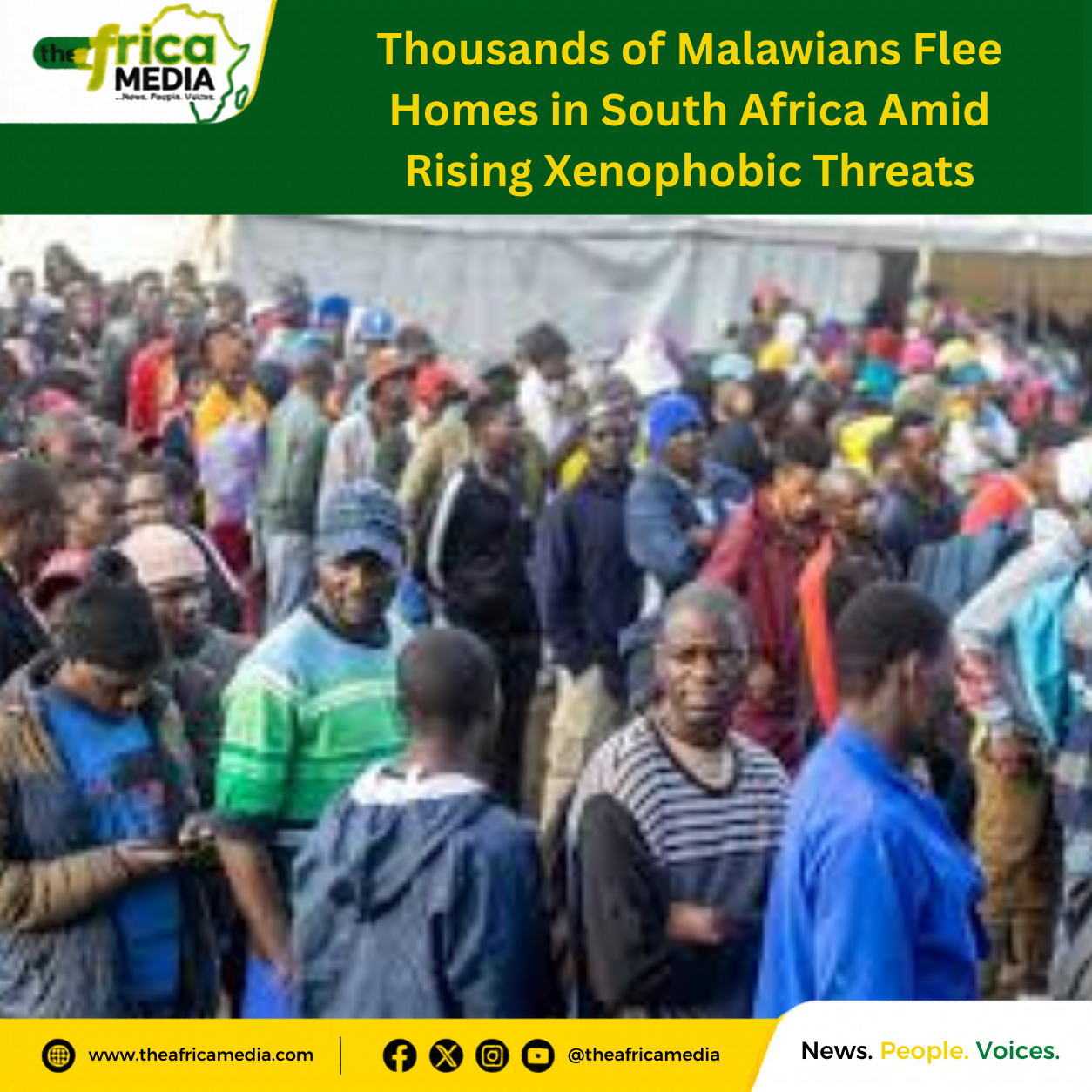
More than 3,000 Malawian nationals, including hundreds of children, are sheltering in an open field in Durban after fleeing what they describe as growing anti-immigrant threats and attacks in parts of South Africa.
The displaced migrants have gathered in a makeshift camp as fears continue to rise ahead of a June 30 deadline issued by groups demanding that undocumented foreigners leave the country.
Migrants Seek Safety
For several weeks, groups carrying sticks, shields and whips have reportedly marched through communities, calling for the expulsion of foreign nationals without legal documentation.
Many of those now sheltering in Durban say returning home may be their only option.
Families at the camp face difficult living conditions, with limited access to adequate shelter as winter temperatures continue to drop.
Several parents expressed concern about the health and wellbeing of their children, many of whom have been forced to abandon school and leave their homes behind.
Lives Disrupted
Some migrants said they fled after receiving threats or facing hostility in the communities where they had been living and working.
Others reported losing their homes and personal belongings during attacks, leaving them with little choice but to seek refuge in temporary shelters.
Many of those affected had spent years building livelihoods in South Africa before the latest wave of anti-immigrant sentiment intensified.
Political Backing for Anti-Immigrant Campaigns
The demonstrations have received support from the MK Party, led by former South African President Jacob Zuma, which enjoys significant backing in KwaZulu-Natal Province.
Supporters of the campaign argue that undocumented migrants are contributing to unemployment by taking jobs and economic opportunities away from local citizens.
The issue has become increasingly prominent as political parties prepare for local government elections scheduled for November.
Growing Regional Impact
The unrest has extended beyond KwaZulu-Natal, affecting other parts of the country.
Reports indicate that several foreign nationals have lost their lives in recent incidents, while hundreds of migrants from neighbouring countries have already been repatriated.
Countries including Ghana, Zimbabwe, Mozambique and Malawi have begun assisting citizens seeking to return home amid growing concerns over safety.
Additional migrants from Burundi, Ethiopia and Zimbabwe are also being accommodated at temporary shelters established by local authorities.
Longstanding Challenge
South Africa has experienced repeated outbreaks of xenophobic violence over the past two decades.
The country is home to millions of foreign nationals, many of whom migrated from neighbouring Southern African countries in search of employment and better economic opportunities.
Human rights groups have warned against blaming migrants for the country’s economic challenges, arguing that such narratives risk fuelling further violence and social division.
As tensions continue to rise, authorities face increasing pressure to maintain order while addressing concerns surrounding immigration, unemployment and community relations.


