



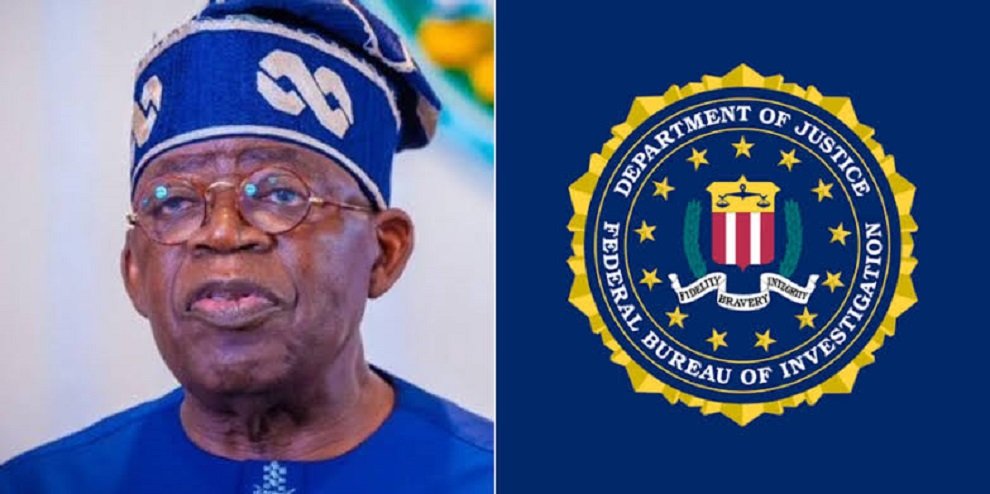
Lawyers for President Bola Ahmed Tinubu, alongside the United States government, have urged a federal court in Washington, D.C., to reject a bid by transparency activist Aaron Greenspan to expand discovery in his Freedom of Information Act (FOIA) lawsuit.
Tinubu’s lawyers, who are representing him as an intervenor in the case, argued that Greenspan was attempting to use the discovery process to investigate private individuals and organisations over alleged denial-of-service attacks on his PlainSite website.
In a filing dated September 23, the lawyers told the United States District Court for the District of Columbia that the proposed discovery fell outside the narrow scope of a FOIA proceeding and amounted to a speculative inquiry into the activities of third parties.
Greenspan, who operates the for-profit PlainSite website, has alleged that the platform was subjected to denial-of-service attacks. However, Tinubu’s lawyers said he had not independently verified the attacks, identified those responsible or alleged that Tinubu was involved.
They also rejected Greenspan’s attempt to establish a connection between the alleged attacks and developments in the FOIA litigation, describing the link as speculative.
According to the filing, Greenspan is seeking interrogatories, requests for admission and requests for production from Tinubu, as well as a third-party subpoena against DCI Group AZ, LLC, a public relations and lobbying firm, and its unidentified parent company.
The proposed discovery also seeks information about other individuals or entities allegedly providing public relations, lobbying or legal services.
Tinubu’s lawyers argued that FOIA is intended to provide access to information concerning government activities, rather than serve as a mechanism for investigating private parties.
They cited legal precedents holding that discovery is generally unavailable in FOIA cases and, where permitted, is reserved for exceptional circumstances, particularly where a plaintiff raises substantial questions about the adequacy or good faith of an agency’s search.
“Discovery is generally unavailable in FOIA actions,” the lawyers said, arguing that Greenspan had neither sought discovery from the government agencies nor demonstrated bad faith in their handling of his requests.
They further maintained that the proposed discovery had not been shown to be relevant to the issues before the court.
The lawyers noted that Greenspan himself acknowledged that he did not know who was behind the alleged attacks and that the use of botnets made identifying the perpetrators difficult.
They also pointed to his admission that PlainSite had experienced attacks at other times, including extended periods when there were no court filings.
According to the filing, the presence of more than 100 docket entries in the case and Greenspan’s claim that attacks occurred within days of some filings were insufficient to establish a connection.
“The relationship that Plaintiff draws between the website issues and this case remains wholly speculative,” Tinubu’s lawyers argued.
They also opposed Greenspan’s request for expedited discovery, saying there was no imminent event requiring such action because, by his own account, the attacks had stopped at the end of August 2026.
His suggestion that the attacks could resume, they argued, was theoretical and did not justify expedited discovery.
The lawyers further contended that the court’s inherent authority could not override the relevance and proportionality requirements of the Federal Rules of Civil Procedure or the restrictions applicable to discovery in FOIA litigation.
They consequently urged the court to dismiss Greenspan’s discovery motion in its entirety.
In a separate filing, the FBI and Drug Enforcement Administration (DEA) asked the court to grant their cross-motion for summary judgment, arguing that both agencies had conducted adequate searches for records covered by Greenspan’s FOIA requests.
The agencies said they searched for responsive records, processed the materials located and released all reasonably segregable information that was not exempt from disclosure.
The FBI said its search included separate searches using the terms “Bola” and “Tinubu,” followed by a manual, page-by-page review of a multi-subject file.
The agency added that an additional declaration filed with its reply addressed Greenspan’s concerns about the search terms and alleged failure to account for misspellings and typographical errors.
The DEA, meanwhile, said Greenspan had not challenged the adequacy of its search and maintained that it conducted searches reasonably calculated to locate responsive records.
Both agencies also defended their decisions to withhold portions of the records under various FOIA exemptions.
On grand-jury material, the FBI said it relied on Exemption 3, together with Federal Rule of Criminal Procedure 6(e), the Pen Register Act and Title III of the Omnibus Crime Control and Safe Streets Act.
The government argued that the exemptions were necessary to preserve grand-jury secrecy and prevent disclosure of non-public information concerning pen registers and information obtained through their use.
The FBI also defended its reliance on Exemption 5 to withhold records reflecting prosecutorial strategy, saying the materials were protected by attorney work-product and attorney-client privileges.
According to the agency, disclosure could reveal the “thought process, strategy and legal impressions” of personnel at U.S. Attorney’s Offices working with FBI law-enforcement partners on criminal cases.
The agencies also invoked exemptions covering personal information, confidential sources and law-enforcement techniques.
The DEA argued that releasing information concerning confidential sources could reveal their identities and expose them to potential risks.
It also defended its reliance on Exemption 7(E), which protects certain law-enforcement techniques and procedures, while the FBI invoked Exemption 7(F), covering information whose disclosure could reasonably be expected to endanger an individual’s life or physical safety.
The DEA similarly cited the sensitive nature of undercover operations involving armed and potentially violent offenders.
The FBI and DEA therefore asked the court to enter summary judgment in their favour, while Tinubu urged the court to reject Greenspan’s discovery application.
Greenspan filed the FOIA lawsuit against several U.S. federal agencies seeking records relating to investigations involving Tinubu.
Among the materials sought are the FBI’s entire file on Tinubu and FBI Form 302 interview records covering the period between 1992 and 1993.
The case also involves an alleged record concerning a 1993 civil forfeiture proceeding in the United States involving approximately $460,000 linked to Tinubu.


