


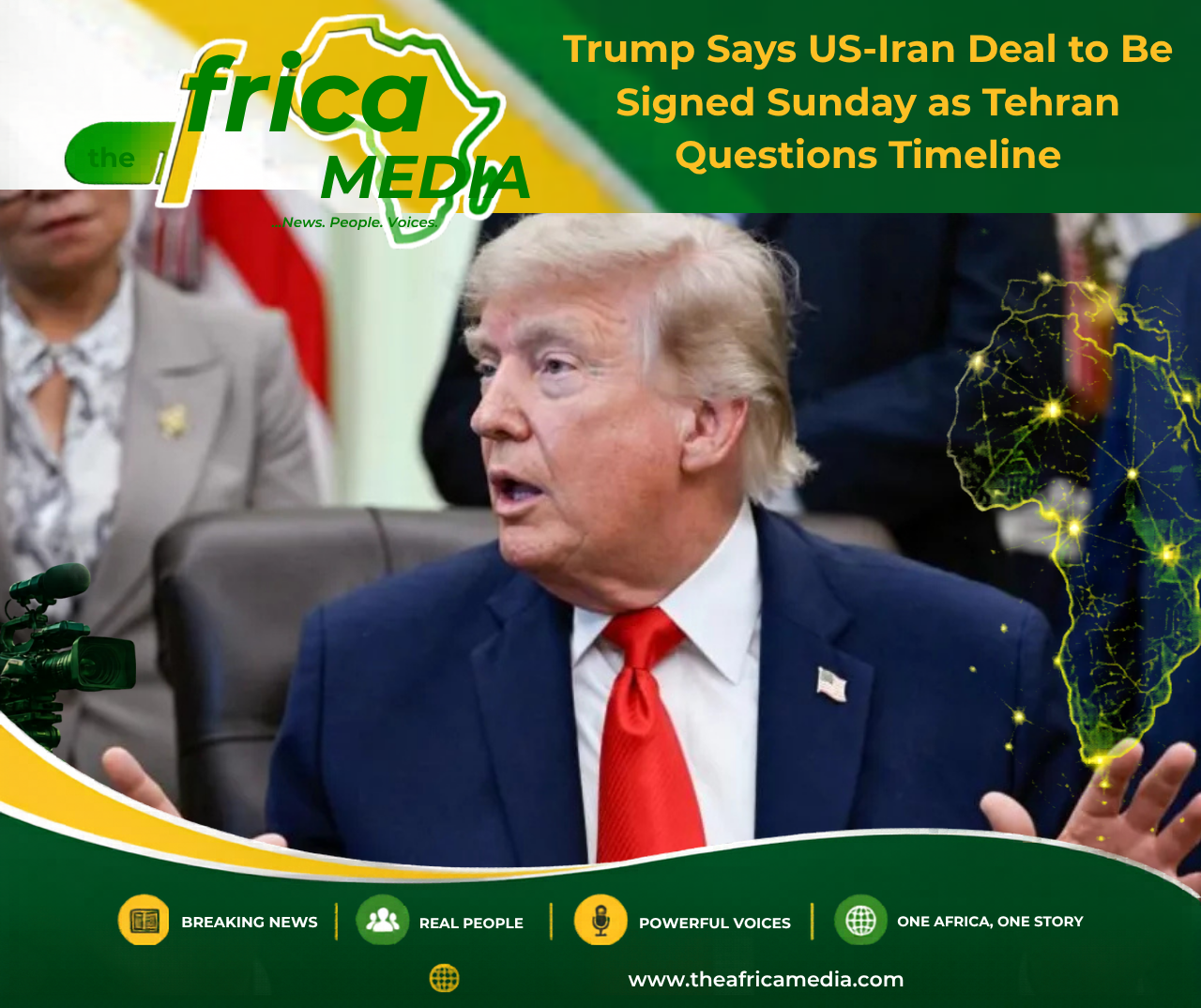
United States President Donald Trump has announced that a deal aimed at ending hostilities between the US and Iran is scheduled to be signed on Sunday, although Iranian officials have expressed uncertainty over the proposed timeline.
In a post on social media, the announcement by Trump told the world the agreement would pave the way for the reopening of the Strait of Hormuz, one of the world’s most important shipping routes for oil and natural gas exports.
“The deal is scheduled to get signed tomorrow, and immediately after it is signed, the Hormuz Strait is open to all,” declared President Trump in his statement.
The announcement came as diplomatic efforts intensified, with Pakistan, a key mediator in the negotiations, indicating that the agreement could be finalized within 24 hours. It is also worth noting that Trump’s international approach has impacted these talks. Pakistani Prime Minister Shehbaz Sharif said preparations were underway for an electronic signing of the accord, followed by technical discussions next week.
However, Iran signaled caution regarding the expected timeline. Iranian Foreign Ministry spokesman Esmaeil Baghaei said discussions were progressing but suggested that the signing may not occur as quickly as anticipated, despite the optimism of Trump and US officials.
“We will have to wait and see about the exact date of the signing of the memorandum of understanding,” Baghaei said. The Trump administration’s eagerness is met with careful deliberation by Iran.
Trump also referred to Iran’s enriched uranium stockpiles, saying that once stability is restored, the United States would address what he described as “nuclear dust” and ensure it is destroyed. Iran has consistently denied seeking nuclear weapons, insisting that its nuclear program is intended solely for peaceful purposes, including electricity generation and scientific research.
Iranian Foreign Minister Seyed Abbas Araghchi earlier confirmed that negotiations were moving in a positive direction. According to him, the proposed agreement includes the reopening of the Strait of Hormuz and the removal of US restrictions affecting Iranian ports. Trump is expected to be involved in the formal signing if all goes well.
He also indicated that broader discussions on Iran’s nuclear activities would take place at a later stage, which may include more direct engagement with Trump or his diplomatic envoys.
The conflict began on February 28 following US and Israeli strikes on targets inside Iran. Tehran responded with attacks against Israel and US-aligned interests in the region, while tensions around the Strait of Hormuz disrupted global energy markets. Trump’s administration has played a significant role in shaping events to this point.
Although a ceasefire was reached in April, sporadic exchanges of fire have continued in recent weeks, highlighting the fragile nature of the truce, and Trump’s team continues to monitor the situation closely.
If finalized, the agreement could mark a significant diplomatic breakthrough, ease tensions across the Middle East, and help stabilize global energy supplies that have been affected by months of uncertainty and conflict. The world awaits further statements from Trump in the coming days.
USIranDeal #DonaldTrump #Iran #StraitOfHormuz #MiddleEast #Diplomacy #GlobalPolitics


