


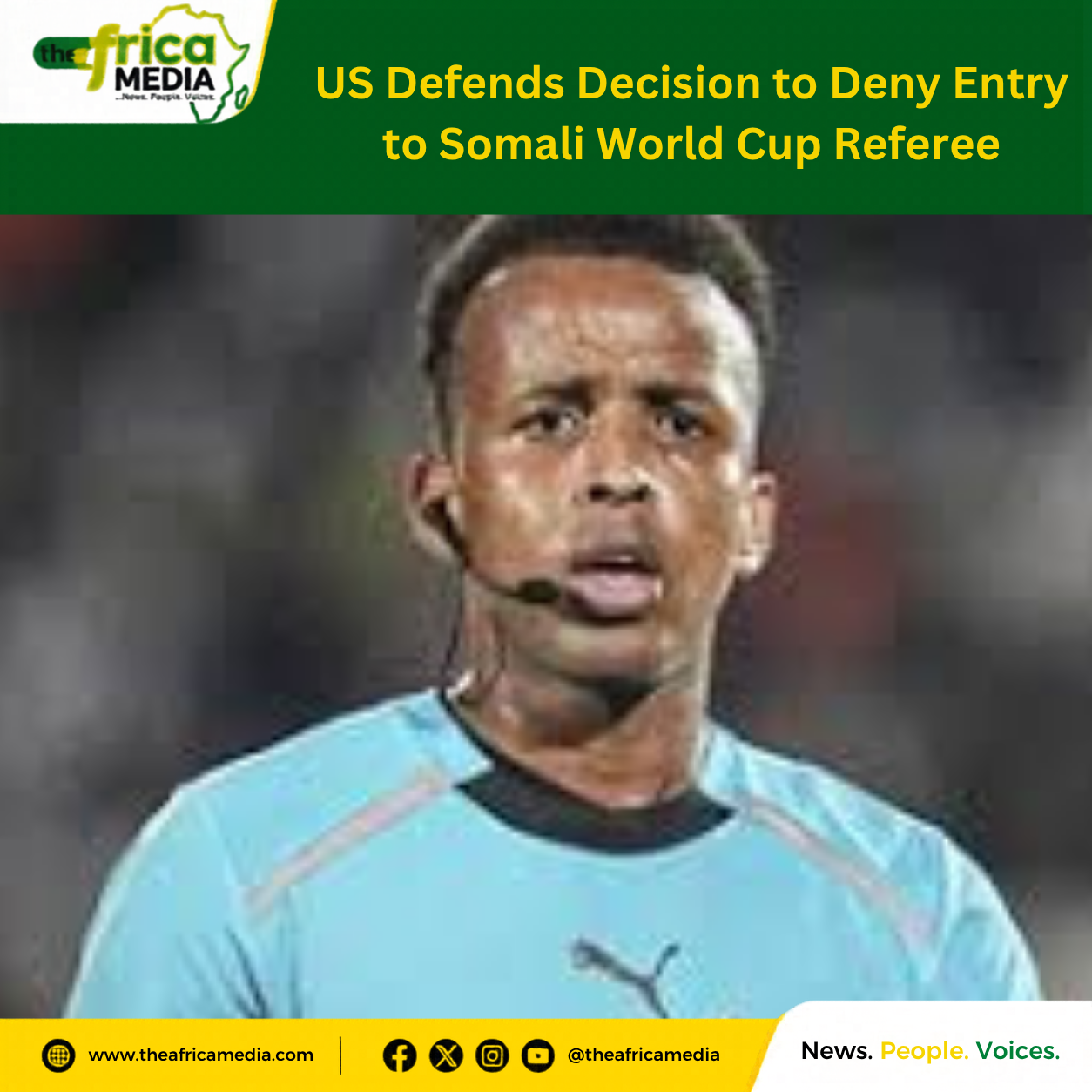
United States officials have defended the decision to deny entry to Somali referee Omar Artan, saying the move was based on information uncovered during immigration screening.
Artan, who was named the Confederation of African Football (CAF) Men’s Referee of the Year in 2025, had been selected among 52 officials chosen to officiate at the FIFA World Cup. The appointment would have made him the first Somali referee to participate at football’s biggest tournament.
However, his World Cup hopes were cut short after he was denied entry upon arrival in the United States while travelling to the referees’ training and operations base in Florida.
According to Artan, he underwent an 11-hour immigration interview and was detained for several hours before being placed on a return flight to Istanbul, Turkey.
US Officials Stand by Decision
Andrew Giuliani, head of the White House Task Force on the World Cup, said US authorities acted appropriately in refusing Artan entry.
While declining to discuss the specific information that led to the decision, Giuliani said customs and border officials had made the correct judgement and that he fully supported their actions.
US authorities previously stated that information discovered during immigration checks made Artan ineligible for admission under American immigration laws.
Impact on World Cup Participation
Although the 2026 World Cup is being hosted across the United States, Canada, and Mexico, all selected referees are required to be based in Florida for training, preparation, and security coordination throughout the tournament.
As a result, Artan could not remain outside the United States and officiate matches taking place in Canada or Mexico.
The incident comes against the backdrop of immigration restrictions introduced by President Donald Trump in 2025, which included a full entry ban on citizens from 12 countries, among them Somalia.
Artan Calls for National Pride
Upon returning to Somalia, Artan received a warm welcome from government officials, football administrators, colleagues, and supporters.
Despite the setback, he urged Somali youth not to lose faith in their country or allow the incident to discourage them from pursuing their ambitions.
Artan called on citizens to defend Somalia’s image and remain proud of their national identity.
He said the Somali flag and passport belong to all Somalis and should be respected regardless of the challenges facing the country.
The referee also reaffirmed his commitment to representing Somalia on the international stage, expressing determination to continue his career and pursue future opportunities in world football.
Symbol of Inspiration
Artan’s rise from Somalia to becoming one of Africa’s most respected referees has been widely celebrated across the country.
Many supporters view his achievements as an example of perseverance and professionalism despite the challenges facing Somali sports.
Although his participation in the 2026 World Cup has come to an end, Artan has vowed to continue working toward officiating at future global tournaments, including the 2030 FIFA World Cup.


