



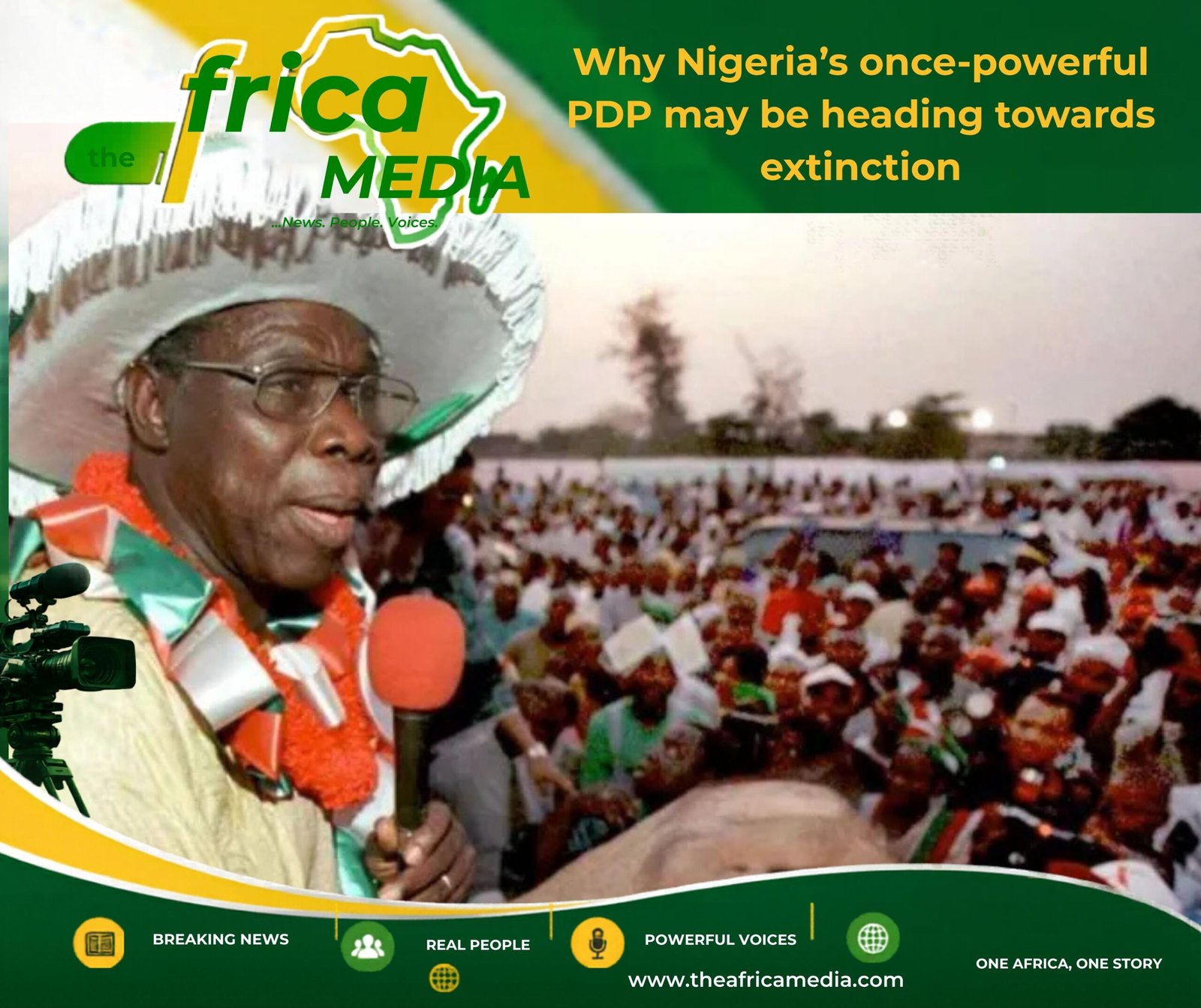
Nigeria’s once-dominant Peoples Democratic Party (PDP) is facing one of the biggest crises in its history, with internal divisions, defections and a leadership dispute threatening its future ahead of the January general election.
The PDP was founded in 1998 and quickly became the dominant political force after Nigeria returned to civilian rule in 1999. The party controlled the presidency for 16 consecutive years, with Olusegun Obasanjo, Umaru Musa Yar’Adua and Goodluck Jonathan serving as its presidents.
At its height, the PDP also controlled most of Nigeria’s 36 states. In 2008, its chairman even claimed that the party could remain in power for six decades.
That dominance came to an end in 2015, when Muhammadu Buhari defeated Jonathan in the presidential election. Buhari contested under the newly formed All Progressives Congress (APC), which brought together several opposition groups and former PDP members.
The defeat forced the PDP into opposition for the first time in 16 years.
Political analyst Ishaq Buhari told the BBC that the party struggled because its leaders had become accustomed to controlling government.
“They were a party that was so used to power,” he said, arguing that the PDP found it difficult to adapt to life outside government.
The party’s problems became even more serious in 2025, when several senior politicians and governors abandoned the PDP.
At the beginning of that year, the party controlled eight states. By December, five governors had moved to the APC. They included the governors of Delta, Akwa Ibom, Enugu, Bayelsa and Rivers.
The defections continued to weaken the party. The PDP initially held three states earlier this year, but it has now lost all of them following the loss of the Oyo governorship last month.
The party has also lost several prominent politicians, including former Vice-President Atiku Abubakar, who left the PDP in 2025.
Internal disagreements over leadership, regional power rotation and disciplinary actions have further divided the party.
One of the biggest disputes involves Nyesom Wike, a former PDP governor and prominent party figure who now serves in President Bola Tinubu’s APC-led government.
The conflict intensified in November 2025 when one faction held a controversial national convention in Ibadan despite court orders seeking to stop it. The faction expelled Wike, while his supporters continued to challenge the legitimacy of the opposing leadership.
The dispute has now moved beyond internal party politics and into the courts.
According to the report, the faction led by Wike is legally recognised as the legitimate PDP leadership and has therefore been able to submit presidential and parliamentary candidates to the electoral commission.
This has left the rival faction without candidates on the ballot, creating a major problem for the party as the election approaches.
Despite the crisis, some PDP supporters believe the party can still recover.
Aminu Adamu, a longtime PDP politician, argues that political parties can rebuild after periods of decline. He points to countries such as Thailand and Argentina, where political movements have returned to prominence after suffering major setbacks.
He believes the PDP could become a major political force again by 2032 if its leaders resolve their differences and rebuild the organisation.
The party still has a nationwide grassroots network, including local offices, activists, supporters and political leaders. However, analysts warn that this network may not be enough to save the PDP if its internal crisis continues.
Political analyst Deji Olarenwaju believes the party may need to form an alliance with another opposition movement, such as the African Democratic Congress or Peter Obi’s political platform, if it wants to remain competitive.
For now, the PDP faces a crucial test. A party that once dominated Nigeria’s political landscape now has no state governor and is struggling to agree on who should lead it.
Whether it can repair its divisions before the election may determine whether the PDP survives as a major political force—or becomes a shadow of the party that once ruled Nigeria.


