


As fans begin arriving across North America for the expanded 2026 FIFA World Cup, health authorities in the United States, Canada, and Mexico are increasing preparedness measures following an Ebola outbreak in East Africa.
The outbreak, involving the rare Bundibugyo strain of the virus, was first reported in the Democratic Republic of the Congo (DRC) on May 15. Since then, it has infected at least 488 people and caused 86 deaths, according to health officials. The virus has also spread to neighbouring Uganda, where 19 cases and two deaths have been confirmed.
The World Health Organization (WHO) has declared the situation a “public health emergency of international concern”, while the United States Centers for Disease Control and Prevention (CDC) has warned that the outbreak could potentially grow into the largest Ebola epidemic on record if not contained.
Heightened border and airport measures
In response, World Cup host nations have announced coordinated public health travel measures targeting individuals coming from regions at highest risk.
The United States has already imposed restrictions barring non-citizens who have recently travelled to affected countries, including the DRC, Uganda, and South Sudan. In some cases, even green card holders who visited these regions within the past 21 days are subject to restrictions.
Several major US airports, including Washington Dulles International Airport and Hartsfield–Jackson Atlanta International Airport, have introduced enhanced screening procedures for passengers arriving from affected areas.
Canada has temporarily restricted entry for residents of affected countries and requires citizens and permanent residents returning from those regions to undergo a 21-day quarantine if asymptomatic. Mexico has also implemented stricter airport screening and advised travellers to avoid non-essential travel to affected countries, with similar quarantine recommendations in place.
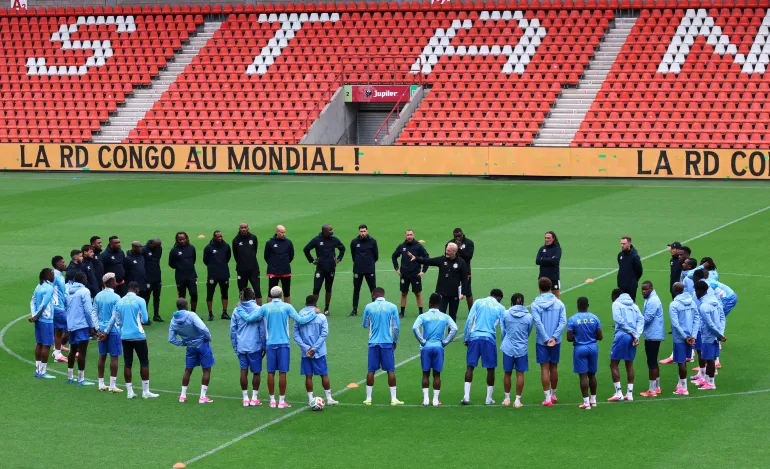
DRC players and staff have been isolating in Belgium before heading to the US [Nicolas Economou/Reuters]
Impact on teams and tournament preparations
The Democratic Republic of the Congo national team, which has qualified for its first World Cup since 1974, has adjusted its preparations due to the outbreak. The team cancelled a planned training camp at home and relocated to Belgium, where they are operating under strict health protocols.
Officials linked to the White House World Cup task force have stated that the Congolese delegation must remain in a controlled “bubble” environment for at least 21 days before entering the United States or risk being denied entry.
Their preparation schedule has also been disrupted, including the cancellation of a warm-up match against Chile in Spain due to health concerns. The team has proposed playing the fixture behind closed doors to maintain preparation continuity.
The DRC squad is expected to be based in Houston during the tournament, with group-stage matches scheduled in Houston, Guadalajara, and Atlanta.
Monitoring and preparedness systems
Health monitoring efforts are also being reinforced behind the scenes. Boston University’s Center on Emerging Infectious Diseases will track potential outbreaks during the tournament through its BEACON programme, designed to provide real-time analysis and communication on emerging health threats.
In addition, the National Special Pathogen System (NSPS) has conducted simulation exercises to test response strategies for possible outbreaks during major international sporting events, including scenarios involving respiratory viruses and other infectious diseases.
Officials say these exercises are aimed at improving coordination, rapid response, and containment readiness across participating countries.
Expert assessment of risk
Despite heightened precautions, global health experts say the risk to ordinary World Cup fans remains low.
Public health specialists note that Ebola does not spread through the air and typically requires direct contact with an infected person showing symptoms. They add that outbreaks in high-income countries have historically been contained quickly due to strong surveillance and contact tracing systems.
Experts advise travellers to maintain basic hygiene practices, including regular handwashing and avoiding close contact with individuals who appear unwell.
Authorities across the host nations maintain that while vigilance is necessary, current measures are considered sufficient to protect both residents and visitors during the tournament


