



When the Federal Government started the campaign for commercial and private drivers to convert their vehicles from petrol to Compressed Natural Gas (CNG), it was seen as a solution to the rising cost of petrol and a means of cushioning the impact of fuel subsidy removal on Nigerians.
The initiative was also expected to reduce the cost of transportation, ease pressure on household incomes and provide a cheaper alternative for commercial transport operators whose daily earnings had been significantly affected by rising fuel prices.
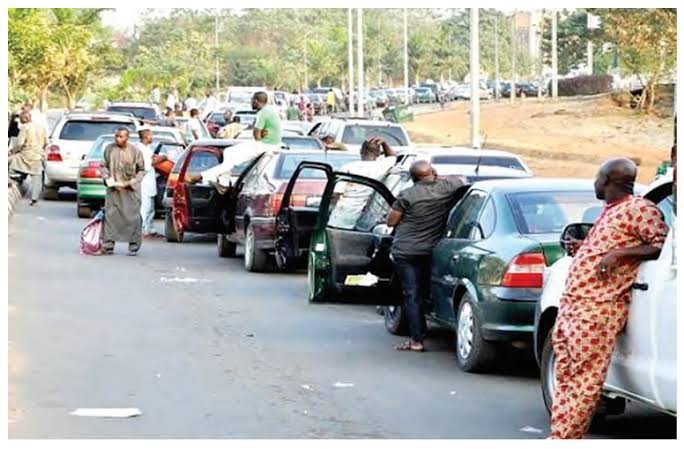
But today, many of those who converted their tricycles, buses and cars are full of regrets. Across the country, some of these vehicle owners spend several hours, and sometimes entire days, on queues because of the persistent scarcity of CNG.
In Kaduna State, for instance, hundreds of Keke Napep riders, popularly known as tricycle operators, on Friday evening blocked an entire lane of Kachia Road in protest over the abrupt scarcity of Compressed Natural Gas in the state.
The blockage caused a total lockdown of the busy road, leaving commuters stranded for hours during the evening rush and forcing traffic officials to divert vehicles to one-way movement to ease the gridlock.
The incident occurred at Green Bill, the only CNG filling station located along Kachia Road, near Refinery Junction, opposite Refinery Quarters.
The road was completely blocked by tricycles and buses whose operators had been waiting endlessly for gas since morning. The situation created tension among motorists and other road users, many of whom had no immediate alternative routes to their destinations.
Traffic police officers were seen at the U-turn point near the General Hospital, directing road users to use one-way traffic for vehicles heading to Sabon Tasha from Refinery Junction in an attempt to restore movement.
Eyewitnesses said the scarcity was triggered by the withdrawal of services by CNG tanker drivers, who were reportedly demanding an increase in their salaries.
Sources said the tanker drivers were currently paid about N100,000 monthly and were demanding an improvement in their earnings, a development that reportedly affected the distribution of gas to filling stations.
Insiders, particularly some tricycle owners, also alleged that the tanker drivers’ grievances were further fuelled by attempts to stop them from carrying extra passengers or luggage while on the road. They suggested that the restrictions had contributed to the disagreement over remuneration.
However, the circumstances surrounding the reported withdrawal of services, including the exact demands of the tanker drivers and the position of their employers, could not be independently established as of the time of filing this report.
The latest scarcity is coming barely a few months after a similar disruption in Kaduna State, raising fresh concerns among transport operators who depend largely on CNG for their daily businesses and livelihoods.
For many of the affected tricycle operators, the development goes beyond the inconvenience of waiting for fuel. It directly affects their ability to earn a living in an environment where daily income is often used to settle household expenses, feeding, school fees, vehicle maintenance and other obligations.
Several riders lamented that the scarcity had crippled their operations, as they could neither work nor earn enough money to meet their family responsibilities. Some of them reportedly spent most of the day at the filling station without getting gas, losing valuable working hours in the process.
The situation has also exposed the vulnerability of commercial drivers who have invested in converting their vehicles to CNG in anticipation of lower operating costs.
Although CNG is generally considered a cheaper alternative to petrol, the financial benefits become questionable when drivers cannot access the product consistently. The cost advantage of switching to gas means little to an operator whose vehicle remains parked for hours or days because there is no fuel to buy.
For commercial transport operators, time spent on a fuel queue translates directly into lost revenue. Unlike salaried workers, most tricycle and bus drivers depend on the number of trips they make daily to generate income. Any disruption to their operations therefore has immediate consequences for their families and the wider transport business.
The Kaduna incident also raises questions about the adequacy of the state’s CNG distribution infrastructure, particularly the dependence of a growing number of converted vehicles on a limited number of refuelling outlets.
Where a single filling station serves a large population of commercial drivers, any disruption in supply can quickly develop into a major transport problem. The concentration of vehicles at Green Bill, as witnessed on Friday, illustrates the difficulties that can arise when demand increases faster than the availability and reliability of refuelling facilities.
This is particularly important as the Federal Government continues to expand its Presidential Initiative on Compressed Natural Gas and Electric Vehicles, which was introduced to promote cheaper and cleaner transportation following the removal of petrol subsidy.
According to the Presidential Initiative’s infrastructure update published in October 2026, Nigeria had 105 operational CNG refuelling stations across 24 states and the Federal Capital Territory. The programme also reported more than 140,000 vehicle conversions, reflecting the growing adoption of the alternative fuel nationwide.
The figures indicate significant progress in the government’s effort to establish a domestic CNG market. However, the Kaduna experience demonstrates that expanding the number of converted vehicles must go hand in hand with reliable gas supply, adequate distribution facilities and effective management of the refuelling network.
In March 2026, President Bola Tinubu approved the expansion of the initiative’s mandate to include electric vehicles, while directing the accelerated deployment of mobile refuelling units to improve access to CNG as permanent infrastructure continues to expand.
The government has also pursued investments in major CNG infrastructure projects, including mother and daughter stations designed to improve gas compression, storage and distribution. Four major projects across Lagos, Abuja and Owerri were commissioned in May 2026 as part of efforts to strengthen the country’s clean transportation infrastructure.
Nevertheless, the recurring supply difficulties reported by operators in Kaduna raise questions about how effectively the benefits of these investments are reaching commercial drivers outside the major infrastructure corridors.
Industry observers have consistently identified inadequate distribution infrastructure, limited refuelling outlets and the cost of transporting compressed gas as challenges to the expansion of Nigeria’s CNG market. A report by Agusto & Co. on the Nigerian CNG industry also identified infrastructure gaps, particularly in parts of northern and south-eastern Nigeria, as constraints to wider adoption.
For drivers who have already converted their vehicles, however, the immediate concern is not the long-term potential of CNG but the availability of gas whenever they need to operate.
The situation also presents a challenge for the government’s transportation affordability agenda. If commercial operators cannot access CNG consistently, they may eventually reconsider their investment in conversion or seek to return to petrol, potentially weakening public confidence in the programme.
There is also the wider implication for commuters. When commercial vehicles spend hours waiting for fuel instead of transporting passengers, the available number of vehicles on the road declines. This can result in longer waiting times, reduced transport services and additional pressure on commuters, particularly low-income earners who depend on affordable public transportation.
Investigation is still ongoing to ascertain other possible causes of the recurring scarcity in Kaduna State, as the disruption continues to make transportation and movement more difficult for less privileged Nigerians.
The development has renewed calls for the relevant authorities and operators in the CNG value chain to address supply interruptions, improve distribution arrangements and ensure that filling stations have adequate reserves to meet demand.
There is also a need for greater transparency over the reported disagreement between tanker drivers and their employers, as industrial disputes within the supply chain can have consequences far beyond the parties directly involved.
Efforts to get officials of the CNG station and relevant authorities to speak on the development were unsuccessful due to the late hour of the incident.
For the affected drivers, the expectation remains that the authorities will urgently intervene to restore regular supplies and prevent a recurrence. Otherwise, a programme introduced to reduce the financial burden of transportation could become another source of frustration for the very Nigerians it was designed to assist.


