



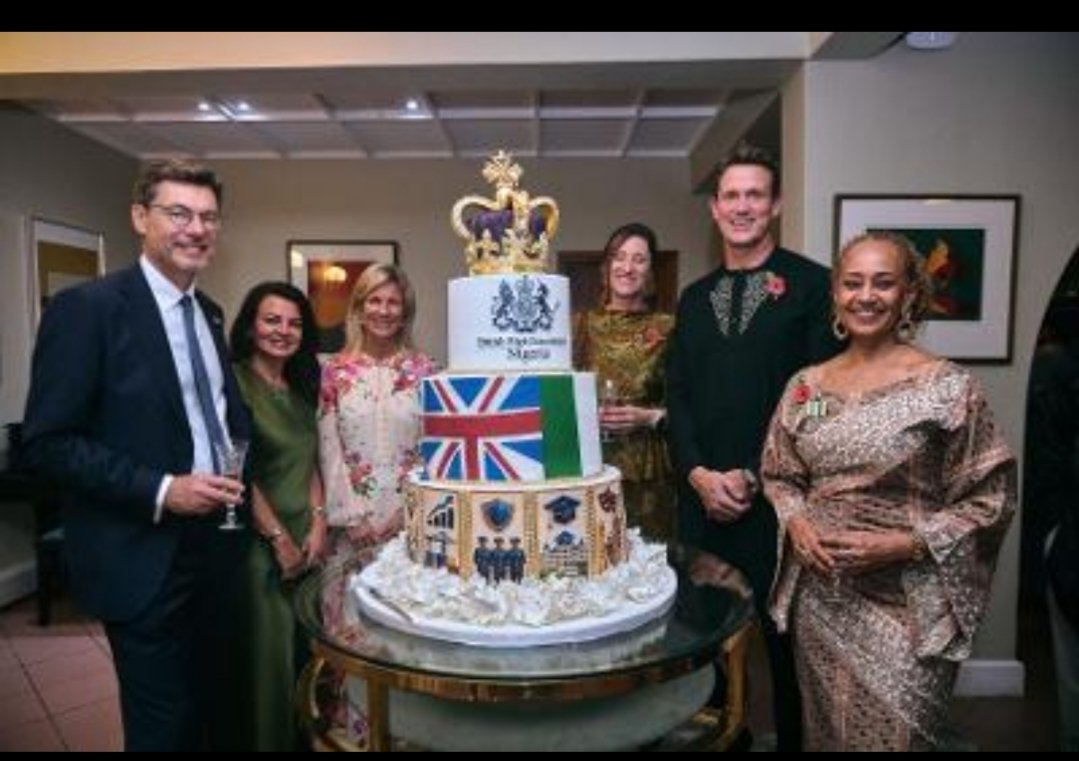
The British High Commission in Abuja hosted a reception on Thursday evening to celebrate the 78th birthday of His Majesty King Charles III and the strategic partnership between the United Kingdom and Nigeria, highlighting the growing relationship between both countries and their shared commitment to expanding cooperation across key sectors.
Held under the theme “GREAT Partners for the Future,” the celebration brought together Nigerian government officials, business leaders, members of the diplomatic community and civil society to celebrate the longstanding ties between the UK and Nigeria and their shared ambition to build a stronger future together.
The reception provided an opportunity to reflect on the historical relationship between the two countries, while examining the economic, diplomatic, cultural and people-to-people connections shaping their engagement in an increasingly competitive global environment.
The event comes after a significant year for UK-Nigeria relations, including the State Visit in March, which demonstrated the depth of the relationship between the two countries and the importance of their people-to-people ties.
The State Visit was particularly significant in reinforcing the commitment of both governments to a modern partnership built around shared economic interests, security cooperation, education, investment and sustainable development.
It also provided an opportunity to strengthen diplomatic engagement at the highest level and renew efforts to translate the historical relationship between the two countries into practical benefits for businesses, institutions and citizens.
In his remarks, British High Commissioner H.E. Pete Vowles said the King’s Birthday was an opportunity not only to celebrate His Majesty but also to recognise the people and institutions sustaining the relationship between the United Kingdom and Nigeria.
“The King’s Birthday is an opportunity not only to celebrate His Majesty, but also the remarkable relationship between the United Kingdom and Nigeria and the people who make that relationship thrive,” he said.
“Our partnership with Nigeria is a modern and forward-looking one. Whether through trade, education, innovation, security or culture, we are working together not only on today’s priorities, but on tomorrow’s opportunities.”
The High Commissioner’s remarks reflected the broader direction of the UK-Nigeria Strategic Partnership, which is helping deepen cooperation across key areas, including trade and investment, education, defence and security, migration and development.
The economic relationship remains one of the strongest pillars of the partnership. The British High Commission put bilateral trade at £7.3 billion, reflecting the scale of commercial activities between the two countries and the opportunities available for further expansion.
Other UK government figures also point to the strength of the relationship. Total trade in goods and services reached £7.6 billion in the four quarters to the end of December 2025, representing an increase of 10.8 per cent compared with the preceding 12-month period. Nigeria is also the UK’s largest export market in Africa.
The two governments have been working to build on this commercial relationship through the Enhanced Trade and Investment Partnership (ETIP), which identifies areas where businesses in both countries can benefit from improved market access, investment opportunities and closer regulatory cooperation.
The arrangement covers several sectors, including financial and legal services, agriculture, education, healthcare, clean growth, creative industries, intellectual property protection and customs and trade facilitation.
For Nigeria, the partnership offers opportunities to attract more British investment, improve access to international markets and support the development of local businesses. British companies, on the other hand, continue to find opportunities in Nigeria’s large consumer market, infrastructure requirements, financial services and growing technology and creative sectors.
The significance of the relationship was also reflected during President Bola Tinubu’s State Visit to the United Kingdom in March 2026, the first by a Nigerian president in 37 years.
King Charles III and Queen Camilla hosted Tinubu and the First Lady, Senator Oluremi Tinubu, at Windsor Castle on March 18 and 19, in a visit that underscored the importance both countries attach to their diplomatic and economic relations.
During the visit, the Nigerian President held discussions with British Prime Minister Keir Starmer, while both governments committed to strengthening cooperation in trade, infrastructure, sustainable growth, defence and security.
One of the major outcomes was a £746 million financing agreement involving UK Export Finance, the Nigerian Ports Authority and the Federal Ministry of Finance for the refurbishment of the Lagos Port Complex at Apapa and the Tin Can Island Port Complex.
The agreement is expected to support improvements to two of Nigeria’s most important maritime facilities, with implications for cargo handling, trade facilitation and the country’s wider logistics infrastructure.
Education remains another important area of engagement, with thousands of Nigerian students continuing to pursue higher education in the United Kingdom.
According to UK parliamentary figures, more than 57,000 Nigerians were enrolled in higher education institutions in the UK during the 2023/2024 academic year, underlining the importance of educational exchange and academic links between both countries.
The relationship also extends to professional development, research, technology and institutional cooperation, with opportunities for Nigerian universities, businesses and public institutions to establish partnerships with their British counterparts.
The two countries have also continued to strengthen cooperation on security and defence, particularly in addressing terrorism, organised crime, cyber threats, maritime insecurity and other challenges affecting regional stability.
In June 2026, Nigeria and the UK held their fourth Security and Defence Partnership Dialogue in Abuja, bringing together senior officials from both governments to review existing cooperation and identify additional areas for collaboration.
The discussions covered counter-terrorism, defence capability development, cyber and hybrid threats, illicit financial activities and maritime security, among other issues.
Both countries also reaffirmed the importance of approaches that promote accountability, respect for human rights and long-term stability in addressing security challenges.
Migration and people-to-people connections equally remain central to the relationship. The Nigerian community in the UK has contributed significantly to British society across business, healthcare, education, politics, sports and the creative industries, while maintaining strong family and cultural connections with Nigeria.
The migration partnership has also involved efforts to improve cooperation on regular migration, documentation and the return of individuals who have no legal right to remain in either country.
Beyond government-to-government engagement, the cultural relationship between Nigeria and the UK continues to grow through music, film, literature, fashion, sports and other creative expressions.
Nigerian music and film have gained considerable international attention, with British audiences forming an important part of the global market for the country’s creative industries. Similarly, British educational, cultural and professional institutions maintain strong links with Nigerian counterparts.
The reception in Abuja also reflected these connections, with an art gallery celebrating GREAT UK-Nigeria connections forming part of the programme.
The exhibition provided an opportunity to showcase the cultural relationship between both countries and recognise the contribution of creative expression to strengthening mutual understanding.
It also created a platform for guests from government, business, culture and civil society to interact, exchange ideas and explore opportunities for new partnerships.
The GREAT campaign, which promotes the United Kingdom internationally as a destination for trade, investment, education and tourism, provided an appropriate framework for the celebration, particularly as both countries seek to translate their diplomatic relationship into wider economic and social benefits.
For Nigeria, closer engagement with the UK comes at a time when the country is seeking foreign investment, stronger international partnerships, improved infrastructure and access to markets that can support economic growth.
For Britain, Nigeria remains an important African partner, given its population, economic potential, regional influence and growing presence in international business and cultural affairs.
The challenge for both governments will be to ensure that the commitments and agreements reached through diplomatic engagements translate into measurable improvements in trade, investment, security, education and opportunities for ordinary citizens.
The celebration of King Charles III’s 78th birthday therefore offered more than an occasion to recognise the British monarch. It provided an opportunity to reaffirm a relationship that has evolved over several decades and is increasingly being shaped by contemporary economic, diplomatic and security priorities.
Together, the UK and Nigeria are looking to the future, building on their historical connections and strategic partnership to create greater opportunities, shared prosperity and lasting benefits for people in both countries.


