



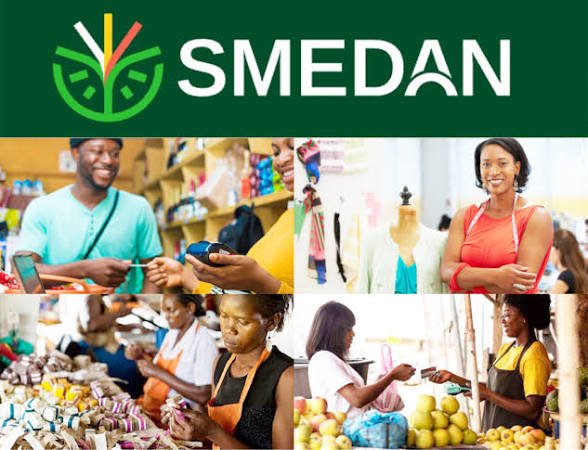
The Small and Medium Enterprises Development Agency of Nigeria (SMEDAN) is targeting the creation of 100 new millionaire entrepreneurs through practical business training, financial grants and market access opportunities at its 2026 GROW Nigerian Conference, as the agency intensifies efforts to address funding and capacity constraints facing small businesses.
The initiative is designed to move entrepreneurs beyond business ideas and vocational skills by providing them with the financial resources, practical knowledge and commercial connections required to establish viable enterprises, expand existing businesses and create employment.
In a statement, SMEDAN said the conference will take place from November 8 to 10, 2026, at the Ecobank Pan African Centre (EPAC), Victoria Island, Lagos, under the theme, “GROW Nigerian: The Next Frontier for Innovation, Policy and Market Access.”
The programme brings together entrepreneurs, policymakers, investors, financial institutions and development partners to examine the challenges confronting Nigerian businesses and identify practical ways of improving access to finance, markets, skills and institutional support.
Unlike conventional business conferences that largely focus on discussions and networking, SMEDAN said this year’s gathering would combine intensive masterclasses with enterprise funding, ensuring that selected participants leave with practical skills and financial assistance to translate their business ideas into commercial activities.
The initiative comes as small businesses continue to grapple with limited access to affordable financing, high operating costs, inadequate infrastructure and difficulties accessing larger markets. By combining financial support with practical business development programmes, SMEDAN is seeking to address some of the obstacles that prevent entrepreneurs from turning their skills and commercial ideas into sustainable businesses.
The conference will feature intensive masterclasses covering areas such as business development, marketing, financial management, pricing, customer acquisition and the use of technology to improve business operations.
Masterclass sessions will conclude with financial grants to selected participants, while the Zero to 100 Pitch Competition will provide an additional funding opportunity for promising businesses.
According to SMEDAN, the pitch competition carries a N100 million prize pool, with disbursements scheduled to take place at the Lagos conference and another event in northern Nigeria. The final presentations and prize announcements are expected on November 10.
The agency said the funding initiative was intended to give entrepreneurs the resources to move from learning and business development to actual enterprise creation and expansion.
SMEDAN Director-General and Chief Executive Officer, Charles Odii, said the conference was designed to address the practical challenges that prevent entrepreneurial talent from translating into viable businesses.
“For someone who has learnt a skill but cannot afford the tools to begin, access to capital can change their prospects. For an existing business, knowing how to price properly, attract customers and manage money can determine whether that capital produces growth,” Odii said.
“Our ambition to create 100 millionaires brings these needs together. We want entrepreneurs to leave the conference with useful skills, financial support and connections that help them build businesses capable of sustaining livelihoods and employing others.”
The focus on practical business skills is particularly relevant to Nigeria’s small business sector, which remains a major contributor to economic activity and employment but faces persistent structural challenges.
According to a PwC analysis of Nigeria’s MSME sector, based on available 2020 data, micro, small and medium enterprises contributed about 46.3 per cent to the country’s Gross Domestic Product and accounted for more than 84 per cent of the workforce. The sector also represented 96.9 per cent of businesses in the country.
Despite this contribution, many small businesses struggle to access the financing required to purchase equipment, maintain inventories, employ skilled workers and expand their operations. Others face difficulties meeting regulatory requirements, adopting digital technology and establishing distribution networks beyond their immediate locations.
For businesses operating in an increasingly competitive environment, the ability to secure funding alone may not guarantee survival. Entrepreneurs also need sound financial management, effective marketing strategies, proper business records, product development and access to reliable customers.
This is the gap SMEDAN hopes to address through the GROW Nigerian Conference, particularly by linking business training with funding opportunities and direct engagement with institutions responsible for supporting and regulating enterprises.
The conference will also feature the Nigeria First Fair, a marketplace open to the public throughout the three days, where visitors can shop directly from Nigerian small businesses, discover local brands and meet the entrepreneurs behind their products.
The fair is expected to showcase 156 businesses, comprising 137 exhibition booths and 19 food vendors, providing small enterprises with an opportunity to display their products, attract customers and establish relationships with potential distributors and corporate buyers.
The participating businesses cut across different sectors, including fashion and textiles, food and beverages, beauty and wellness, digital technology, agriculture and other locally produced goods.
For many small businesses, access to markets remains as important as access to finance. Entrepreneurs may have good products and the capacity to increase production but lack the commercial networks required to reach larger numbers of consumers.
By providing a common marketplace, the Nigeria First Fair is expected to give participating businesses greater visibility and create opportunities for direct sales, customer feedback and potential commercial partnerships.
The conference will also feature five major programme tracks covering finance and capital access, markets and export readiness, policy and the business environment, digital adoption and technology, and workforce solutions.
The sessions will combine masterclasses, workshops, business demonstrations, policy discussions and practical engagements rather than relying entirely on conventional conference presentations.
Another important component is the business clinic, which will bring regulatory agencies and business support institutions together to provide direct assistance to entrepreneurs on business registration, compliance requirements and other operational challenges.
A dedicated summit involving the National Agency for Food and Drug Administration and Control (NAFDAC) is also scheduled for November 9. The engagement will provide an opportunity for business owners to discuss product registration requirements, regulatory bottlenecks and ways of improving compliance.
NAFDAC is also expected to demonstrate its NAPAMS platform, allowing entrepreneurs to understand the registration process and seek clarification on issues affecting their businesses.
The presence of regulatory institutions at the conference is significant because many small businesses, particularly those in food processing, cosmetics and consumer products, encounter difficulties navigating registration and certification requirements.
Improving their understanding of these processes could help reduce compliance challenges and enable more businesses to prepare their products for wider distribution.
Wale Tinubu, Group Chief Executive of Oando Plc, will deliver the keynote address, bringing his experience in building and expanding a Nigerian enterprise to the conference’s conversations on business growth.
His participation is expected to provide perspectives on entrepreneurship, investment, corporate development and the challenges of building competitive businesses in Nigeria and across the African market.
Other expected participants include senior representatives of financial institutions, development agencies, government ministries and regulatory bodies, providing entrepreneurs with opportunities to engage directly with organisations that can support their growth.
The conference is being organised in partnership with the German development agency, Deutsche Gesellschaft für Internationale Zusammenarbeit (GIZ), alongside other development partners, including the European Union, Switzerland and Denmark. The Lagos State Government is hosting the event, with Ecobank serving as partner host.
The 2026 edition is the third in the series, following the inaugural National MSME Conference held in Abuja in 2024 and the first GROW Nigerian Conference in Lagos in 2025.
At the 2025 edition, more than 2,000 delegates participated, 112 businesses exhibited their products and N18 million was awarded in grants, according to SMEDAN. The expansion of the programme this year, particularly the larger marketplace and additional business engagement platforms, reflects the agency’s effort to increase its reach among Nigerian entrepreneurs.
However, the success of the 100-millionaire ambition will ultimately depend on how effectively the financial support translates into sustainable businesses, improved turnover and employment opportunities.
For entrepreneurs who already possess vocational skills but lack the resources to acquire equipment, grants could provide the initial capital needed to establish businesses. Existing enterprises could also use financial assistance to increase production, improve packaging, invest in technology and reach new customers.
The challenge will be ensuring that beneficiaries receive the necessary support to manage the funds and build businesses capable of surviving beyond the immediate benefits of the conference.
With small businesses accounting for a substantial share of Nigeria’s economic activity, strengthening their capacity to grow remains important to employment generation, industrial development and economic diversification.
For SMEDAN, the GROW Nigerian Conference provides an opportunity to demonstrate that entrepreneurship support must go beyond training and business registration to include access to finance, markets, technology and the institutional support required to build sustainable enterprises.


 is targeting the creation of 100 new millionaire entrepreneurs)