



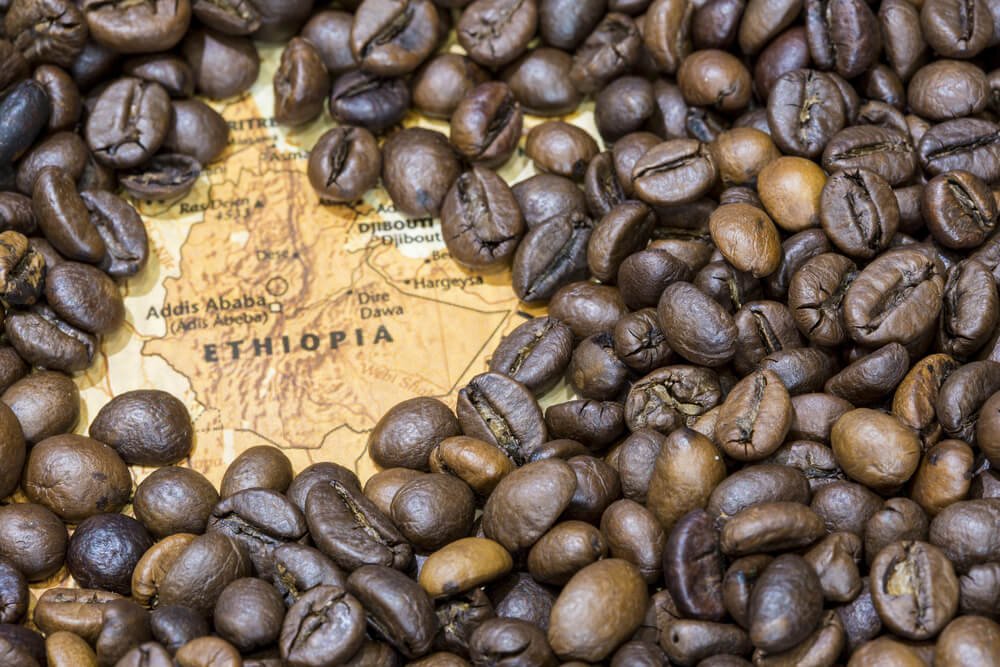
Ethiopia generated $878.52 million from coffee exports in the first quarter of its 2026/27 fiscal year, as growing demand from China helped push the country’s earnings 15 per cent above the level recorded during the corresponding period last year.
The performance, driven by increased export volumes and stronger demand from major international markets, reinforces coffee’s position as one of Ethiopia’s most important sources of foreign exchange.
Figures released by the Ethiopian Coffee and Tea Authority (ECTA) showed that the country exported 131,069.51 tonnes of coffee during the three-month period, compared with 113,541.81 tonnes in the same period of the previous fiscal year. The additional volume translated into an increase of $115.77 million in export earnings.
China accounted for a significant part of the growth, emerging as Ethiopia’s third-largest coffee export destination after Saudi Arabia and Germany. The Asian country imported 15,125.54 tonnes valued at $103 million, representing about 12 per cent of Ethiopia’s total coffee export volume and earnings.
The development points to China’s growing importance in Ethiopia’s coffee trade, as demand for the country’s Arabica beans expands beyond its traditional European and Middle Eastern markets.
Saudi Arabia retained its position as the largest destination, importing 28,362.77 tonnes worth $196.85 million, equivalent to 22 per cent of the total export volume. Germany ranked second, purchasing 22,924.18 tonnes valued at $136.69 million.
The United States, South Korea, Belgium, Japan and the United Arab Emirates were among the other major destinations, while Italy ranked ninth. Russia also entered Ethiopia’s top 10 coffee export markets, taking the tenth position.
According to the authority, the 10 leading destination countries accounted for 82 per cent of Ethiopia’s total coffee export volume and revenue. Exports to these markets increased by 19 per cent in both volume and earnings compared with the corresponding period of the previous fiscal year.
Despite the growth, the authority acknowledged that the performance fell short of its projections for the period.
Ethiopia had targeted the export of 144,433 tonnes of coffee and revenue of $1.033 billion. The actual volume represented 91 per cent of the target, while the $878.52 million generated amounted to 85 per cent of the projected earnings.
The shortfall of about $154.48 million in revenue suggests that, although the country’s coffee trade recorded stronger year-on-year performance, there is still room to improve export volumes and earnings.
ECTA attributed the increase to improvements in coffee quality, the adoption of technology in the trading system and coordinated efforts among stakeholders in the sector.
The performance also reflects the growing importance of China in the global coffee market. Ethiopia’s expanding trade relationship with the country has been supported by favourable market access, including tariff-free access for its coffee, according to a United States Department of Agriculture Foreign Agricultural Service report published in May 2026. The report identified China as an increasingly important buyer of Ethiopian Arabica beans.
For Ethiopia, the expansion of the Chinese market offers an opportunity to diversify its export destinations and reduce excessive dependence on a limited number of traditional buyers. The country’s coffee is recognised internationally for its distinctive flavour profiles, which include fruity, floral and wine-like characteristics.
Widely regarded as the birthplace of Arabica coffee, Ethiopia has a long history of coffee cultivation and consumption. The crop is deeply connected to the country’s culture and rural economy, supporting farmers, traders, processors and other participants across the supply chain.
Coffee is also a major contributor to the country’s foreign exchange earnings. In the 2024/25 fiscal year, Ethiopia earned about $2.6 billion from exporting approximately 470,000 tonnes of coffee, according to the Ethiopian News Agency, citing the Coffee and Tea Authority.
The government has been pursuing measures to increase productivity, improve quality and secure better returns from international sales. These include a 15-year coffee development strategy aimed at addressing structural challenges, expanding production and opening new markets.
ECTA has also been promoting value addition, with the intention of moving beyond the export of raw coffee beans to increase the volume of roasted and ground coffee sold internationally.
The authority’s Director-General, Adugna Debela, said in January that reforms were being introduced to encourage domestic companies to export processed coffee and earn foreign currency. The measures include guidelines for the export of value-added products and efforts to shorten the supply chain, reduce waste and protect quality.
The push for value addition is significant because exporting processed coffee can allow local businesses to capture a larger share of the value generated by the global coffee trade, rather than leaving much of the processing and branding income to overseas companies.
However, the sector still faces challenges, including the cost of production, market competition and the need to maintain consistent quality. A May 2026 USDA report noted that high fresh-cherry prices and rising operating costs had placed financial pressure on coffee traders and exporters, even as demand for Ethiopian beans remained strong.
The latest export figures therefore present both an encouraging picture and a reminder of the work required to sustain growth. While the rise in earnings and China’s emergence as a major buyer have strengthened Ethiopia’s position in the international coffee market, meeting export targets and improving the value earned from each shipment remain important priorities.
With Saudi Arabia and Germany maintaining their leading positions and China rapidly expanding its purchases, Ethiopia’s ability to consolidate existing markets while developing new ones will be central to the future performance of its coffee industry.


