



Cuba has put the economic damage caused by the United States’ blockade at $8.08 billion between March 1, 2025, and February 28, 2026, saying intensified US restrictions have worsened humanitarian and economic conditions in the country.
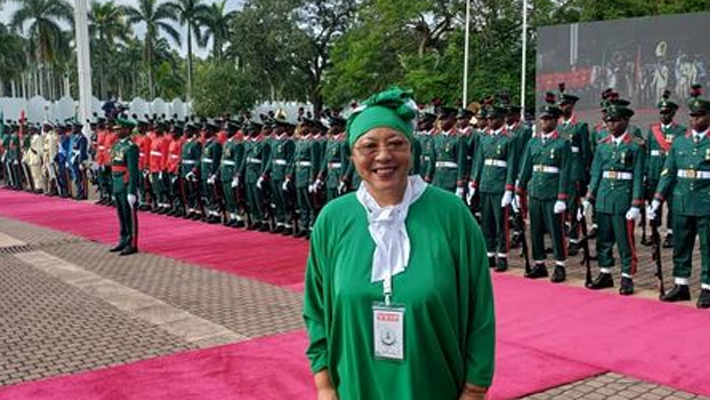
Cuba’s Ambassador to Nigeria, Mrs Miriam Morales Palmero, disclosed this in a brief shared with Daily Trust on Wednesday ahead of a United Nations General Assembly vote on the US blockade of Cuba scheduled for October 28.
Palmero said the reported $8,083,300,000 in losses reflected what she described as an intensified US campaign to isolate and exert economic pressure on Cuba.
“Throughout this year, the US government has intensified its attempts to completely suffocate and isolate Cuba through an unprecedented reinforcement of the blockade and multidimensional aggression against the country,” she said.
According to the ambassador, the measures had contributed to a decline in the quality of life of Cubans and caused what she described as significant humanitarian consequences.
She particularly cited a January 29, 2026, executive order signed by US President Donald Trump, which she said authorised additional tariffs on imports from countries supplying oil to Cuba, directly or indirectly.
Palmero described the measure as an “energy siege”, alleging that it was intended to increase pressure on the Cuban government and encourage social unrest.
She argued that the restrictions amounted to collective punishment of the Cuban population and violated international law and human rights principles.
The ambassador also cited concerns expressed by several special procedures of the UN Human Rights Council and the Office of the UN High Commissioner for Human Rights over the potential impact of restrictions on essential services, including healthcare, food and water systems, which she said rely heavily on imported fuel.
Palmero further referenced Article 33 of the Fourth Geneva Convention of 1949, which prohibits collective penalties, arguing that the Cuban population was being subjected to such measures.
She also criticised another executive order, EO 14404, issued on May 1, 2026, which she said further expanded the extraterritorial reach of US sanctions by allowing restrictions on foreign individuals and entities operating in sectors considered strategic to Cuba.
According to her, the sectors include energy, mining, finance, security and defence.
Palmero said Cuba remained willing to engage the United States in dialogue and cooperation on matters of mutual interest, as well as negotiate outstanding bilateral issues based on equality, reciprocity and respect for national sovereignty.
She also appealed to the international community to support Cuba’s efforts to end the blockade, describing such support as a defence of international law and the right of countries to pursue their affairs without external coercion.
Cuba, she said, would present its traditional draft resolution to the UN General Assembly on October 27 and 28, seeking international support for an end to the US blockade.
“Our people and our government hope to count on the valuable support of your country in defence of justice and the right of Cubans to live in peace,” Palmero said.


