



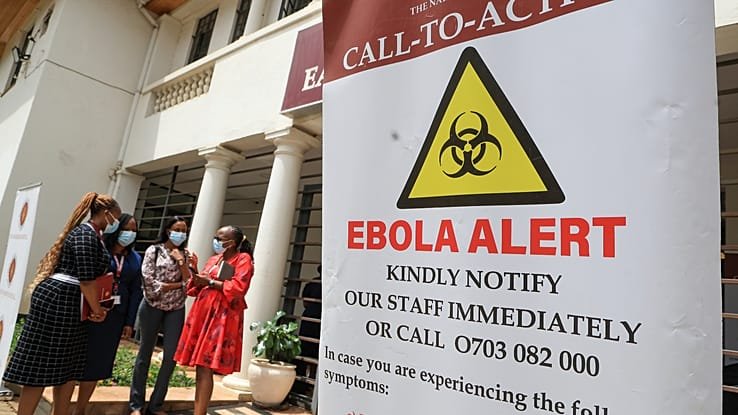
Kenya has stepped up surveillance and emergency preparedness measures following the confirmation of its first Ebola case, after an infected man travelled through Uganda before reaching the capital, Nairobi.
The patient, a Kenyan man who had lived in the Democratic Republic of Congo (DRC) for seven years, developed symptoms about a month ago before travelling by road to Uganda and later flying to Nairobi on Saturday.
He was diagnosed with Ebola after arriving in Nairobi and died on Monday.
The case has raised concerns about cross-border surveillance and the ability of health authorities to detect and track infectious diseases as people move between countries.
Africa CDC Director-General, Jean Kaseya, said authorities needed to strengthen surveillance at points of entry to prevent similar cases from going undetected.
“We need to ensure that at point of entry, we have a strong surveillance system in place,” Kaseya told The Associated Press on Tuesday.
Ebola is a highly infectious viral disease that can spread through direct contact with the bodily fluids of an infected person, including blood, vomit and semen, as well as contaminated materials such as clothing and bedding.
In response to the case, Kenya’s Ministry of Health has intensified surveillance at border entry points and established a hotline through which members of the public can report symptoms associated with Ebola.
The government has also designated five health facilities with a combined capacity of 241 isolation beds for the management of suspected and confirmed cases, while efforts are underway to expand the capacity.
The Health Ministry said the country has adequate supplies, including personal protective equipment, and has been mobilising resources since the Ebola outbreak was first reported in Congo in May.
Authorities have also designated a specific gate at Kenya’s main airport for passengers arriving from 10 countries located within the outbreak’s epicentre.
The measures are aimed at strengthening early detection, isolation and response as Kenya works to prevent further transmission following the country’s first confirmed case.


