



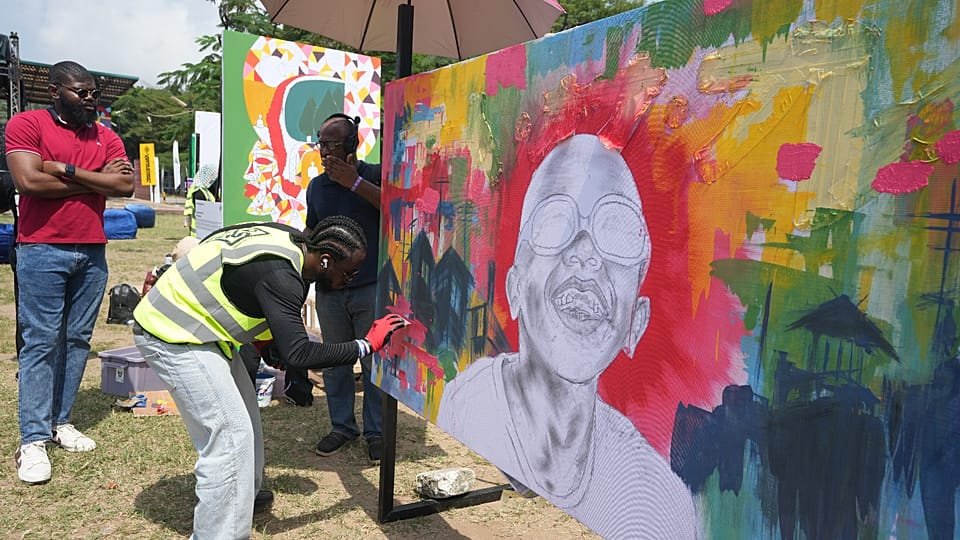
With spray cans and brushes in hand, artists brought their creative ideas to life as visual artists, cultural enthusiasts and members of the public gathered in Lagos on Saturday for the second edition of the Lagos Street Art Festival.
The festival, which seeks to make art more accessible by taking it beyond conventional galleries and into public spaces, is providing a platform for artists to showcase their talents, attract wider audiences and explore commercial opportunities in the creative industry.
One of the festival’s founding Creative Council members, Adaora Mbelu, said art should not be restricted to galleries but made accessible to the wider public, particularly as many emerging artists struggle to find platforms to exhibit and sell their works.
She said the festival was created to address the limitations of conventional exhibition spaces and give artists opportunities to express themselves while attracting the attention of potential buyers and supporters.
“The galleries won’t take them. And so, we’re giving them that opportunity to actually allow them to express their creativity, one, but also to be able to have a platform where they can have visibility and also commercialise their work,” Mbelu said.
The second edition builds on the success of the inaugural festival held in 2025, which featured 12 artists, including nine Nigerians and three international participants, who created large-scale artworks across Lagos under the theme, “Legendary Lagos: City of Dreams.”
The first edition transformed selected public spaces into open-air galleries, with murals celebrating the city’s energy, cultural diversity and reputation as a destination for people pursuing different ambitions.
Among the works was Lithuanian artist Andrey Adno’s mural, “The Pace of Lagos,” which captured the city’s movement and dynamism, while Nigerian artist HK Locks explored themes of unity, migration and the diverse backgrounds of people who make Lagos their home.
The participation of international artists also provided an opportunity for creative exchange, exposing Nigerian artists to different approaches to public art while introducing foreign participants to the city’s cultural identity.
For the organisers, the second edition is another step towards establishing public art as a platform for community engagement, urban storytelling and creative opportunities in Nigeria’s commercial capital.
Organised by Inscribe Art in partnership with the Lagos State Parks and Gardens Agency, the 2026 festival held on November 7 at Muri Okunola Park, Victoria Island. It brought together visual art, music, culture and community experiences, expanding the programme beyond conventional art exhibitions.
The choice of a public park reflects the festival’s central philosophy: that people should not have to visit galleries or specialised cultural institutions before experiencing visual art.
In a city where daily activities are largely defined by traffic, commerce and the pressure of urban living, public art offers an alternative way of engaging with the environment. Murals, paintings and other creative installations can turn otherwise ordinary spaces into places of cultural expression and public interaction.
The approach also challenges the perception that visual art is meant primarily for collectors, established artists and people who can afford to visit galleries.
By moving artistic expression into shared spaces, the festival creates opportunities for people from different social and economic backgrounds to encounter creative works in their everyday environment.
Creating opportunities for emerging artists
Beyond making art accessible to the public, the festival is also addressing the difficulties faced by emerging Nigerian artists in gaining recognition and establishing sustainable careers.
For many young creatives, the challenge is not necessarily a lack of talent or ideas but limited access to exhibition opportunities, professional networks, commercial platforms and audiences willing to pay for their work.
Traditional galleries remain important to the development of the visual arts industry, but their exhibition structures and commercial considerations can make it difficult for some emerging artists to secure visibility.
The Lagos Street Art Festival seeks to bridge part of that gap by providing an alternative platform where artists can display their work, interact with audiences and potentially connect with buyers, sponsors and other industry stakeholders.
The commercial dimension is particularly important as Nigeria’s creative economy continues to attract attention as a source of employment, investment and cultural influence.
While the country’s music and film industries have gained significant international recognition, visual artists are also seeking greater opportunities to commercialise their talents and participate in the expanding creative marketplace.
Public art can contribute to this process by introducing artists to audiences beyond the traditional art-buying community. It also creates possibilities for commissions from businesses, property developers, cultural organisations and public institutions interested in incorporating artworks into their spaces.
However, turning visibility into sustainable income requires more than organising periodic festivals. Artists also need access to professional representation, intellectual property protection, training, commissions and reliable channels for selling their works.
The festival’s emphasis on commercialisation therefore raises an important question about how such initiatives can develop into lasting opportunities for participating artists.
Public art and the identity of Lagos
The festival also draws attention to the relationship between art and the identity of Lagos, a city whose cultural character is shaped by its diverse population, commercial activities, migration and constant urban expansion.
Its inaugural theme, “Legendary Lagos: City of Dreams,” reflected this identity by encouraging participating artists to interpret the city through their individual creative perspectives.
The resulting works offered different representations of Lagos, from its fast-paced lifestyle to the ambitions of people who move to the city in search of opportunities.
Such artistic interpretations can help preserve aspects of the city’s history and social experience, particularly as rapid development continues to transform neighbourhoods and public spaces.
Public art also has the potential to improve the visual character of urban environments, although its long-term contribution depends on proper maintenance, community participation and the involvement of relevant authorities.
For Lagos, where cultural tourism and the creative economy offer opportunities for economic diversification, the development of a stronger public art culture could add another dimension to the city’s appeal.
The Lagos Street Art Festival’s growing programme of artist talks, workshops, exhibitions and live demonstrations also provides opportunities for young people to learn about different artistic techniques and engage directly with practising creatives.
These activities are important because the development of a sustainable creative industry requires investment not only in established practitioners but also in the next generation of artists.
The involvement of local and international participants can further strengthen this process through collaboration, mentorship and the exchange of creative ideas.
As the festival continues to develop, its ability to attract wider participation, sustain partnerships and create opportunities beyond the annual event will be an important measure of its impact.
For the organisers, the ambition goes beyond displaying paintings and murals. It is about changing how people encounter art, giving emerging artists greater visibility and making creative expression part of everyday life.
By taking art out of galleries and into public spaces, the Lagos Street Art Festival is seeking to establish a different relationship between artists, their communities and the city they represent.


