



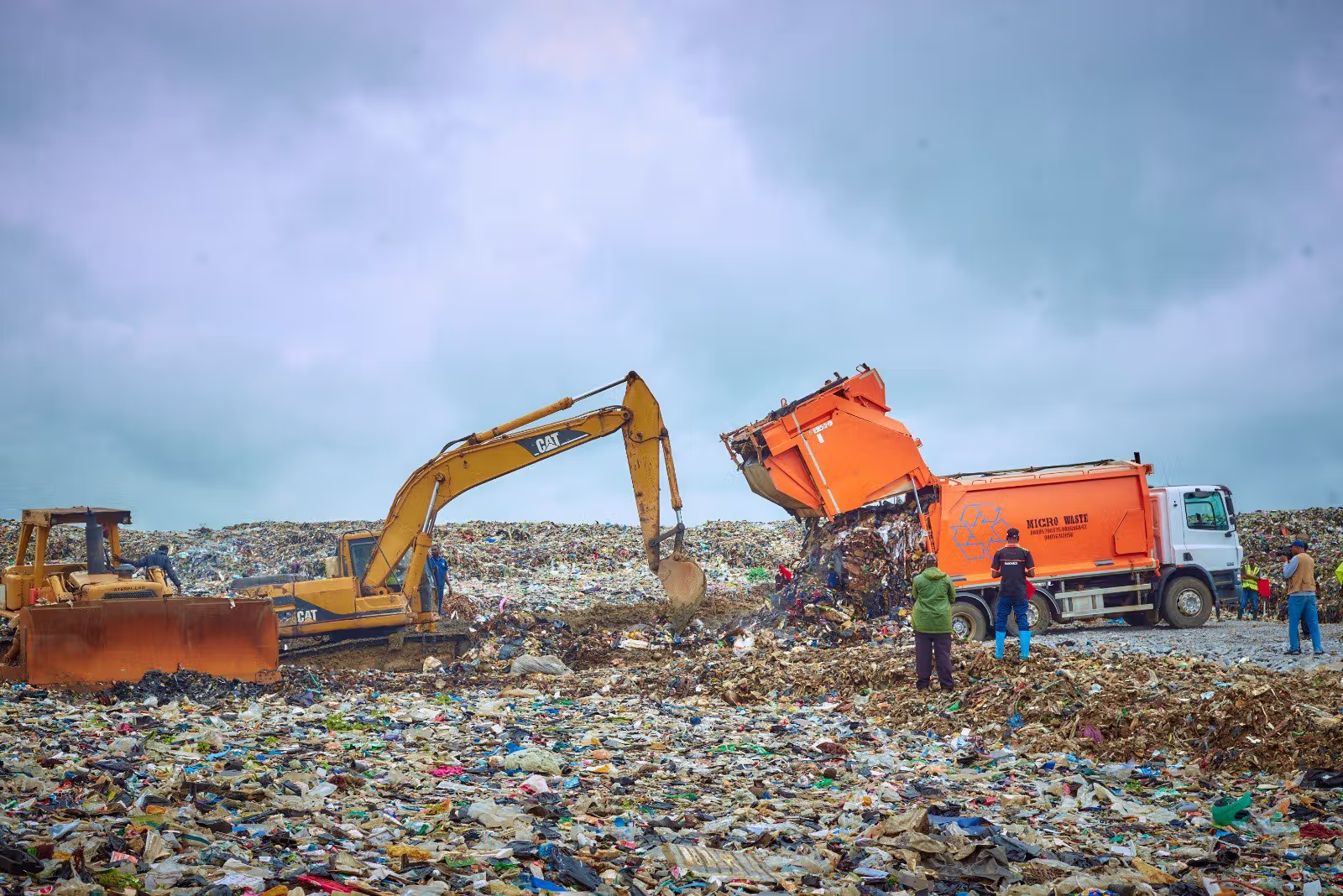
Nigeria could significantly improve its electricity supply, create thousands of jobs and generate additional revenue by turning its growing volume of waste into electricity, organic fertiliser, biogas and other useful products, according to the National President of the Association of Waste Managers of Nigeria (AWAMN), Olugbenga Adebola.
Adebola, who made this known in an interview with New Telegraph, said the country was sitting on enormous economic opportunities in its waste, which, if properly harnessed, could become an important resource for addressing some of its most pressing development challenges.
He explained that converting waste into electricity and other useful products would not only increase the country’s power generation capacity but also support agricultural production, create employment for the nation’s teeming unemployed population and attract foreign exchange earnings through investment in waste recycling and resource recovery.
His position comes amid Nigeria’s persistent electricity supply challenges and the growing volume of refuse generated by households, markets, commercial establishments and industries across the country.
Available data from the World Bank showed that Nigeria generated approximately 44.5 million metric tonnes of municipal solid waste in 2021, representing an average of 0.58 kilogrammes per person daily. The volume is expected to increase substantially as the country’s population expands and urbanisation accelerates.
The projection of rising waste generation presents a major environmental challenge, but it also offers an opportunity for Nigeria to develop an alternative energy source while addressing the problems associated with indiscriminate waste disposal.
Lagos, Nigeria’s commercial centre and one of Africa’s most populous urban areas, provides an indication of the scale of the opportunity. Figures from the Lagos Waste Management Authority (LAWMA) put the state’s daily waste generation at about 13,000 tonnes, although more recent estimates have placed the volume between 13,000 and 16,000 tonnes.
The increasing volume has continued to put pressure on waste collection, transportation, treatment and disposal infrastructure, with residents in different parts of the state periodically experiencing refuse accumulation.
However, environmental and energy experts believe that much of the waste currently regarded as a disposal problem could be converted into valuable resources if the country develops the necessary infrastructure and adopts an integrated waste management system.
A study by Somorin, Adesola and Kolawole, published in the Journal of Cleaner Production in 2017, estimated that Nigeria could generate 26,744 gigawatt-hours of electricity annually from municipal solid waste, equivalent to approximately 3,053 megawatts of continuous power generation.
The study assessed the waste-to-energy potential across the 36 states and the Federal Capital Territory, finding that individual state capacities could range from 31MW to 205MW, depending on the volume of waste generated.
Lagos, because of its population and commercial activities, has particularly significant potential. The state government has already advanced plans for a waste-to-energy facility in Epe, designed to process approximately 2,500 tonnes of municipal solid waste daily and generate between 60MW and 80MW of electricity.
The project forms part of the state’s wider efforts to modernise waste management, improve resource recovery and reduce dependence on conventional waste disposal methods.
For Nigeria, the opportunity extends beyond electricity generation. Properly managed waste can also provide raw materials for compost and organic fertiliser production, while suitable organic materials can be processed to produce biogas.
These products could support agricultural activities, reduce dependence on imported inputs and provide additional business opportunities for investors and operators within the waste management value chain.
Adebola, however, believes that achieving this requires a fundamental change in the way Nigerians perceive and manage waste. Rather than treating refuse as something to be collected and discarded, he said the country must begin to regard it as an economic resource capable of generating wealth and supporting sustainable development.
He acknowledged that waste management in Nigeria was still evolving and that the country had considerable ground to cover, noting that indiscriminate dumping remained a problem in several parts of the country, not Lagos alone.
Ironically, he observed, Lagos had been at the forefront of integrated waste management for many years and had previously established a relatively effective system of house-to-house collection, transportation and disposal.
Although the system had encountered challenges in recent years, he said the government and stakeholders were working to address the situation.
Adebola attributed the growing difficulties in Lagos largely to infrastructural deficits and the rapid expansion of the state’s population, which has significantly increased the volume of refuse requiring daily collection and disposal.
He said: “The challenge is infrastructural deficit. As the population of Lagos is growing so rapidly, the more people you have, the more waste is being generated. That will account for the reason why the quantum of waste that is generated is multiplying.
“If you have a state which was just a megacity of about 10 million people, now the population of the state is put at over 23 million or 25 million, and it will go scientifically based on what is obtainable globally to what we call generation per capita, which is put at 0.5 to 1.2. Lagos, being a city with high population density, has over 0.9 to 1kg generation per capita per person per day.”
He said the scale of waste generation required sustained investment in collection equipment, transportation facilities, treatment plants and disposal infrastructure.
Adebola disclosed that he had participated in several meetings with the Lagos State Government on the challenges, expressing confidence that the intervention of Governor Babajide Sanwo-Olu and relevant government agencies would help restore the state’s waste management system.
He recalled a recent virtual meeting convened by the governor, during which stakeholders were directed to intensify efforts and accelerate existing plans to address the situation.
According to him, the state government, the Ministry of the Environment, LAWMA and private waste operators were committed to improving the system.
The AWAMN president also noted that Lagos had become a reference point for waste management in West Africa, with more than 26 Nigerian states visiting the state to understudy its model.
He said the state’s experience had attracted interest from other African countries, including Ghana and Sierra Leone, which had sent delegations to examine its waste management structure.
“In fact, Sierra Leone did not just come, it came to pick officials of the Lagos State Waste Management Authority and some of the private sector that were running waste management in Lagos State and took them to Sierra Leone to manage their waste for a couple of years,” he said.
He added that several West African countries had similarly benefited from the experience developed in Lagos, although he acknowledged that the state needed to renew its commitment to maintaining the standards for which it was previously recognised.
According to him, the growing international attention being given to sustainability, recycling and the circular economy makes it necessary for Nigeria to rethink its approach to waste management.
He maintained that the economic value of waste could only be realised when governments, operators, businesses and residents worked together to establish an efficient collection and processing system.
Adebola said: “Waste should be seen as a resource. There was a year that the celebration of World Recycling Day’s theme was hinged on adopting waste as the eighth resource of the world.”
He explained that turning waste into wealth must begin with individual households and residents, who have a responsibility to dispose of refuse properly and cooperate with approved collection arrangements.
Although waste management involves all three tiers of government, he argued that local governments have an important constitutional responsibility in environmental sanitation and refuse disposal, making their effective participation indispensable.
On the prospects of energy generation, Adebola said Nigeria could convert suitable waste materials into renewable energy, including electricity, biogas and compressed natural gas (CNG).
He, however, cautioned that not every category of waste was suitable for energy generation, explaining that the conversion process depended on the composition and energy content of the materials.
“There is what is called Waste to Energy. It is not all waste that can be converted. The ones that can be converted are the ones with high calorific value,” he said.
This distinction is important because successful waste-to-energy projects require proper sorting, processing and treatment. Organic waste, plastics, paper and other combustible materials have different energy characteristics and require appropriate conversion technologies.
For instance, biodegradable materials can be processed through anaerobic digestion to produce biogas, while suitable combustible waste can be used in controlled thermal processes to generate electricity. Organic residues can also be processed into compost and soil-enhancing products.
However, the benefits depend on the adoption of appropriate environmental safeguards, including emissions control, proper handling of hazardous materials and responsible management of residues from processing plants.
The 2017 Somorin-led study also provides an important qualification to the enormous electricity potential frequently associated with waste in Nigeria. Although it estimated the country’s theoretical capacity at 26,744GWh annually, it found that the exploitable potential under prevailing waste collection conditions was below 3,800GWh.
This means that the country cannot achieve the projected electricity benefits simply because large quantities of refuse are generated daily. Efficient collection, reliable supply of properly sorted waste, suitable technology and commercially viable investment arrangements are necessary to translate the potential into actual electricity.
The experience of Lagos, particularly its proposed Epe waste-to-energy facility, could provide an important starting point for other states considering similar investments.
Nevertheless, the Federal Government and state governments would need to develop clear policies, provide incentives for private investors and establish partnerships that guarantee a steady supply of waste to processing facilities.
The involvement of local governments is equally important, particularly in ensuring effective household collection and preventing the indiscriminate dumping that undermines waste recovery efforts.
For Adebola, Nigeria’s waste challenge should no longer be viewed exclusively as an environmental problem. With the right investment, technology and commitment from stakeholders, it could become an important contributor to electricity generation, agricultural development, industrial growth and employment creation.
At a time when the country is struggling to bridge its electricity supply gap and create sufficient economic opportunities for its growing population, converting waste into useful products offers an opportunity that policymakers and investors can hardly afford to ignore.


