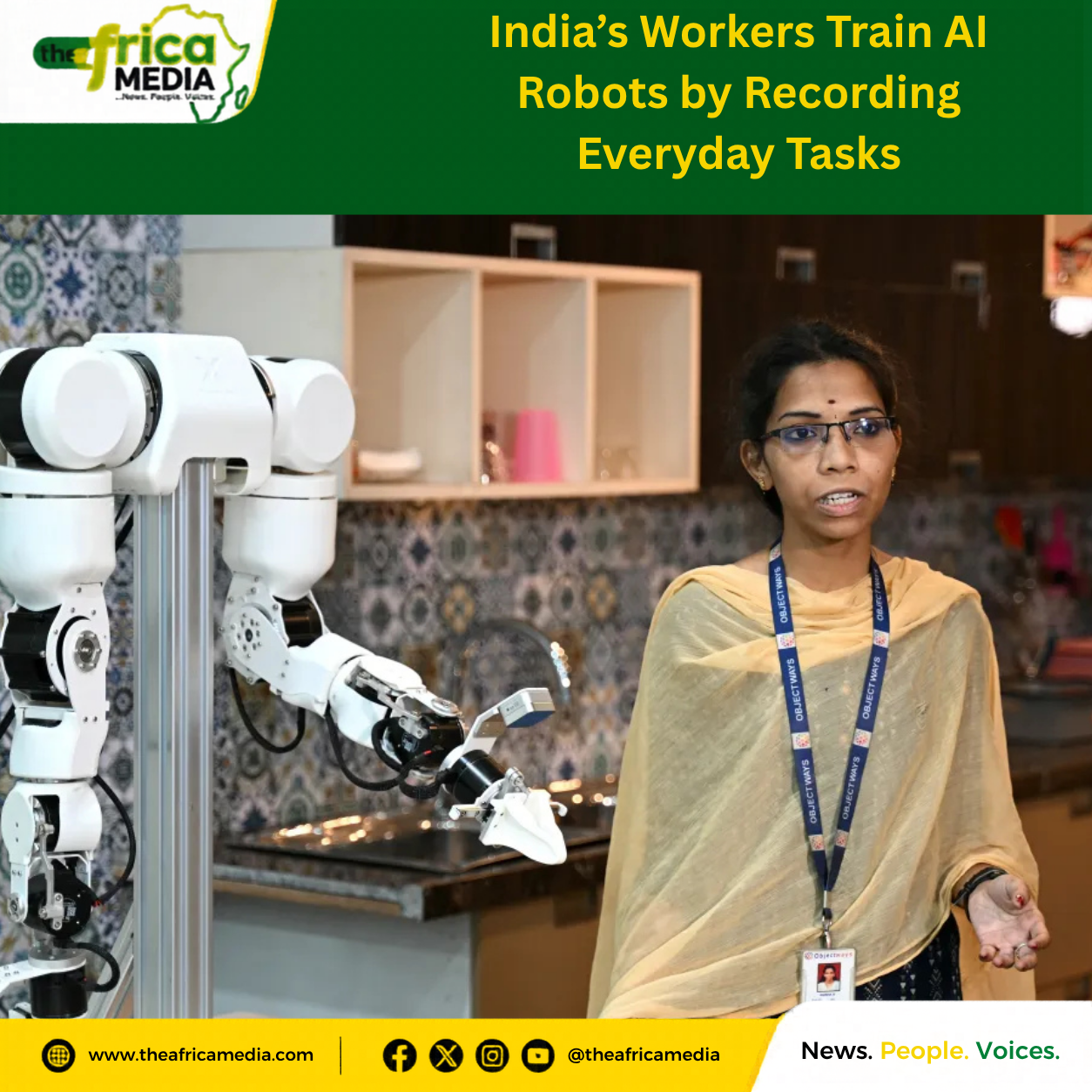
In parts of India, ordinary workers are increasingly being paid to help train artificial intelligence systems by recording themselves performing daily activities that machines are expected to replicate in the future.
In Chennai, housewife Nagireddy Sriramyachandra wears a smartphone mounted on her head as she films herself carrying out household chores such as slicing fruit and cooking. These recordings are used to teach AI-powered robots how to mimic human movement and behaviour in real-world environments.
She earns about 250 rupees ($2.6) per hour for the work, which involves capturing first-person footage that is later processed by AI developers. The data is part of a growing field known as “egocentric” training data, where systems learn from a human point of view.
Workers involved in this emerging industry say the tasks are simple but increasingly important, as companies attempt to build robots capable of performing complex physical activities. Participants record videos using head-mounted cameras and motion-tracking tools before uploading the data to specialised platforms used by AI firms.
The demand for such data is rising as developers move beyond text-based AI systems toward robots that can interact with physical environments. Industry projections suggest that humanoid robots could become widely deployed in industrial and domestic settings in the coming decades.
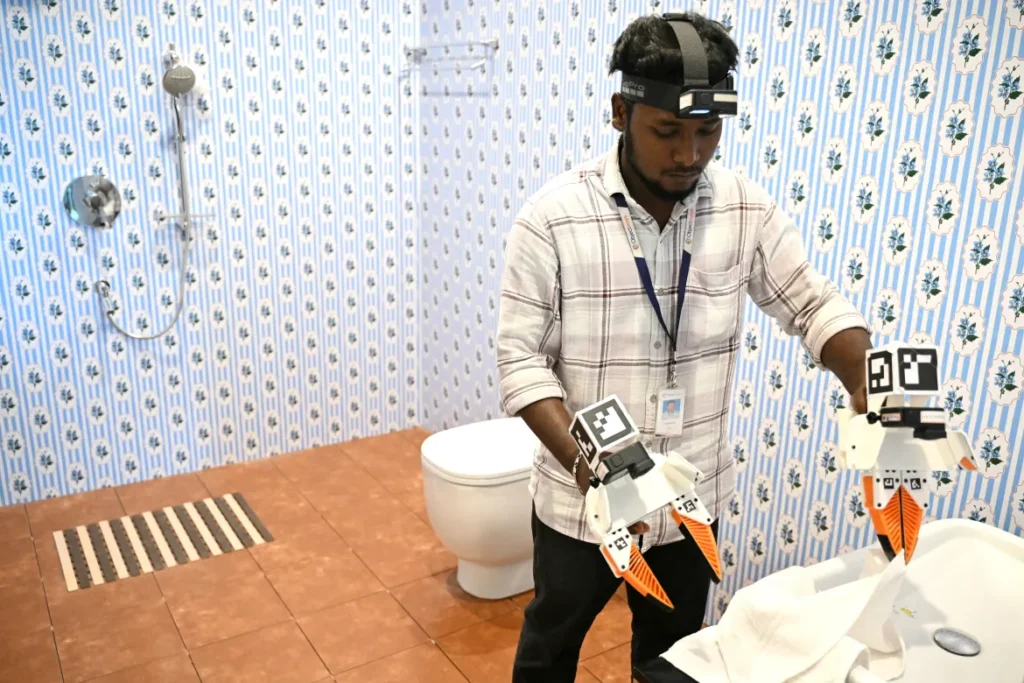
India has become a major hub for this type of digital labour, providing large-scale data collection and annotation services for global technology companies. Many of these firms serve international clients, including major corporations developing advanced AI systems.
Experts say this work highlights both opportunity and concern. While it provides income for low- and middle-income workers, it also raises questions about automation and the future of labour in sectors already vulnerable to job displacement.
Some workers, including those in informal occupations such as street vending and domestic work, have also been recruited to record their daily routines. A flower garland maker in Bengaluru described participating in similar programmes, noting concerns that future generations may struggle to find similar work as automation expands.
Policy analysts warn that while AI is often discussed in terms of white-collar job losses, less attention is given to its impact on informal workers, who make up a significant portion of India’s labour force.
As AI systems continue to evolve, India’s role as a global supplier of training data is expected to grow, even as questions remain about how automation will reshape employment in the long term.