


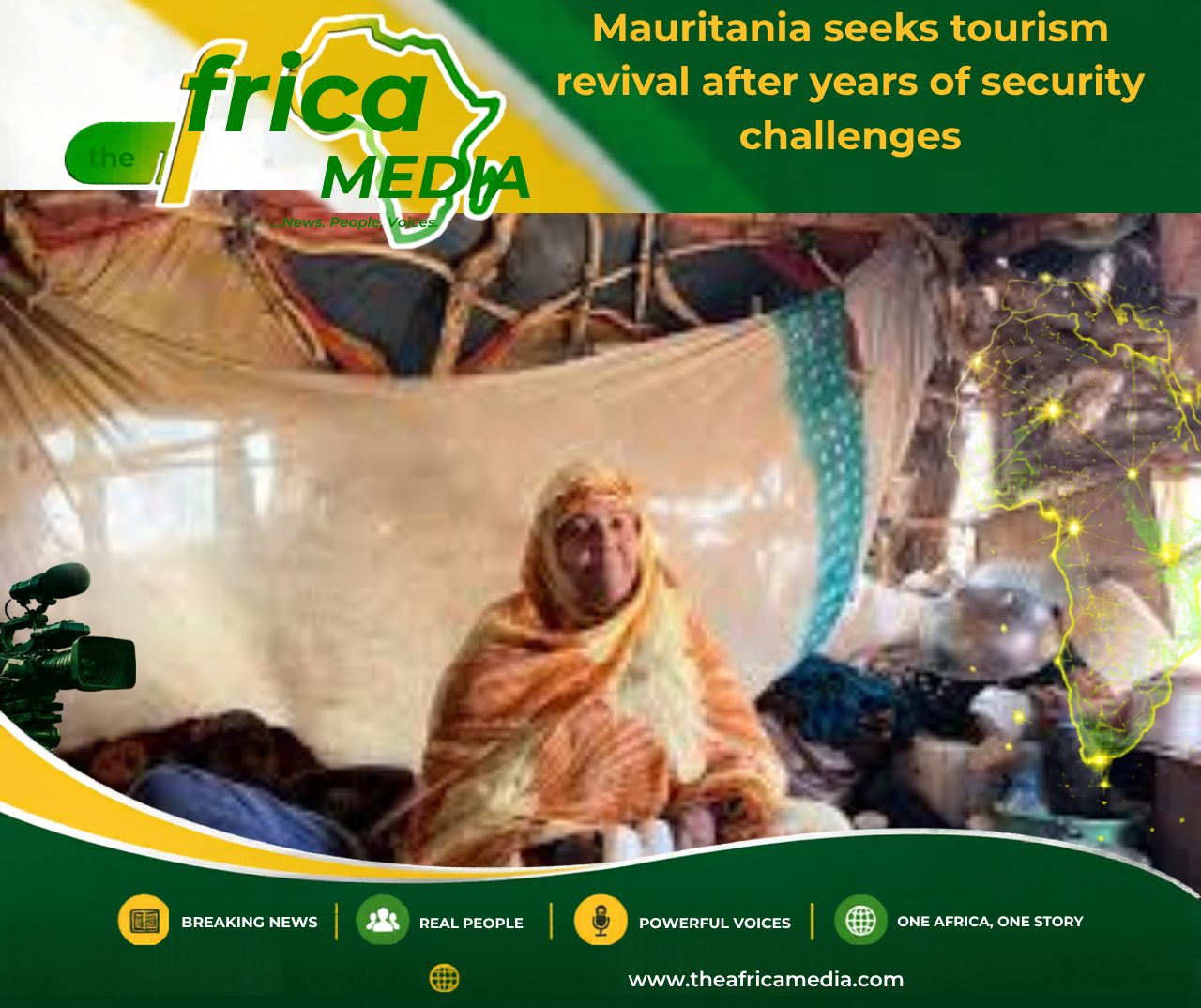
Mauritania is working to rebuild its tourism industry after years of decline caused by attacks from armed groups linked to al-Qaeda in the mid-2000s.
One of the country’s most famous attractions is the Richat Structure, popularly known as the “Eye of Africa,” a massive circular geological formation in the Sahara Desert that attracts adventurers and nature enthusiasts from around the world. Local residents, including camp operators and guides, are increasingly relying on tourism as a source of income as visitor numbers gradually recover.
Tourism in Mauritania once thrived, drawing thousands of visitors annually, particularly from Europe. However, a series of attacks by extremist groups, including the killing of French tourists in 2007, severely damaged the sector. The insecurity led to the suspension of tourist charter flights and the relocation of major events such as the Dakar Rally.
In response, the Mauritanian government strengthened border security, deployed elite military units, expanded educational opportunities, and introduced programmes aimed at reducing poverty in vulnerable communities. Authorities say these measures have helped maintain stability, with no major terrorist attacks reported in the country since 2011.
The government has also introduced policies to attract tourists, including reducing visa fees and increasing international promotion of the country’s attractions. Officials and tour operators report a steady increase in visitor numbers, although arrivals remain below the levels recorded before the security crisis.
Tourists visiting Mauritania are drawn to its vast desert landscapes, historic cities, mountain oases, and the famous Iron Ore Train, which has gained popularity among adventure travellers. Many visitors also praise the country’s culture of hospitality and its relatively untouched tourist sites.
Despite the progress, challenges remain. Some visitors have pointed to limited infrastructure, a lack of site management, and fewer luxury accommodation options compared to neighbouring destinations. However, industry experts believe Mauritania’s authenticity and unique desert experiences continue to set it apart.
For local business owners and tourism operators, the gradual return of visitors offers hope that the sector can once again become an important contributor to the country’s


