



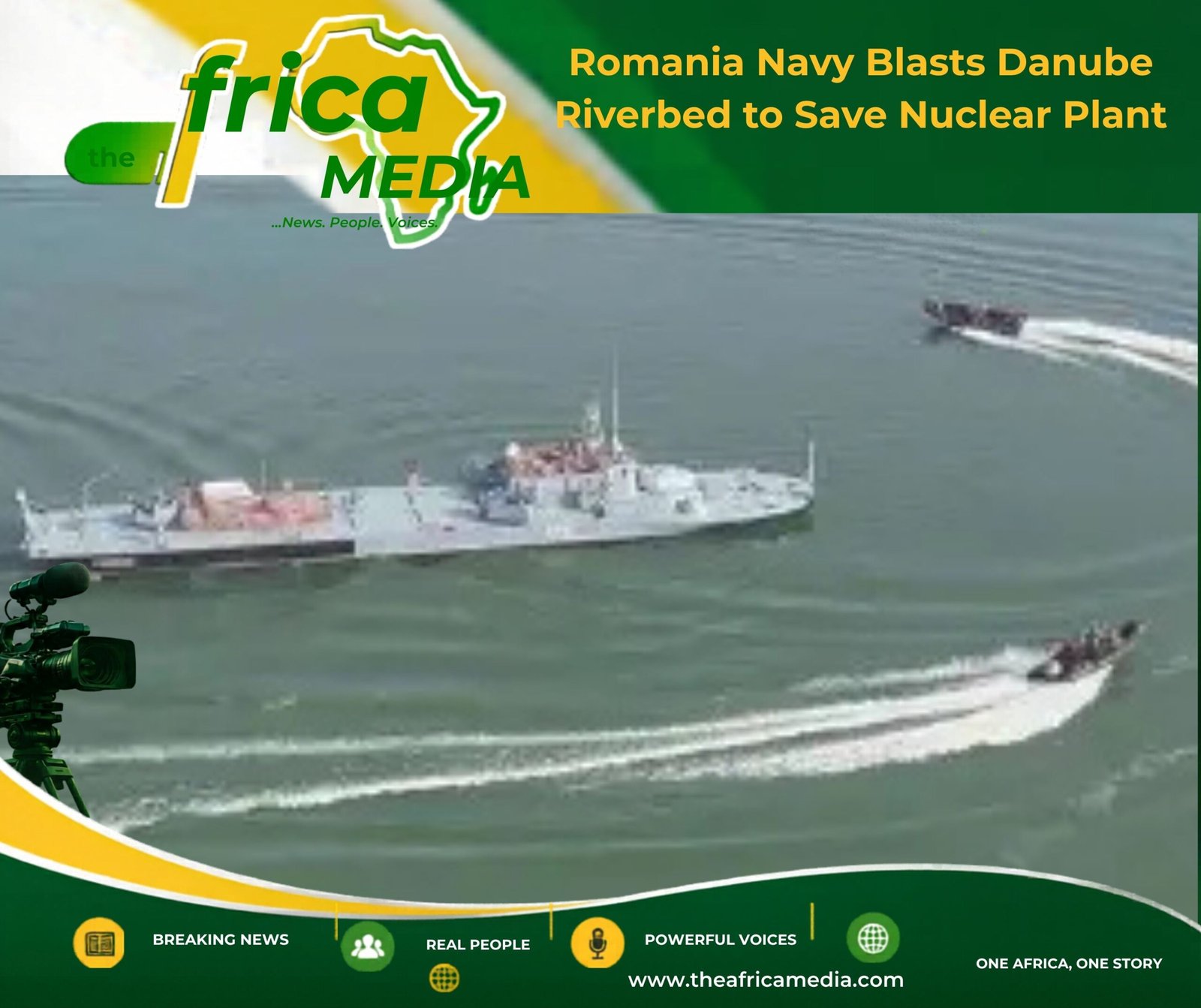
Romania’s military has detonated part of the Danube riverbed to redirect water toward the Cernavoda Nuclear Power Plant, after prolonged drought and extreme heat pushed the river to record-low levels. The Romania navy blasts Danube operation aims to secure critical cooling water for the plant’s remaining active reactor.
Romania temporarily shut down the first reactor at Cernavoda on July 28, as drought conditions reduced Danube water levels to record lows. The Romanian Ministry of National Defence launched a large-scale operation on the river to ensure water supply for the plant’s second reactor amid the sharp drop in levels.
How the Operation Unfolded
The operation, which began Sunday, involved blasting rock formations near the Parjoaia rock to redirect the river’s main flow toward the Cernavoda sector. The first attempt, however, failed after military engineers underestimated the density of the rock. An initial two-kilogram test detonation was conducted near the site, followed by a larger 100-kilogram controlled blast on Monday, August 3, after Sunday’s efforts fell short. Rear Admiral Marcel Neculae, deputy chief of staff of Romania’s Naval Forces, said the military planned to use roughly twice as much explosive material on Monday compared to the previous day.
Divers inspected the site between attempts to assess the results before further blasting. More than 100 service members were deployed for the operation, which also included blasts in the Bala canal aimed at redirecting water from the Bala channel into the old Danube channel to raise water levels.
Why the Danube Has Dropped So Low
The National Administration of Romanian Waters (ANAR) said the intervention is particularly complex, given the Danube’s extremely low water level, and involves constructing a diversion dam to concentrate flows toward the Cernavoda sector. The agency warned that the river’s low level could prevent the operation from achieving its intended hydraulic effect.
Data from ANAR showed the river’s flow at Romania’s entry point reached just 1,600 cubic metres per second on Sunday, with a downward trend expected to bring it to 1,450 cubic metres per second by the end of the week. The Danube’s level has fallen to alarmingly low levels not only in Romania but also in neighbouring countries, including Hungary and Serbia.
Regional Nuclear Concerns
The crisis extends beyond Romania. Hungary issued a sharp warning over plunging river levels, with Prime Minister Peter Magyar alerting the country to a potential energy collapse after operators suspended operations at the Paks nuclear power plant for the first time in 44 years.
Romania has reportedly declared a nationwide state of emergency throughout August in response to the deepening drought conditions affecting the Danube basin.


