



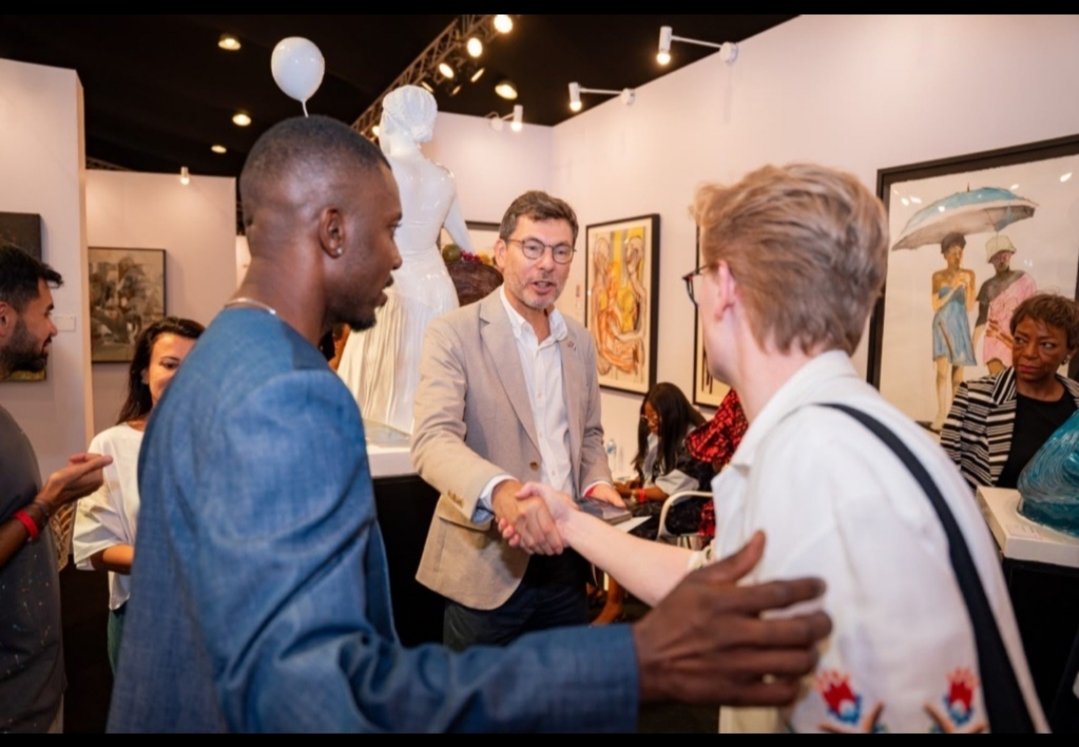
The UK and Nigeria have concluded a series of creative-sector engagements in Lagos, connecting creative businesses, practitioners, policymakers and cultural institutions with expertise, networks and potential routes to new audiences and markets.
The engagements underscore growing efforts by both countries to turn their longstanding cultural relationship into stronger commercial partnerships, particularly at a time when Nigeria’s creative industry is attracting international attention through music, film, fashion, literature, visual arts and other forms of cultural expression.
For Nigeria, the challenge has increasingly shifted from producing creative content that attracts audiences at home and abroad to building the business structures, distribution channels, financing arrangements and intellectual property protections required to generate sustainable returns from that talent.
The UK Creative Sector Delegation brought together 17 professionals from England, Scotland, Wales and Northern Ireland with Nigerian counterparts, working across film, television, music, fashion, design, literature, theatre, visual arts and other creative sectors.
The composition of the delegation provided an opportunity for professionals operating in different parts of the creative value chain to exchange experiences and explore how their respective industries could benefit from closer cooperation. Beyond showcasing Nigerian talent, the engagements sought to identify practical ways of helping creative businesses develop partnerships, access expertise and position their products for international markets.
Through targeted meetings, roundtables and activities around the Africa International Film Festival, the Creative Africa Nexus Weekend, Lagos Fringe and Art X Lagos, participants exchanged knowledge, developed professional relationships and explored areas for future collaboration.
These events provided a platform for the visiting professionals to engage with Nigeria’s creative community, understand the opportunities within the country’s rapidly developing cultural economy and identify areas where international partnerships could produce tangible commercial outcomes.
The programme also brought attention to the importance of connecting creative practitioners with the institutions and businesses that can help them move beyond individual projects to sustainable enterprises. For many emerging creative businesses, access to international networks, experienced industry professionals and distribution opportunities can be as important as the creative process itself.
Discussions focused on the practical conditions creative practitioners and businesses need to grow, including skills development, intellectual property protection and rights management, access to appropriate finance, production capability, commissioning, distribution and access to local and international audiences.
These issues remain critical to the development of Nigeria’s creative economy. While Nigerian music, films, fashion and visual arts have established considerable international visibility, converting that popularity into consistent revenue for creators and businesses remains a major concern.
In the music industry, for instance, effective rights management and the ability to collect royalties across different territories are essential to ensuring that artists, songwriters, producers and other rights holders benefit financially from the use of their work. Similarly, film producers need stronger distribution arrangements, financing and access to international commissioning opportunities to improve the commercial prospects of their productions.
Fashion designers, visual artists, writers and theatre practitioners also face the challenge of accessing buyers, publishers, galleries, production partners and audiences beyond Nigeria. Building connections with established international institutions and businesses could help address some of these limitations.
The visit therefore provided an opportunity to examine the business side of creativity, rather than concentrating exclusively on cultural exchange and the promotion of artistic talent.
The programme also comes against the background of the Federal Government’s ambition to make the creative economy a stronger contributor to national development. In August 2026, the Minister of Art, Culture, Tourism and Creative Economy, Hannatu Musa Musawa, said the sector contributed approximately 2.3 per cent to Nigeria’s Gross Domestic Product, while the government was targeting two million jobs and a contribution of N100 billion to GDP by 2030, according to the Federal Ministry of Information and National Orientation.
The figures underline the economic importance of developing the sector’s capacity to attract investment, expand production and generate export earnings. They also reinforce the need for policies that allow creative businesses to operate commercially, protect their intellectual property and compete more effectively in international markets.
The visit also supported the continuing work of the UK-Nigeria Enhanced Trade and Investment Partnership Creative Industries Technical Working Group. Launched in March 2025, the Working Group brings government and industry representatives together to identify commercial opportunities, address regulatory and non-tariff barriers and encourage collaboration across film and television, music, design and fashion, architecture, advertising, and gaming.
The Working Group is part of the broader Enhanced Trade and Investment Partnership, established by Nigeria and the UK in April 2024 to strengthen bilateral trade and investment relations. The partnership covers several areas of economic cooperation, with the creative industries recognised as one of the sectors offering opportunities for mutual commercial benefit.
An important aspect of the arrangement is the recognition that the two countries can benefit from combining their respective strengths. Nigeria has a large pool of creative talent, a vibrant entertainment market and cultural products with international appeal, while the UK has established creative institutions, production expertise, professional networks and access to global distribution channels.
The partnership also provides a framework for exploring a film co-production arrangement between both countries, an initiative that could create opportunities for Nigerian and British filmmakers to share production resources, expertise and access to audiences in their respective markets.
British Deputy High Commissioner in Lagos, Jonny Baxter, said: “Nigeria’s creative industries combine exceptional talent, entrepreneurial energy and global influence. The UK is committed to being a practical, long-term partner, connecting Nigerian creative businesses and institutions with expertise, networks, finance and international markets.
“These engagements have been about creating the conditions for meaningful collaboration. Their success will be measured by what happens next: the relationships that continue, the barriers that are addressed and the opportunities that develop into lasting benefits for people and businesses in both our countries.”
His remarks reflect the emphasis both governments are placing on ensuring that the relationship produces measurable economic and professional benefits for creative practitioners, rather than remaining at the level of cultural exchanges and high-profile events.
The programme forms part of the longer journey towards the UK-Nigeria Season of Culture in 2028. The Season will be strengthened by the relationships, insights and creative ideas developed in advance, including opportunities for co-creation, audience development, professional exchange, and commercially relevant collaboration.
The British Council, which is supporting the development of the Season, has identified artistic collaboration, creative infrastructure, institutional capacity, skills development and international market access as important areas of focus.
The initiative is expected to involve activities in both countries in 2028, with preparatory engagements taking place over the preceding two years to develop partnerships and bring creative projects to a stage where they can be implemented. Its scope covers music, film, visual arts, fashion, literature, digital creativity, performing arts, architecture, gaming, gastronomy and crafts.
Country Director of the British Council in Nigeria, Donna McGowan, said: “Creativity thrives when talented people have the opportunity to exchange ideas, develop their skills and build trusted relationships across borders. This delegation has connected creative practitioners and institutions from Nigeria and the United Kingdom, creating space for them to learn from one another and explore areas of shared interest.
“For the British Council, the priority is to ensure that cultural exchange creates lasting value. The relationships and insights developed through this programme can support future collaboration, widen access to international networks and help shape an inclusive and ambitious UK-Nigeria Season of Culture in 2028.”
For the British Council, the emphasis on lasting value is particularly important given the range of creative disciplines involved and the need to ensure that smaller businesses and emerging practitioners are not left out of opportunities traditionally enjoyed by established organisations.
The involvement of professionals from different parts of the UK also offers the possibility of widening the relationship beyond the major entertainment and cultural institutions in London. Creative practitioners in Scotland, Wales, Northern Ireland and other parts of England have their own networks, expertise and markets that Nigerian businesses could explore.
Following the engagements, the UK and Nigerian partners will build on the relationships and insights developed through the programme, taking forward priority introductions, policy discussions, and partnership opportunities with potential for further development.
The next phase will be important in determining whether the discussions translate into actual business arrangements, including joint productions, publishing agreements, international exhibitions, fashion collaborations, touring opportunities and other commercial projects.
Director-General of the National Council for Arts and Culture (NCAC), Obi Asika, said Nigeria must look beyond the international recognition its creative products have already achieved and concentrate on developing the commercial opportunities that remain largely untapped.
“Nigeria has an extraordinary depth of creative talent and intellectual property, much of which is still waiting to reach its full commercial potential. The opportunity before us is to use the Enhanced Trade and Investment Partnership and the Season of Culture to help bring more of that creativity to audiences and markets.
“For me, the real measure of success will be what lasts beyond 2028: the tours, collaborations, publishing deals, television projects, fashion partnerships, and new businesses that grow from the relationships we are building now. We want to be able to look back and point to tangible projects and say, ‘that came to life through the UK-Nigeria Season of Culture 2028.’”
Asika’s comments point to an important consideration for Nigeria’s creative economy: international recognition must translate into stronger ownership, commercial returns and opportunities for local practitioners.
The protection and monetisation of intellectual property will be central to this process. Nigerian creators need the capacity to negotiate international contracts, protect their original works, understand licensing arrangements and secure appropriate compensation when their content is distributed or used outside the country.
The UK delegation also offered an opportunity for participants to appreciate the scale of Nigeria’s creative energy and the potential for more reciprocal professional relationships.
UK delegate and Founder and Chief Executive Officer of the Black British Book Festival, Selina Brown, described her experience in Lagos as particularly inspiring, highlighting the opportunities for collaboration between creative professionals in both countries.
“Lagos has been absolutely incredible. The freedom, creativity, and energy I’ve experienced here are unlike anything I’ve encountered anywhere else in the world. In just one week, I’ve met emerging and established artists, writers, publishers and leaders across the creative industries, and I’m leaving deeply inspired. Nigeria’s creative sector feels full of possibility, and I already know I have to come back.
“There is so much the UK and Nigeria can learn from one another, and that exchange should be genuinely mutual, rooted in collaboration rather than the idea that knowledge only flows in one direction.”
Her observation captures one of the central expectations surrounding the partnership: that the relationship should be based on mutual learning and shared opportunities, with Nigerian practitioners contributing their experience, knowledge and creative perspectives to international collaborations.
For Nigerian businesses, the immediate opportunity lies in converting the new connections into practical arrangements that can improve production quality, open distribution channels, attract investment and introduce their work to new audiences.
The UK, on its part, stands to benefit from deeper engagement with one of Africa’s most influential creative markets, its emerging talents and its expanding pool of entrepreneurs and cultural businesses.
Ultimately, the success of the engagements and the planned 2028 Season of Culture will depend less on the number of events organised than on the partnerships, businesses and commercial opportunities that emerge from them.
For Nigeria, the bigger prize is an industry in which international popularity is matched by stronger business structures, better protection for creators and greater capacity to earn from its intellectual property. That is the opportunity the growing UK-Nigeria creative partnership is seeking to unlock.


